
Review · JIZZAKH REGION, UZBEKISTAN
2 Days Private Safari Tour from Bukhara
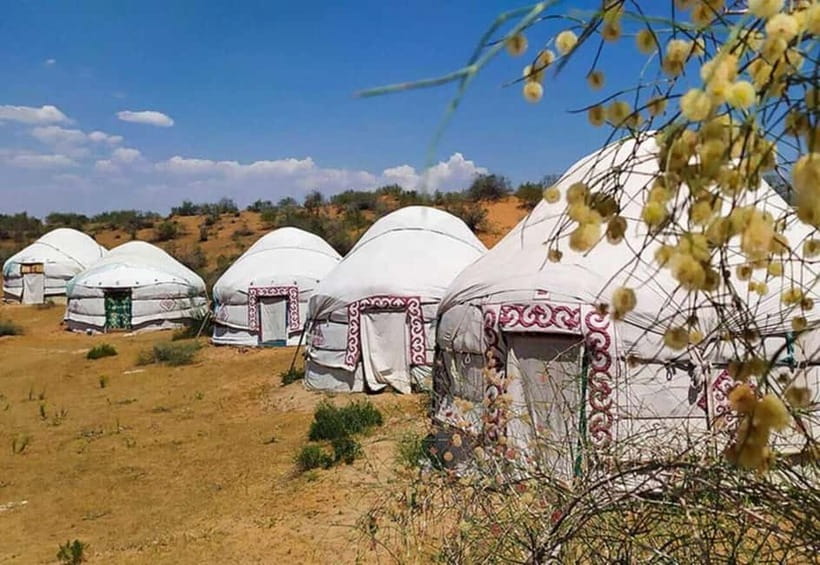
Desert nights reward the curious. This two-day route links Bukhara and Samarkand through the Kyzylkum Desert, with ancient carvings, a yurt camp, camel riding, and a lakeside picnic. I especially like the variety of stops and the chance to see ordinary village life instead of staying only in Uzbekistan’s famous cities. The main concern is value: at $245 per person, the vehicle, yurt, meals, and service need to match the promise.
I also like the evening music around the fire and the clear chance to see stars far from city lights. Guides such as Bekhruz, Bakhtiior, Rozibek, Ikrom, and Rouzbek have been singled out for kindness and good explanations. Still, you should confirm the car’s air conditioning, ask exactly what water and tips cost, and understand that the desert scenery may feel modest if you have already seen larger deserts.
Key points at a glance
- A useful Bukhara to Samarkand link: You see several sights while moving between two major Uzbek cities, rather than spending two full days returning to your starting point.
- Nearly five hours of driving each day: The route covers a lot of ground, so this is part sightseeing tour and part road journey.
- Sarmishsay’s ancient carvings: Two petroglyph areas contain about 10,000 rock drawings, with some dating as far back as the Stone Age.
- A night under desert skies: The yurt stay includes dinner, traditional music, stories around a fire, and a 20-minute camel ride.
- Lake Aydarkul breaks up the desert: You can picnic beside the lake and, depending on the season, swim or watch birds from the shore.
- Private means personal, but not always cheap: You get private transport and flexible pickup, though solo pricing can feel high for what is included.
What this two-day route really offers
This is not a luxury safari. Think of it as a cultural road trip across central Uzbekistan, with a night in a yurt camp near Lake Aydarkul. The appeal comes from the changes in scene: Bukhara’s historic setting, caravan routes, rock art, a small town linked with Alexander the Great, open desert, a rural village, and a broad lake.
You start in Bukhara and finish in Samarkand, which makes the route practical. You avoid arranging a separate transfer between the two cities and add several out-of-town sights along the way. Pickup is available from hotels, airports, and train stations in Bukhara and Samarkand.
The tour can also run in the opposite direction, beginning in Samarkand. That flexibility matters if your Uzbekistan trip starts in Samarkand and ends in Bukhara.
The price is $245 per person. That includes an English or Russian-speaking guide, air-conditioned transport according to the program, entrance tickets, one night in the yurt camp, one breakfast, two lunches, one dinner, camel riding, registration, and the local music performance. At that price, I would expect reliable transport and clear handling of all included services.
A few more safaris around the world worth a look
- From Marrakech: Zagora 2-Day Desert Safari with Food & Camp
★ 4.5 · 1,137 reviews - From Cape Town: 2-Day Safari at Garden Route Game Lodge
★ 4.8 · 928 reviews - From Cape Town: South African Wildlife and Safari 2-Day Tour
★ 4.7 · 411 reviews
Day 1: caravan roads, petroglyphs, and Nurata
Your driver collects you at 9:00 in Bukhara. The first day is long, with about five hours of total driving before you reach the desert camp, not counting the time spent at stops. Bring water, sun protection, and patience. You are covering a large area.
Rabati Malik and Sardoba Malik
Near Navoiy, you stop at Rabati Malik Caravanserai and Sardoba Malik. A caravanserai was a roadside lodging place for merchants and their animals, while the sardoba was a water reserve. Together, these sites explain how people crossed this dry region before modern roads, fuel stations, and air-conditioned cars.
The water reserve is especially useful for understanding the route. In a desert, water storage was not a side feature. It was the reason a caravan could stop at all. Your guide can help connect the stone remains with the wider trade routes that once crossed Central Asia.
This stop is brief compared with the driving time, but it gives the day a clear historical frame. You are not simply heading into empty sand. You are following an old corridor shaped by trade and water.
Sarmishsay Gorge and 10,000 rock carvings
Sarmishsay Gorge is one of the strongest stops on the route. The area contains archaeological remains reaching back to the Stone Age, including two petroglyph sites with around 10,000 ancient rock carvings.
The value here is scale and age. You are looking at marks made long before the cities and monuments usually featured on an Uzbekistan itinerary. The drawings provide a direct connection with people who lived, hunted, and moved through this region thousands of years ago.
Expect a rugged archaeological stop rather than a polished museum visit. Wear sensible shoes and protect yourself from the sun. The gorge is important because of the carvings, not because it offers a long list of modern facilities.
For many people, this will be the most rewarding daytime stop. It gives you something to interpret and remember, rather than another view from a car window.
Same region, a very different drive:
- Dubai: Desert Safari, Quad Bike, Camel Ride & Al Khayma Camp
★ 4.9 · 68,962 reviews - Dubai: Desert Safari, Quad Bike, Camel Ride and Sandboarding
★ 4.9 · 43,505 reviews - Dubai: Safari, Quad Bike, Camel Ride, and Buffet Dinner
★ 4.9 · 33,424 reviews - Dubai: Red Dune Safari, Quad Bike, Camel Ride, BBQ Dinner
★ 4.9 · 32,185 reviews
Nurata, a town tied to Alexander the Great
The route continues through Nurata, a town traditionally linked with Alexander the Great. You stop to see its monuments before heading farther toward the yurt camp.
The information provided does not give a detailed list of the exact monuments visited, so you should ask your guide what is open and included on your date. The town works as a useful break in a long drive and adds a human setting between the gorge and the desert.
This is also where a good guide makes a real difference. Several guides associated with this route, including Bekhruz, Bakhtiior, Rozibek, and Ikrom, have been praised for clear explanations and attentive service. If history interests you, ask them to explain how Nurata fits into the region’s older stories.
The yurt camp: music, camels, and a star-filled evening
By late afternoon or evening, you reach the yurt camp near Lake Aydarkul. The overnight stay is the emotional center of the tour. After a day in the car, the change of pace matters.
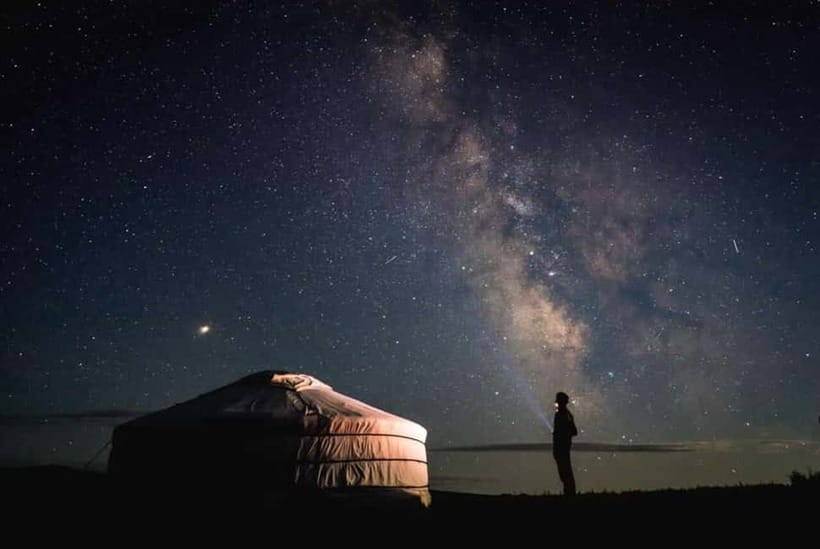
You receive dinner at the camp, then listen to traditional music and stories around a fire. The performance is presented by a local bard, and several visitors have considered this one of the most memorable parts of the trip. The setting is simple but effective: open desert, a fire, local songs, and very little artificial light.
On clear nights, you may see an impressive spread of stars. One couple reported seeing the Milky Way clearly, and another described the quiet of the desert village and the night sky as lasting memories. Exact visibility depends on weather and moonlight, but the camp’s location gives you a good chance of seeing more stars than you would in Bukhara or Samarkand.
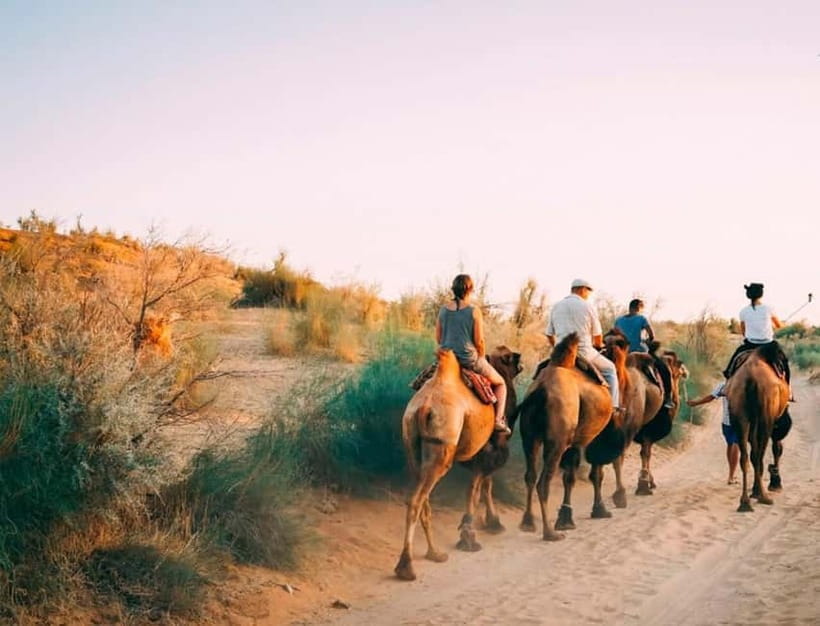
The included camel ride lasts 20 minutes and takes place around the camp. Keep expectations modest. This is a short activity, not a full desert expedition. One visitor enjoyed a camel ride at sunset, while another found the camels and surroundings disappointing. The experience may depend on the animal handler, timing, and the condition of the camp.
The yurt itself is basic accommodation. Some people found the camp comfortable, while one report described a broken door and poor cleanliness. I would not book this expecting hotel standards. Ask your provider in advance about bathroom arrangements, bedding, hot water, and the exact yurt setup.
Day 2: Dungalak village and Lake Aydarkul
Breakfast is served at the yurt camp before you visit Dungalak, a nearby village. The village visit focuses on rural life and livestock. This is a useful part of the itinerary because it shows how people live in an area often presented only as a desert backdrop.
The stop is not designed as a formal museum visit. You are there to see a working community and learn about everyday life. One memorable account described meeting an elderly woman in the village, a quiet encounter that left a strong impression. That kind of moment cannot be scheduled, but the village setting gives it room to happen.
Be respectful with photography and follow your guide’s advice. The tour description does not promise a particular household visit or a set activity, so the exact experience can vary.
Aydarkul picnic and seasonal swimming
After Dungalak, you visit Lake Aydarkul for a picnic. The lake is a welcome change after the dry open country. Depending on the season, you may swim or simply walk along the shore and look for birds.
Do not build your entire decision around swimming. The activity depends on the season, and the available information does not specify water temperature, changing facilities, or beach services. In cooler conditions, the better plan is a walk, a picnic, and time to watch the birds.
The lake stop is one of the tour’s best contrasts. You begin with desert archaeology and end with water, open sky, and a slower lunch. It also gives you a chance to stretch your legs before the final drive.
In the afternoon, you continue to Samarkand, with about five hours of driving. This makes the second day long too. If you have a train, flight, or important appointment in Samarkand, leave a generous buffer. The itinerary gives an afternoon transfer, but no exact arrival time is stated.
The long drives and the vehicle question
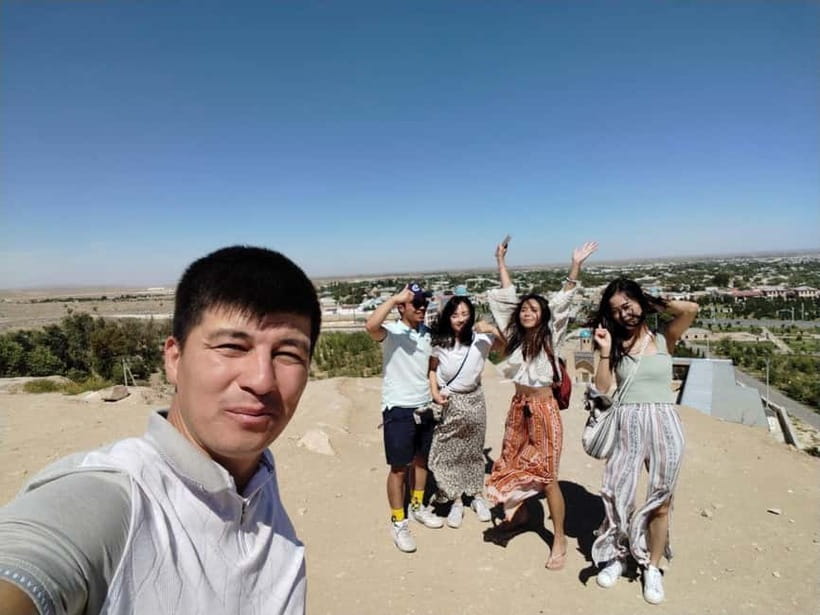
Transport is central to this trip. The route covers Bukhara, Navoiy, Sarmishsay, Nurata, the yurt camp, Dungalak, Lake Aydarkul, and Samarkand. You will spend many hours in the vehicle, often in hot conditions.
Air conditioning is listed as included, and it is not a minor detail here. A serious complaint described a full day in temperatures above 95°F, or 35°C, with no working air conditioning. The company reportedly attributed the problem to a petrol issue affecting only a short distance, while the passenger felt the problem lasted throughout the journey. That is a major comfort and value issue.
Before departure, ask the operator to confirm that the vehicle’s air conditioning is working. If the car changes, check the replacement vehicle before setting off. The review score is 4.4 from 11 ratings, so the overall picture is positive, but the transport complaint shows why this question matters.
The private format can be a real advantage. You can ask for breaks, spend more time at a site, and have direct contact with your guide. Guides and drivers such as Rozibek, Abbos, Rouzbek, and Almaz have been praised for being friendly, attentive, and fun company on the road.
What $245 per person gets you
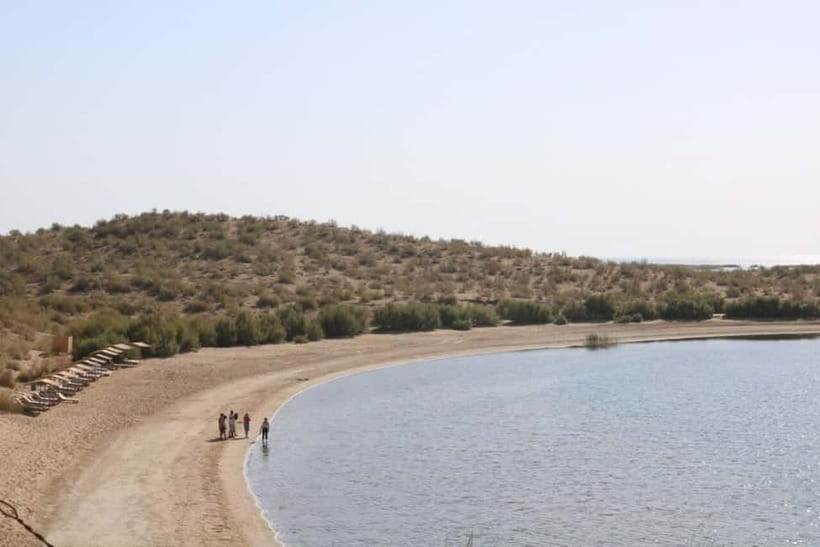
At $245 per person, the price is reasonable only if you value the private transfer, guide, entrance fees, and the city-to-city route. You are not paying just for a bed in a yurt. You are also paying to connect two major cities while visiting remote sites that would be awkward to reach independently.
The included food is one breakfast, two lunches, and one dinner. Water is not listed as included. One visitor was unhappy about paying extra for drinking water, especially because water is inexpensive locally. Bring your own supply at the start and ask exactly what will be provided at the camp and during the drives.
Tips can also affect the final cost. A visitor felt pressured to tip after the camel ride and music performance. Tipping expectations are not explained in the tour details, so ask your guide what is customary and what services are already paid for.
Solo travelers should pay close attention to the final quote. One person reported paying nearly 340 euros alone, while another couple paid close to 480 euros. The supplied price is $245 per person, but solo supplements or currency changes may affect what you actually pay.
Who will enjoy this tour most
I would recommend this trip to you if you want to connect Bukhara and Samarkand while seeing a less urban side of Uzbekistan. It suits people who enjoy archaeology, rural visits, long road journeys, basic accommodation, and unusual overnight settings.
It is especially good for:
- Couples or friends who want a private route between the two cities
- First-time visitors who have not seen a desert or yurt camp
- People interested in petroglyphs and ancient trade routes
- Photographers hoping for stars, sunset, village scenes, and lake views
- Travelers who prefer local music and conversation to large group entertainment
I would hesitate if you need dependable luxury, short transfers, or carefully controlled hotel standards. The route is too long for anyone who dislikes road travel, and the camp may feel rough around the edges. It is also not suitable for people with back problems, babies under one year, or people over 95.
The tour does not allow drones, and you must bring your passport or ID card.
Should you book it?
Book this tour if the combination of ancient rock art, a desert night, and a practical Bukhara to Samarkand transfer appeals to you. The strongest moments are likely to be Sarmishsay Gorge, traditional music by the fire, the stars, and the contrast between the desert and Lake Aydarkul.
Before paying, confirm four things: the vehicle’s air conditioning, the condition of the yurt, what drinking water costs, and how tips are handled. If those details are clear and you accept basic lodging plus long drives, $245 can buy a memorable slice of rural Uzbekistan.
If you expect a polished safari with a spotless camp, a full camel excursion, and luxury transport, choose another style of trip. This is best approached as an adventurous cultural transfer with a good mix of history, village life, and desert atmosphere.
FAQ
Where does the tour begin and end?
The standard route begins with pickup in Bukhara and ends in Samarkand. The tour can also be started from Samarkand.
How long is the tour?
The experience lasts two days and includes one overnight stay at a yurt camp.
How long are the driving days?
The first day includes about five hours of driving to the yurt camp. The transfer from Lake Aydarkul to Samarkand on the second day also takes about five hours.
Is hotel pickup included?
Yes. Pickup is available from hotels, airports, and train stations in Bukhara and Samarkand.
What languages are available?
The guide service is available in English and Russian.
Is the tour private?
Yes. The tour is arranged for a private group.
What meals are included?
The package includes one breakfast, two lunches, and one dinner.
Is camel riding included?
Yes. A 20-minute camel ride around the yurt camp is included.
Can I swim in Lake Aydarkul?
Swimming may be possible depending on the season. You can also walk along the lake shore and watch birds.
What should I bring?
Bring your passport or ID card. Drones are not allowed on the tour.
Newest safaris around the world
- Desert Safari in 4×4 Car with BBQ Dinner and Belly Dance★ 5.0 · 62 reviews
- Dubai Desert Safari: Quad Bike, Camel Ride and BBQ Dinner★ 5.0 · 29 reviews
- Desert Safari and Quad Bike Experience in Dubai with Dinner★ 4.5 · 44 reviews
- Dubai Evening Desert Safari with Thrilling Dune Buggy Adventure★ 5.0 · 109 reviews
- Desert Safari With Bab Al Shams Dinner★ 4.5 · 43 reviews
- Dubai Desert Safari with Dinner, Camel Ride & Dune Bashing★ 5.0 · 73 reviews
- Evening Desert Safari Tour With Dinner & Entertainment★ 5.0 · 41 reviews
- Desert Safari with 30 Minutes Quad Biking on High Red Dunes (Complete Package)★ 5.0 · 124 reviews
2-Day Experiences, compared.
2 Day South African Wildlife Tour with 4×4 Safari from Cape Town
Read our review →
2 Days Tarangire and Ngorongoro Group Camping Safari
Read our review →
Browse the lists this tour appears in