
Review · JAIPUR, INDIA
Jhalana Panther Safari Park Tour in Jaipur
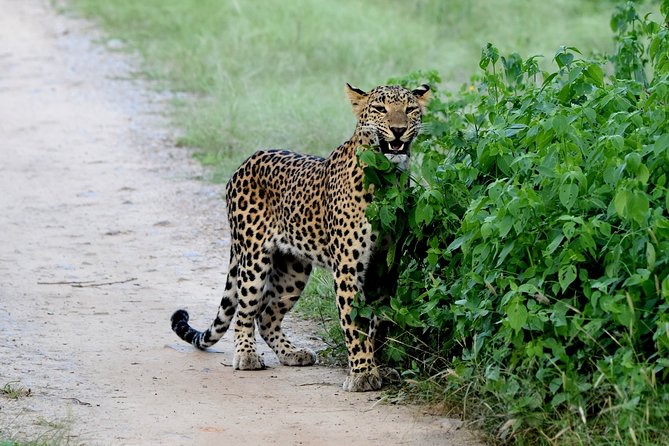
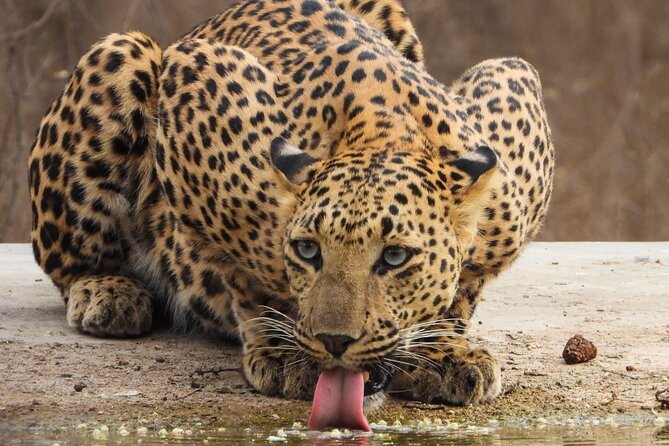
Leopards can appear beside Jaipur’s city streets. The Jhalana Panther Safari takes you into a 23-square-kilometer urban forest in an open 4×4, where a naturalist helps spot leopards, hyenas, desert foxes, birds, and smaller wildlife. I like the easy two-and-a-half-hour format and the fact that safari permits, permit handling, the interpretation center, and still-camera fees are included.
I also like the choice of morning or afternoon departures, plus pickup within 8 kilometers of the park entrance. The main catch is simple: wildlife sightings are never guaranteed, and some visitors spend the full drive seeing little more than birds and distant animals. The park can also feel busy and somewhat managed, especially around waterholes.
The key points before you book
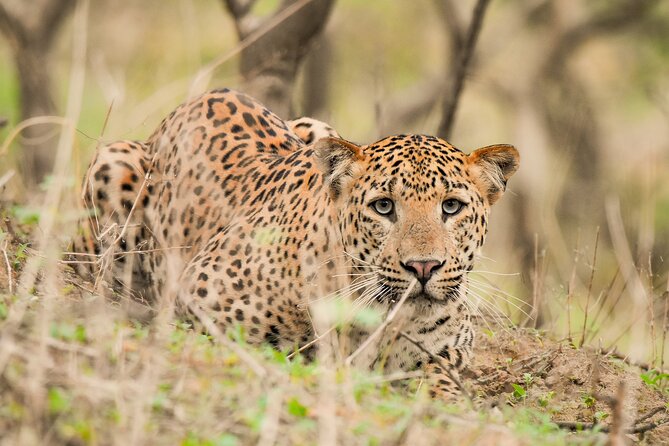
- Leopard sightings are possible but not promised: Some drives see two leopards, while others see none.
- The park is close to Jaipur: This is an urban forest safari, not a remote national park expedition.
- Open 4×4 vehicles make spotting easier: You get a raised view, though rain and cold can make the ride uncomfortable.
- Guides can make or break the outing: Several visitors praised drivers who spotted animals and redirected the vehicle quickly.
- The usual group limit is six people: Shared seating can create delays or cramped moments.
- Season matters: November to February can reach 2 degrees Celsius, while April to June is hot and July to September brings thicker grass and fewer sightings.
What the Jhalana safari is really like
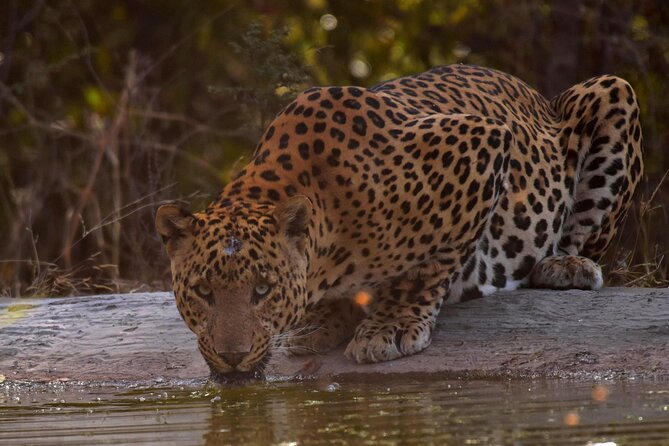
Jhalana Panther Safari Park offers a chance to see wild cats without leaving Jaipur for a full-day trip. The reserve sits near the city, so you can fit this outing around forts, palaces, markets, and other Jaipur sights.
That convenience is its biggest strength. You are not spending an entire day on the road to reach a distant wildlife reserve. Instead, you travel to the meeting point in Malviya Nagar, board an open 4×4, and enter a forest area that has become known for its leopard population.
The experience lasts about two hours and 30 minutes. That is long enough to cover the park roads and wait at likely animal spots, but short enough to suit a packed Jaipur schedule.
The experience is described as a private tour, though the vehicle operation can involve shared seating. The maximum group size is six, and one complaint involved passengers waiting while the vehicle filled. If personal space matters to you, confirm the vehicle arrangement before paying.
A few more safaris around India worth a look
- Non-Touristic overnight Camel Safari
★ 5.0 · 526 reviews - Overnight Camel Safari – Sleeping under the Stars
★ 5.0 · 390 reviews - Adventure non touristic camel safari
★ 5.0 · 300 reviews
Starting at the Malviya Nagar meeting point
The standard meeting point is the World of Wilders office on Central Road, inside the Malviya Nagar Industrial Area. The address refers to the road end, near the safari operator’s Jaipur activities.
Pickup is offered for locations within 5 miles, or 8 kilometers, of the park entrance. If your hotel is farther away, a round-trip transfer upgrade costs $35. This makes the tour most convenient for people staying near the safari area, while visitors in central Jaipur should check the added transport cost before booking.
The provided information says transportation from the city is by open 4WD vehicle. In practice, that means your ride to the gate may also expose you to sun, wind, or rain. Bring a light layer even if Jaipur feels warm at breakfast.
At the entry gate, the driver identifies the naturalist who will accompany the drive. The quality of this person matters. The best reports describe drivers who pointed out animals, knew the birds, and hurried to a nearby sighting when another vehicle found a leopard.
That kind of quick response is useful in Jhalana. A leopard may appear for only a short time, and the difference between seeing it and missing it can come down to how alert the driver is.
Inside the 4×4: roads, waterholes, and waiting
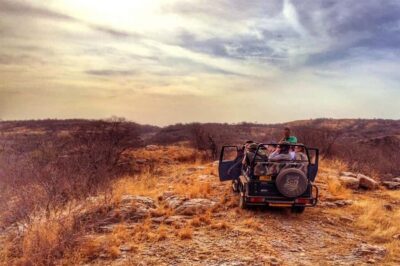
Once inside, you follow dirt roads through the forest in an open safari vehicle. The raised seats provide a better view than a normal car, especially when the driver stops near a bird or animal.
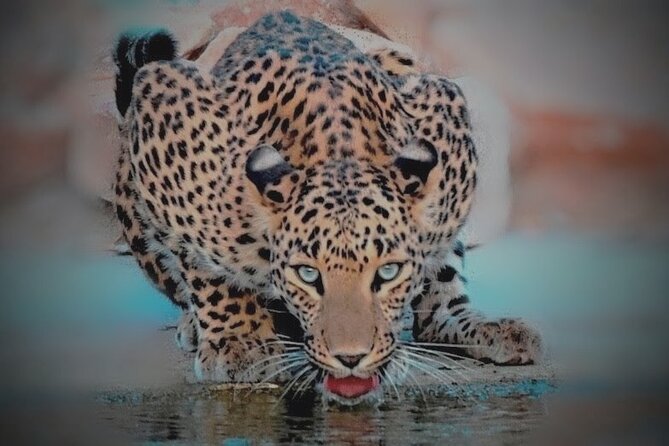
The route includes man-made waterholes, which are common places for wildlife to appear. Some visitors find this setup too artificial, with several vehicles gathering around the same areas. Others appreciate having likely stopping points in a compact urban reserve.
This is not a silent wilderness far from human activity. Jhalana is an urban forest, and the park’s roads and viewing habits can feel organized. You may encounter other 4x4s, particularly when a leopard has been spotted.
Still, the animals are not in cages. Leopards roam freely, and the driver cannot order one into view. You need to treat the outing as a wildlife search, not a guaranteed cat show.
The naturalist may point out birds, smaller animals, and tracks while looking for the main prize. Reports describe sightings of plenty of animals even when no leopard appeared. That makes the guide’s ability to explain what you are seeing especially important.
The chance of seeing a leopard
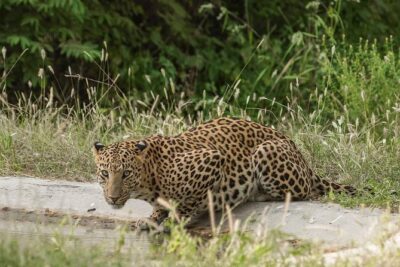
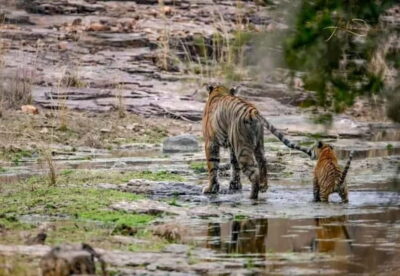
Jhalana is known for its leopards, also called panthers in the tour name. Some drives see two cats, though they may be sleeping and far from the vehicle. One especially fortunate sighting involved a leopard eating a dead deer.
Those moments are memorable, but they are not the normal promise of the tour. Other outings have ended without a leopard, particularly during the rainy season from July through September. Thick grass gives the animals more cover, even as the forest turns greener.
The operator describes Jhalana as having one of the highest leopard sighting rates in Asia. Treat that as a reason to choose the park, not as a guarantee. Wild cats control the schedule here.
The morning and afternoon departures give you useful flexibility. A morning ride may suit you if you want cooler air and a full day afterward. An afternoon ride can work well after sightseeing, but heat and animal activity can vary by season.
If a leopard is found elsewhere in the park, a good driver may redirect the vehicle. One highly praised outing involved a driver taking the group quickly to another vehicle’s panther sighting. That is exactly the sort of practical effort you want from a safari guide.
Same region, a very different drive:
- Overnight Desert Safari Tour Package
★ 5.0 · 255 reviews - Private 4-Day Golden Triangle Tour with Ranthambore Tiger Safari
★ 5.0 · 248 reviews - From Jaipur: Ranthambore National Park Day Trip with Safari
★ 4.6 · 244 reviews - Overnight Camel Safari (remote And Isolated)
★ 5.0 · 170 reviews
Wildlife beyond the big cat
A leopard is the headline, but it is not the only reason to enter Jhalana. The park is also home to hyenas, desert foxes, birds, and other animals.
The birdlife gives the naturalist something to explain during quiet stretches. Visitors who missed a leopard still enjoyed watching birds and smaller animals, especially when the guide allowed enough time to study them and take pictures.
You should also keep your expectations in proportion to the park’s size. At 23 square kilometers, Jhalana is substantial for an urban forest but much smaller than a large remote reserve. You are likely to cover familiar roads and revisit water sources rather than travel across a huge wilderness.
That compact size is both good and bad. It makes a short safari possible from Jaipur, but it can also make the experience feel repetitive if animal activity is low.
The interpretation center and included fees
The tour includes a visit to the interpretation center. This gives you a useful introduction to the park before or around the safari, though the supplied information does not specify how long the stop lasts or what displays are included.
Safari permits and permit management are included, which saves you from handling the park paperwork yourself. A still-camera fee is also included. That matters if you plan to use a regular camera for wildlife photographs.
The camera inclusion does not mean you will get close-up images. Several leopard sightings have been distant, and an open 4×4 does not guarantee a clear view through grass or trees. Bring realistic expectations for photography and use the waiting time to watch the animal rather than chase a perfect frame.
Is $45 good value?
At $45 per person, the tour sits in a reasonable middle range for a guided wildlife outing near a major city. The price covers the safari permits, permit arrangements, interpretation-center visit, and still-camera fee. You also receive the 4×4 ride and a naturalist.
The value depends almost entirely on your expectations. If you see a leopard, the price can feel fair, especially when the sighting includes unusual behavior such as feeding. If you see only birds and distant wildlife, the same price may feel high because the park is compact and the drive lasts about two hours.
The $35 transport upgrade changes the calculation for hotels more than 8 kilometers from the entrance. Add it to the $45 fare and the outing becomes $80 per person before any other spending. For a solo visitor, that may still be worthwhile for convenience. For a family, the extra transfer charge deserves careful thought.
The permit and camera inclusions are helpful because they reduce surprise charges. The bigger financial risk is the non-refundable booking rule. Once you pay, cancellations or amendments do not produce a refund, so check your date and transport plan first.
Weather and clothing by season
Jhalana changes with the weather, and your comfort affects how much attention you give the wildlife.
From November through February, temperatures can fall to about 2 degrees Celsius. An open vehicle feels much colder while moving, so wear warm clothing and bring extra layers. Gloves or a scarf may be useful, though they are not specifically listed as required.
April through June brings strong heat. Wear a hat and sunglasses, and consider clothing that covers your arms. The open vehicle provides little protection from direct sun.
Rainfall is limited, but July and August can still bring wet conditions. Full-length clothing is recommended to reduce mosquito exposure. Rain can also make the ride uncomfortable, especially if the vehicle has no effective cover.
The monsoon period from July through September tends to produce thicker grass and fewer leopard sightings. The forest may look greener and more attractive, but your odds of spotting a hidden cat can drop. If your main goal is a leopard, avoid treating the rainy season as the safest choice.
Group size, comfort, and guide quality
The stated maximum is six people, which is small enough for a useful safari vehicle. A group of six can still feel crowded, particularly if everyone carries bags or camera gear.
Shared seating may also cause a short wait while the vehicle fills. One complaint described a problem with too many passengers and limited space, while the operator responded that six people are meant to sit in one vehicle and that shared groups may wait five to ten minutes.
That inconsistency suggests you should confirm the seating plan if you are particular about comfort. A small group does not always mean a fully private vehicle.
Guide quality receives some of the strongest praise. The best guides identify animals, explain birds, allow time to watch, and make an effort to reach a leopard sighted by another vehicle. English ability appears uneven, however, and one visitor found that the guide did not speak English as expected.
If commentary is important to you, ask about the language available when booking. Do not assume that every guide will provide detailed English interpretation.
Who should book this safari?
I would recommend Jhalana to you if you want a short wildlife outing that fits neatly into a Jaipur itinerary. It suits first-time safari visitors, families who prefer a shorter drive, and anyone curious about seeing a leopard without traveling to a distant reserve.
It also works well for photographers who are happy to photograph birds, forest views, and smaller animals while waiting. The included still-camera fee is a useful touch, but you should bring patience rather than expect guaranteed close views.
I would be more cautious if you want a remote wilderness experience, complete quiet, or a guaranteed leopard sighting. The compact park, dirt roads, waterholes, and other vehicles can make the outing feel commercial.
People who dislike open-air rides should also plan carefully. Jaipur’s winter mornings can be very cold, summer afternoons can be harsh, and rain can turn the ride into an uncomfortable wait.
Should you book the Jhalana Panther Safari?
Book this tour if you value easy access, a short schedule, and a real chance to see a free-roaming leopard near Jaipur. The strongest experiences come from an alert driver and good luck, with wildlife sightings ranging from two distant sleeping cats to no leopard at all.
Before booking, check three things: the season, your hotel’s distance from the gate, and whether the vehicle is shared. Choose cooler months for comfort, avoid expecting certainty during the rainy season, and budget the $35 transfer fee if needed.
For the right expectations, Jhalana can be a memorable half-day addition to Jaipur. Just remember that the forest decides what you see.
FAQ
How long does the Jhalana Panther Safari last?
The safari experience lasts approximately two hours and 30 minutes.
What animals can I see at Jhalana?
Possible sightings include leopards or panthers, hyenas, desert foxes, birds, and other wildlife.
Is hotel pickup included?
Pickup is offered within 8 kilometers, or 5 miles, of the safari entrance. Pickup and drop-off beyond that distance cost $35.
How many people can join the safari vehicle?
The activity has a maximum of six people.
Are safari permits included in the price?
Yes. The price includes all safari permits and permit management.
Is the still-camera fee included?
Yes. A still-camera fee is included.
What should I wear during the safari?
Wear warm clothing from November to February, when temperatures can reach 2 degrees Celsius. Use a hat and sunglasses from April to June, and wear full-length clothing during the rainy season from July to August.
Newest safaris around India
- Wild Life Jeep Safari Tour at Bannerghatta with Private Transfer★ 5.0 · 24 reviews
- Explore Bangalore’s Wild Side – An Exclusive Bannerghatta Safari!★ 5.0 · 10 reviews
- Sariska Tiger Reserve Assistance for Gypsy Private Safari Tickets★ 4.0 · 13 reviews
- Chambal River Safari★ 5.0 · 75 reviews
- Sanjay Gandhi National Park + Kenheri Caves + Lion Safari★ 4.4 · 19 reviews
- Sawai Madhopur: Ranthambore National Park Guided Jeep Safari★ 4.4 · 23 reviews
- Ranthambore National Park: Safari Ticket with Pickup Option★ 4.5 · 32 reviews
- Peeps Billions of Star Experience with Desert & Camel Safari★ 4.8 · 18 reviews
Jaipur Safaris, compared.
Exclusive Safari at Jhalana Leopard Park Including Transfers
Read our review →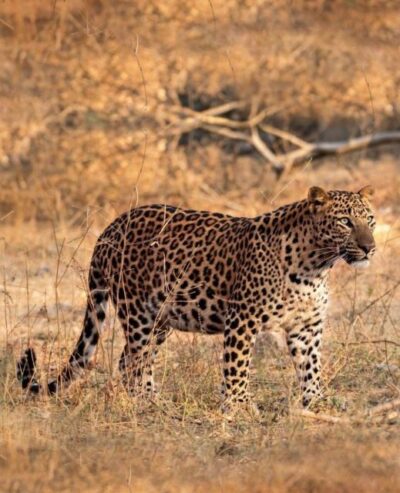
Browse the lists this tour appears in