
Review · ANDALUSIA, SPAIN
From Granada: Sierra Nevada Safari up to 2500 meters high
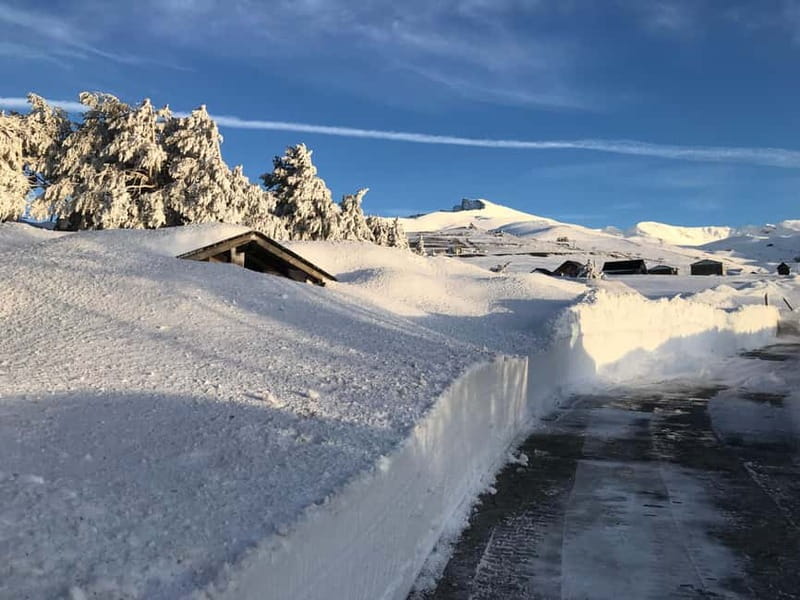
The high country starts surprisingly close to Granada. This small-group 4×4 trip takes you from the city to 2,500 meters, using old mountain tracks, quiet backroads, and viewpoints that are difficult to reach without a capable vehicle. I especially like the unhurried stops and the chance to see the Sierra Nevada through local eyes, not just from a busy ski resort.
I also like the guides’ clear affection for the area. Jaime, Daud, Carlos, and other local guides are praised for their driving, humor, plant knowledge, and stories about the mountains. The main consideration is the road itself: some sections are narrow, rough, and curvy, so this is not the right outing if mountain roads make you uneasy. Lunch is also not included, and the meal stop can come late in the day.
The mountain experience in four useful points
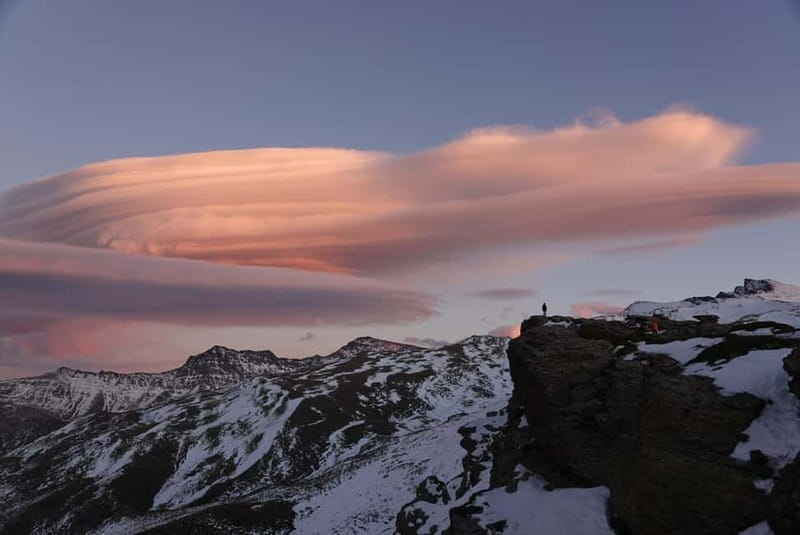
- Reach 2,500 meters by 4×4: Enjoy high views of Mulhacén and other peaks without committing to a demanding hike.
- Follow old routes above Granada: Parts of the outing use tracks linked with Visigoth, Roman, and Moorish history.
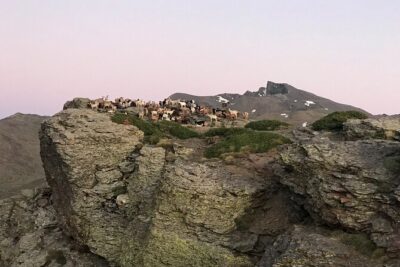
- Look for wild animals: Spanish ibexes, griffon vultures, eagles, wild boar, and bee-eaters may appear, though sightings are never guaranteed.
- Small groups make a difference: With no more than eight people, it is easier to ask questions, stop for photos, and hear the guide.
- Easy walks, not a hiking expedition: Most walks are short and manageable, with plenty of time to stay in the vehicle if you prefer.
- A drink at a mountain hut: The included drink at 2,500 meters gives the day a pleasant pause, with food available separately at your own expense.
Leaving Granada for the Sierra Nevada
The trip begins with pickup in central Granada, although the exact meeting point depends on the option you book. From there, you leave the city in an air-conditioned 4×4 Mercedes Sprinter fitted for rougher roads and steep mountain routes.
The vehicle matters here. You are not simply driving to a roadside lookout on a standard tour bus. The route uses dirt roads and secondary roads with little traffic, including old tracks that have served the mountains for centuries. A lifted suspension and low-range capability make this sort of outing possible, though they do not remove the natural bumps and bends.
I would choose this trip early in a Granada stay. It gives you a useful sense of the mountains that frame the city, and the guide’s comments can help you understand places you see later from the Alhambra or Albaicín. The contrast is striking: Granada’s warm streets can give way to cool mountain air within the same half-day.
The full outing lasts about six to seven hours. That is long enough to reach high country without consuming an entire vacation day, but the pace is relaxed rather than tightly packed. The guides generally allow time for photographs, short walks, and questions instead of rushing from one scheduled stop to the next.
A few more safaris around Spain worth a look
- Fuerteventura: Cofete Beach Jeep Safari
★ 4.5 · 2,248 reviews - Ibiza: Jeep Safari Island Exploration
★ 4.9 · 1,478 reviews - Corralejo: Buggy Safari Tour
★ 4.6 · 1,174 reviews
Roman gold and the water below the Alhambra
One of the most unusual pieces of local history concerns the gold associated with Cenes de la Vega. The river connected with this area supplies water to the Alhambra, and Roman miners once found gold nearby.
This is not the sort of fact you usually pick up from a standard Granada city tour. It connects the mountain environment with the palace below. The same high country that supplies water, stone, plants, and minerals has helped shape Granada for thousands of years.
The route also brings in the Genil River, the main river of the Sierra Nevada. Its source is linked with the high peaks, including Mulhacén, the highest summit on mainland Spain. Hearing this story while climbing toward the upper mountain makes the geography easier to grasp: the peaks are not just a distant backdrop, but the source of the water system that supports the region.
The Roman connection is only one layer. Your guide may also explain the presence of the Visigoths and the later Arab communities that used these routes. This historical thread gives the drive more substance than a succession of scenic stops.
Camino de los Neveros and the old mountain routes
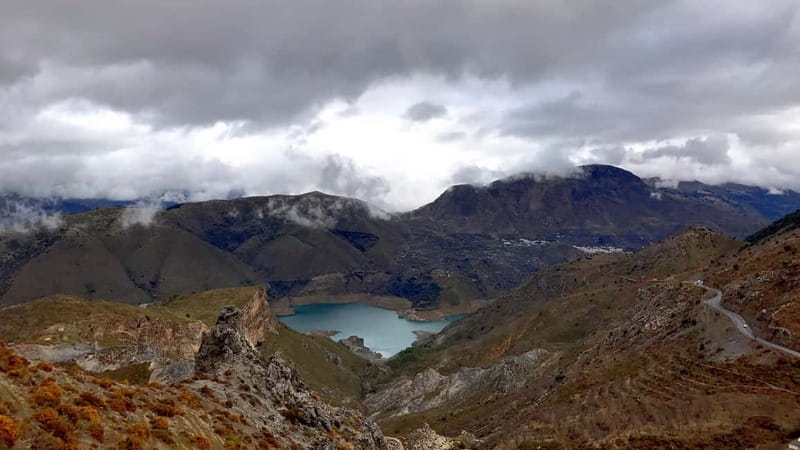
The Camino de los Neveros is another distinctive part of the outing. Moorish communities used this route to reach the Sierra Nevada and collect ice, which could then be used during Granada’s hot summers.
That detail helps explain why these high paths mattered before modern refrigeration and paved roads. The mountains were not empty wilderness waiting to be discovered. They were working terrain, crossed for water, ice, grazing, trade, and travel.
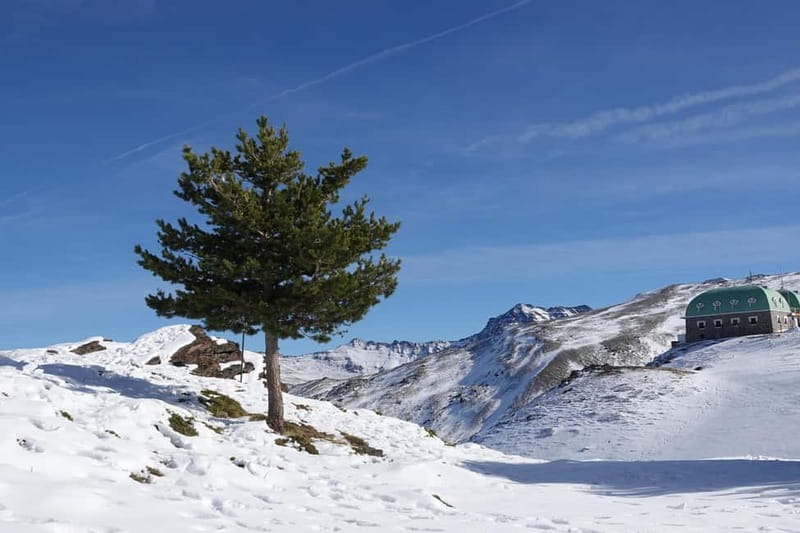
The exact views change with the weather and season. In summer, you may enjoy cooler air than in Granada and see herbs such as thyme, rosemary, and sage growing along the route. In spring, mountain greenery and late snow can appear together. In winter, snow makes the upper reaches especially impressive, but also makes warm clothing more important.
You do not need advanced hiking ability. Walks during the activity are short and easy, and you can spend more time enjoying the view rather than trying to cover distance. That makes the tour suitable for families and mixed-age groups, including people who want mountain scenery without a full-day trek.
Cahorros de Monachil and the changing scenery
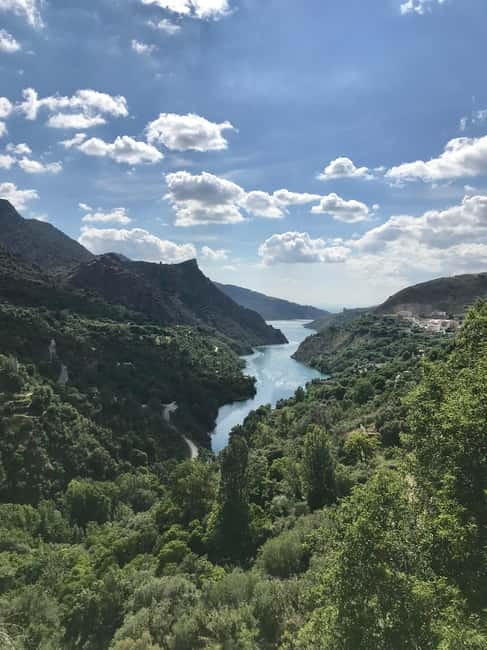
The Cahorros de Monachil is a beautiful canyon cut by the Monachil River. Its rock walls and river-carved shape show how water has worked through the mountains over time.
This stop adds variety to the day. The upper Sierra Nevada is open, broad, and exposed, while a canyon feels closer and more enclosed. I like that change because it prevents the outing from becoming a single long climb with repeated views.
The guide’s explanation of the geology is one of the strongest reasons to take this trip rather than drive into the mountains alone. You learn how the range formed, why the rock changes from one area to another, and how water and altitude affect the plants and animals. The information is practical and tied to what you can see from the road.
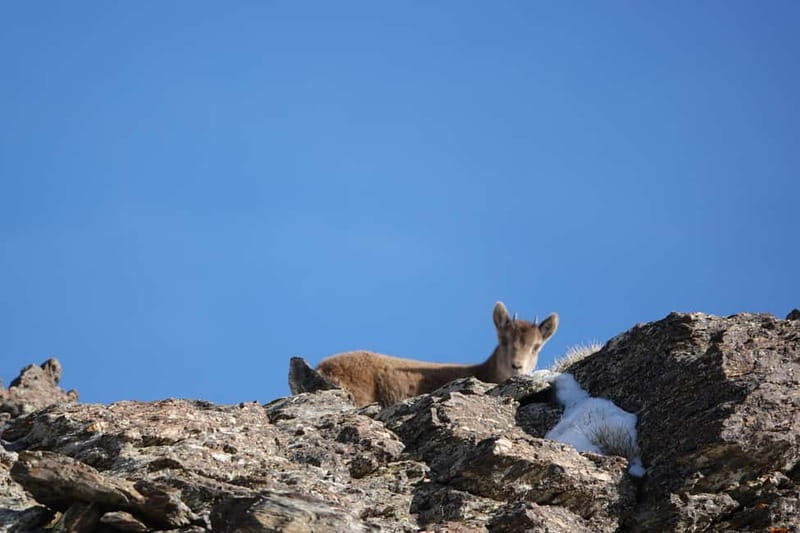
The route is also a good place to keep your eyes open for wildlife. Spanish ibexes can appear on rocky slopes, while birds of prey may circle above the ridges. Some outings have produced sightings of mountain goats, wild boar, golden eagles, and colorful bee-eaters. These are fortunate encounters, not scheduled attractions, so bring patience and binoculars if you have them.
Same region, a very different drive:
- Gran Canaria: Camel Ride Safari w/ Optional Food & Transport
★ 4.2 · 1,167 reviews - From Playa de las Américas: Full-Day Teide Jeep Safari
★ 4.7 · 1,056 reviews - Salou: Off-Road Guided Quad Safari with Hotel Pickup
★ 4.8 · 896 reviews - Costa Calma: Buggy Safari
★ 4.8 · 699 reviews
Climbing toward Mulhacén at 2,500 meters
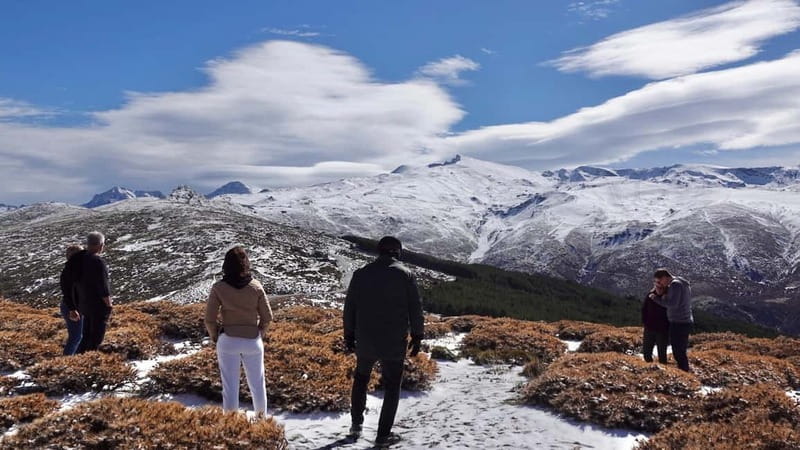
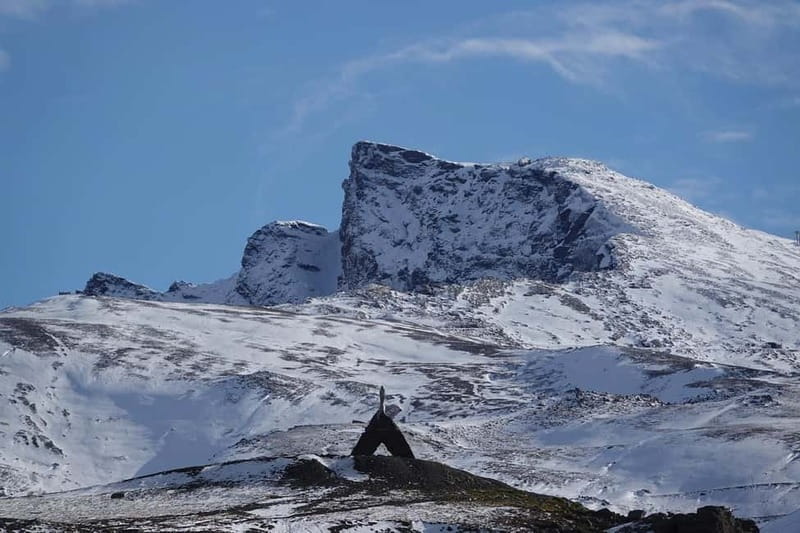
The highlight is the climb toward the north face of the Sierra Nevada, where several peaks rise above 3,000 meters. You do not climb Mulhacén on this tour, but you get views toward it and other high summits from several angles.
Mulhacén is the highest peak on mainland Spain. Its name comes from one of the final rulers of the Alhambra, which gives the summit a direct link to Granada’s Nasrid past.
The views are the main reward at this height. You see broad mountain slopes, distant ridges, and the high peaks of the Iberian Peninsula. The guides tend to stop at several viewpoints, giving you time to take photographs instead of offering one rushed photo break.
At 2,500 meters, conditions can differ sharply from those in town. Even in summer, the air may feel cool. In winter and spring, snow and wind can make the upper stop cold. Bring layers, a hat, and a coat with a hood. This is one of the most useful practical tips for the trip, since Granada’s weather can tempt you to dress too lightly.
The altitude itself is not presented as a demanding physical challenge, but you should still take the day at an easy pace. The walks are short, and you can simply sit at a viewpoint if you prefer. If you have a concern about altitude, mention it to the guide before setting out.
The mountain hut and the long lunch break
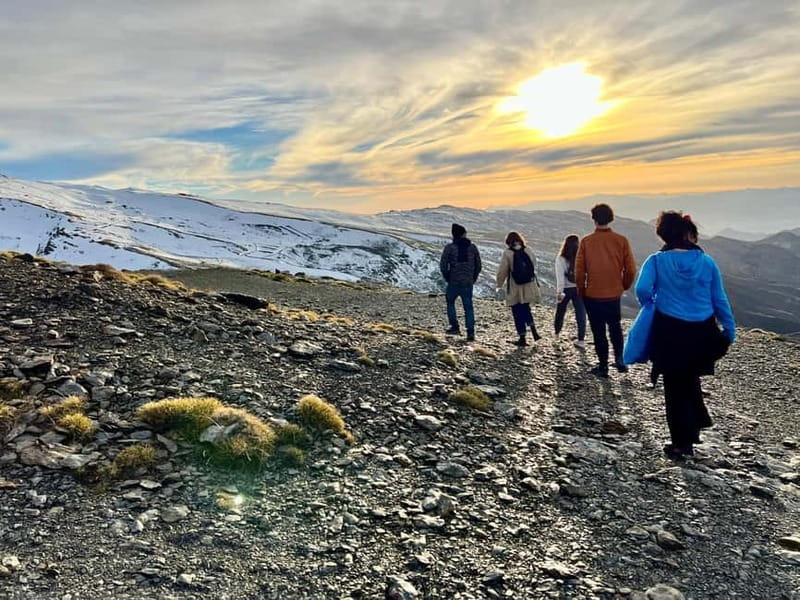
At the upper stop, the tour includes one drink at a panoramic mountain hut around 2,500 meters. It is a simple but effective part of the day: after the winding drive, you get a chance to sit, warm up or cool down, and take in the view without walking.
You also receive about an hour and a half of free time. You can walk, take photographs, eat lunch, or do very little. That flexibility is a strength, especially for families or groups with different energy levels.
Food is not included. You may buy lunch or dinner at a panoramic mountain restaurant, but the timing can be late. One outing reached the lunch stop at around 2 p.m., so I would pack a sandwich, fruit, or snacks even if you plan to eat at the restaurant. The tour information specifically allows you to bring your own food.
The long break is mostly an advantage, but it will not suit everyone. One person may enjoy a slow meal and a short walk, while another may feel that an hour and a half is too much time at one place. If you prefer constant sightseeing, this pause may feel leisurely. If you value breathing room, it is welcome.
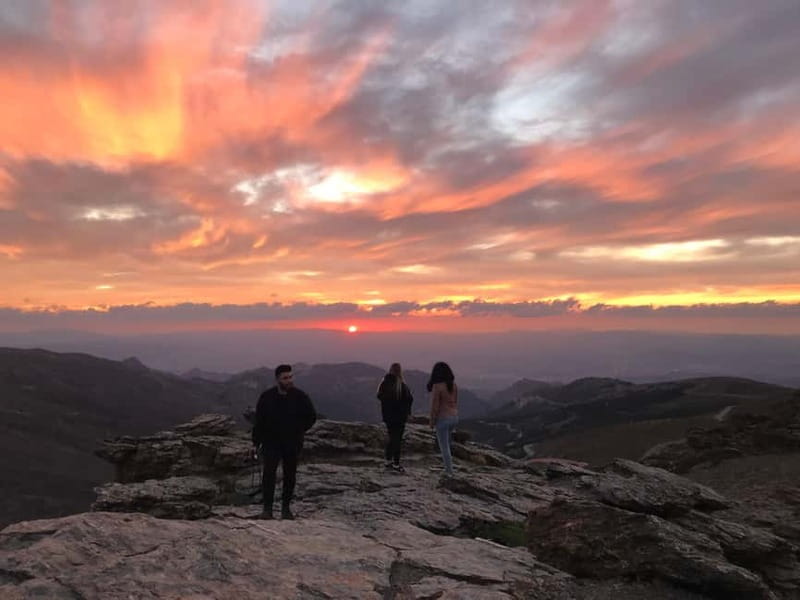
Some schedules are offered around sunset. When the timing works, seeing the sun drop across the mountains from 2,500 meters can be remarkable. A sunset departure also means a darker and quicker return, so bring an extra layer and do not expect the same daylight views on the way back.
Guides who make the difference
This is a guide-led outing, not simply a scenic transfer. The best guides add local detail at every turn, from plants and geology to old routes and childhood memories.
Jaime is repeatedly praised for safe driving, good humor, and his ability to explain the plants and terrain. Daud is described as friendly, entertaining, and deeply familiar with the region. Carlos is noted for his calm driving and kindness. Guides using nicknames such as Vulture also bring a strong interest in birds and mountain ecology.
That personal touch matters on a route where the scenery can be hard to interpret by yourself. A patch of herbs becomes part of a lesson about the climate. A river becomes a clue to the high peaks. A Roman mining site becomes part of Granada’s wider story.
Safety also comes up in the practical sense. The roads can be narrow and muddy, and one outing required help after the vehicle slipped into a ditch. The guide handled the situation calmly and worked to get the group moving again. That episode shows both the character of the guides and the real nature of off-road travel: generally well managed, but not as smooth as a highway excursion.
Who will enjoy this tour most?
I would recommend this experience if you want mountain scenery but do not want to rent a car or plan a route through unfamiliar high roads. It is also a good choice for families, older adults who prefer easy walks, and photographers who want several viewpoints rather than one fixed lookout.
Nature lovers will get the most from it, especially if you enjoy identifying plants or watching for birds and ibexes. History fans will appreciate the links between Roman mining, Moorish ice gathering, the Alhambra, and the mountain villages.
It is less suitable if you want a serious hike. The emphasis is on driving, viewpoints, short walks, and interpretation. You also need to be comfortable with a small 4×4 group, winding roads, and a flexible day rather than a rigid timetable.
With a maximum of eight participants, the group is small enough for conversation. It also means that the personality of the guide and the other people in the vehicle can shape the day. That is part of the charm, but it is worth knowing before you book.
Is the price good value?
The exact price is not provided here, so I cannot judge it against a specific figure. I can say what you are paying for: specialist transport, a local mountain guide, access to rougher routes, a small group, and a full six to seven hours away from Granada.
A rental car would not give you the guide’s local knowledge, and driving narrow mountain roads while trying to find viewpoints is not an easy way to relax. Public transport would not reach these remote stops. The included drink is modest, but the real value lies in the vehicle, route, and interpretation.
Remember to budget separately for lunch or dinner if you want to eat at the panoramic restaurant. Bringing snacks gives you more control over the timing and avoids waiting hungry for the main meal.
Practical advice before you go
Wear sturdy shoes, even though the walks are easy. The surface may be uneven, and the weather can change as you climb.
Bring layers, a hat, sunscreen, water, and food. A hooded jacket is useful in wind or snow, while a light layer helps in summer when the upper air is cooler than Granada.
Keep your camera ready, but do not expect wildlife on demand. Ibexes, eagles, vultures, wild boar, and other animals are possible sightings. The quieter roads improve your chances, but the mountains set their own schedule.
The tour is offered in English and Spanish. Free cancellation is available up to 24 hours before the activity, and the reserve-now, pay-later option can help if your itinerary is still changing. Confirm the meeting point for your selected option, since it may vary.
Should you book the Sierra Nevada safari?
I would book it if you have at least half a day in Granada and want to see the mountains without taking on the driving yourself. The combination of high viewpoints, old routes, easy walks, local stories, and a small group gives you much more than a quick photo stop.
Book with the right expectations. This is not a summit hike, a guaranteed wildlife safari, or a polished coach excursion. Roads can be rough, lunch costs extra, and the weather at 2,500 meters may surprise you.
For an authentic mountain outing with strong guiding and plenty of time to look around, it is one of the better ways to get beyond Granada’s historic center.
FAQ
How long does the Sierra Nevada tour last?
The tour lasts approximately six to seven hours.
How high does the tour go?
The 4×4 reaches about 2,500 meters, or roughly 8,000 feet, above sea level.
Does the tour climb Mulhacén?
No. The tour provides views of Mulhacén and other peaks above 3,000 meters, but it does not involve climbing the summit.
Is lunch included?
No. Lunch or dinner is not included, but you can buy food at a panoramic mountain restaurant or bring your own snacks and packed lunch.
Are the walks difficult?
The walks are described as short and easy. You can also spend more time at the viewpoints if you do not want to walk much.
What animals might I see?
Possible sightings include Spanish ibexes, griffon vultures, eagles, wild boar, and bee-eaters. Wildlife sightings are not guaranteed.
What type of vehicle is used?
Transport is provided in an air-conditioned 4×4 Mercedes Sprinter with low-range lifted suspension.
How many people are in the group?
The group is limited to eight participants.
Which languages are available?
The live tour is available in English and Spanish.
Is the mountain hut drink included?
Yes. One drink at a panoramic mountain hut at about 2,500 meters is included.
Newest safaris around Spain
- Jeep Safari – Mojacar , Turre , Los Gallardos , Cabrera★ 5.0 · 11 reviews
- Salou safari: Park Samá with 1 vermouth tasting&hotel Pickup★ 5.0 · 15 reviews
- Tenerife: Puerto Colon Snorkel Safari by Speed Boat★ 4.4 · 84 reviews
- Tenerife south: safari with luxury boat , animals encounters★ 4.7 · 44 reviews
- Salou: Buggy Safari with Hotel Transfer★ 4.6 · 74 reviews
- Gran Canaria: Camel Ride at Camel Safari Park★ 4.1 · 217 reviews
- Menorca: Snorkeling Safari Tour★ 4.4 · 22 reviews
- Mallorca: Self Drive 4×4 Jeepsafari Tour★ 4.7 · 161 reviews
Spain Safaris, compared.
Camel Ride Safari w/ Optional Food & Transport
Read our review →
Sierra Nevada Safari tour up to 2500 meters high
Read our review →Browse the lists this tour appears in