
Review · JACKSON HOLE, USA
Grand Teton Wildlife Safari in a Enclosed or Open-Air Vehicle (season dependent)
Wildlife rewards patience, not promises. This four-hour Grand Teton safari gives you a useful head start at dawn or dusk, when elk, moose, deer, and birds are often active. I especially like the small group of no more than 12 and the guides’ patient use of binoculars and spotting scopes. I also like that the outing covers more than animals, with geology, ecology, local history, and Snake River scenery woven into the drive. The catch is simple: wildlife is wild, and one guest saw little more than a distant moose and pronghorn for about $160.
You’ll ride in an open-air vehicle during the warmer season, if weather allows, or in a heated enclosed vehicle during colder months. Guides such as Kyle, Kelsey, Allie, Anthony, and Neil have earned warm praise for spotting animals, explaining the park, and helping with photos. Bring a serious jacket even in summer, and book early, since this experience is often reserved more than a month ahead.
Key points to know before you book
- Dawn and dusk give you the best odds: The safari runs when many animals are active, though sightings can never be guaranteed.
- The vehicle changes with the season: Open-air rides run roughly June through mid-September, while enclosed vehicles are used from mid-September through May.
- Guides do much of the hard work: Binoculars and a spotting scope are supplied, and guides search roadsides, woods, fields, and river areas for animals.
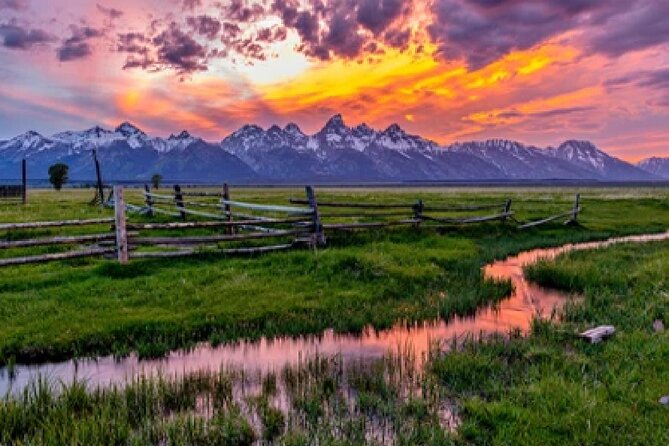
- Mormon Row adds a classic photo stop: From March through November, you’ll usually stop near the famous barns for about 20 minutes.
- The price buys more than transport: Snacks, drinks, wildlife equipment, interpretation, and a small group are included, but park admission is extra.
- A warm layer is essential: Sunrise rides can be cold, and winter departures require full snow clothing, including boots, gloves, and a hat.
Starting in Jackson Hole and entering Grand Teton
The usual meeting point is at 210 North Cache Street in Jackson, with the safari returning there after about four hours. Hotel pickup is available from approved Jackson Hole locations from November through mid-May. Summer pickup and drop-off are not included, so check your plans before assuming your lodging is covered.
The group limit of 12 matters. You are not being packed into a large coach with a guide speaking only to the front row. A smaller group makes it easier to ask about animal behavior, request a better viewing position, or get help with binoculars. It also gives the guide a better sense of what your group hopes to see.
The route uses both paved highways and dirt roads inside Grand Teton National Park. That mix is useful because wildlife does not arrange itself beside the smoothest road. One minute you may be looking toward the Tetons from a broad highway, and the next you may be moving slowly along rougher ground near likely animal habitat.
The safari covers only part of Grand Teton’s roughly 310,000 acres. That is worth remembering. Four hours gives you a strong introduction, not a complete tour of the park. Your guide has to balance driving, searching, stopping, and keeping the group on schedule.
More Wildlife Safaris in the USA
- Half-Day Wildlife Safari Tour in Grand Teton National Park
★ 5.0 · 341 reviews - Half Day Grand Teton Wildlife Safari Tour
★ 5.0 · 259 reviews - Yellowstone Wildlife Safari from Bozeman – Private Tour
★ 5.0 · 140 reviews
Open-air views or an enclosed winter ride
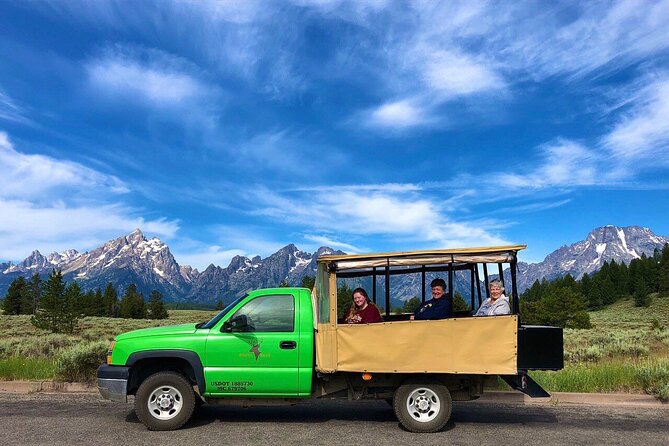
From June through roughly mid-September, the main attraction is the customized open-air vehicle, weather permitting. You get a wide view of the sky and surrounding country, and it is easier to hear natural sounds and scan in every direction. It also brings you closer to the feel of a real safari than a standard sightseeing van does.
There is a trade-off. Open-air seating can be cold at sunrise, during an evening ride, or whenever the wind picks up. Wear long pants, sturdy walking shoes, and a jacket. One summer guest specifically advised bringing a coat even when the day starts warm. That is sensible advice in mountain country.
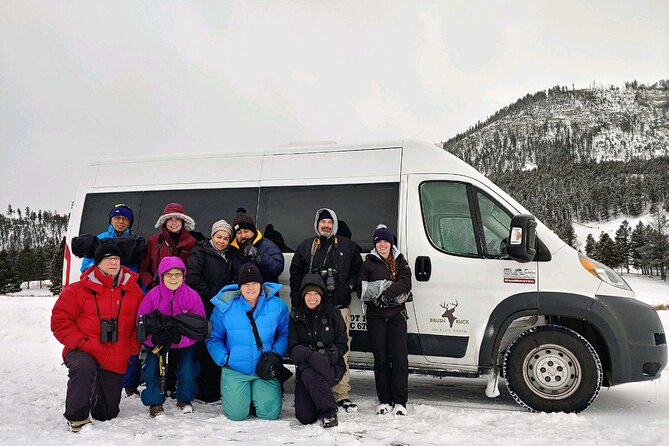
From mid-September through May, the vehicle is enclosed and heated. In warmer weather, air conditioning is available. This setup is more comfortable when temperatures drop, especially on early departures, but you may feel a little less exposed to the surroundings than you would in the open vehicle.
Winter visitors need to take the clothing instructions seriously. Plan on snow boots, snow pants or bibs, a winter jacket, gloves, a beanie, and a scarf. The company may provide blankets on some rides, but blankets are backup comfort, not a substitute for proper clothing.
The summer vehicle is not recommended for people with back problems. The ride can include rugged dirt roads, so anyone sensitive to jolts should consider the enclosed option or another way to see the park.
Searching for elk, moose, bears, and wolves
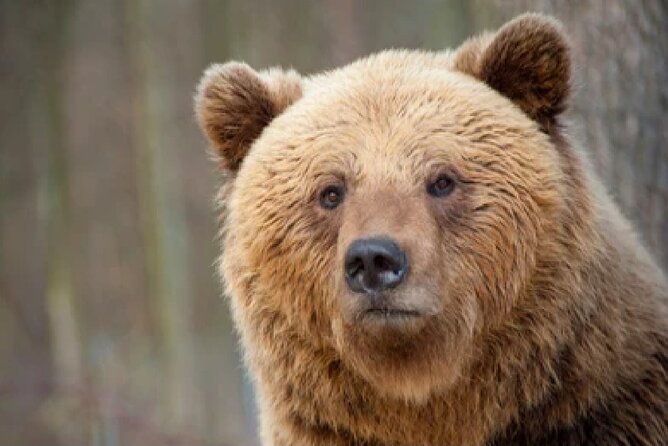
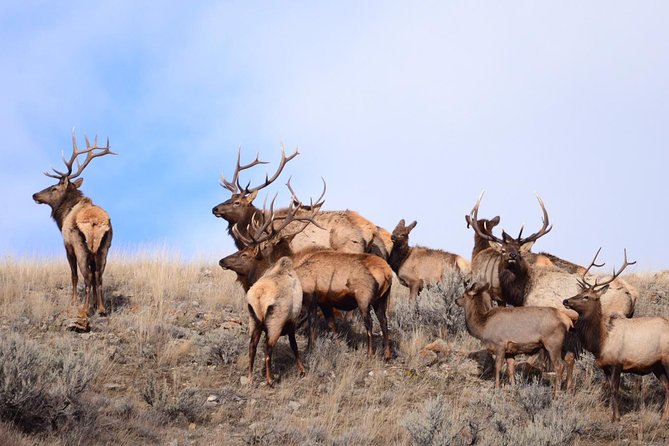
The main purpose of the safari is the search. You may scan fields for elk and pronghorn, peer into woods for moose, or watch open areas for bison and bighorn sheep. Mule deer, black bears, grizzly bears, and wolves also live in the park, though their appearance depends heavily on season, timing, and luck.
The guides’ role is more important than the vehicle itself. Several guides, including Kyle, Kelsey, Allie, Anthony, Cameron, Phil, Kevin, and Neil, have been praised for locating animals and explaining what the group is seeing. The strongest feedback centers on guides who keep looking after the first sighting, give everyone time at the scope, and explain animal movement instead of simply pointing and driving on.
Your guide supplies binoculars and a spotting scope. This is a real benefit because many animals will be far from the road. A bear in the distance may look like a dark patch without magnification, while a scope can reveal its shape and movement. A guide may also help you position the scope so children or anyone less comfortable with binoculars can see the animal.
You should keep your expectations sensible. One safari produced moose, elk, bison, pronghorn, bears, and even a wolf. Another saw only a partial moose in the trees and some antelope-like pronghorn. Both outcomes are possible. The safari improves your chances by using local route knowledge, but it cannot control animal behavior.
The best attitude is to value the search itself. Your guide may point out tracks, birds, changing vegetation, or a distant shape that needs a closer look. If you require a bear, wolf, or moose sighting to feel the outing was worthwhile, you may find the price hard to justify.
Birds and smaller moments along the route
Grand Teton is also a strong place for birdwatching, particularly in spring and summer. The park is home to more than 300 bird species, including bald eagles, golden eagles, ospreys, hawks, owls, and sandhill cranes.
Birds can be easier to miss than large mammals, so the guide’s scanning skills matter. You may see an eagle overhead, an osprey near water, or an owl tucked into the trees. The supplied binoculars are handy here, though fast-moving birds can still test your patience.
The animal list is broad, but the point is not to collect species like stamps. A guide can explain why some animals appear in certain areas during particular seasons, how migration affects sightings, or how the park’s plant communities support different species. That turns a roadside stop into a lesson you can carry into the rest of your time in Wyoming.
Same region, a very different drive:
- Everglades Airboat Safari Adventure with Transportation
★ 3.0 · 956 reviews - 3 Hour Off-Road Sunset Safari to Grand Canyon with Entrance Gate Detour
★ 5.0 · 904 reviews - Kauai Deluxe Waterfall Safari: Helicopter Tour
★ 5.0 · 900 reviews - Wild Florida Drive-Thru Safari and Gator Park Admission
★ 4.5 · 892 reviews
The Tetons, Snake River, and the story beneath your feet
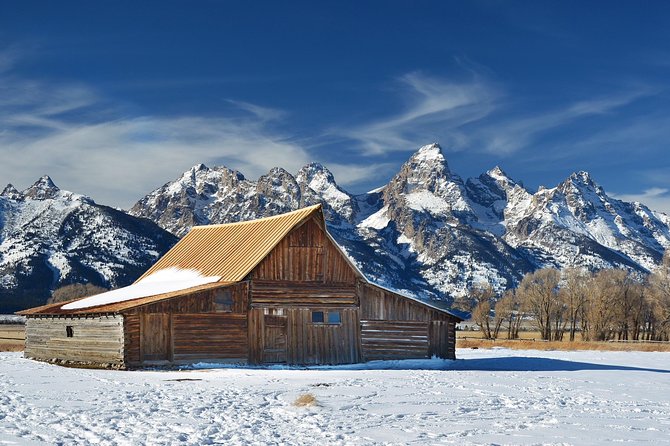
Even during a quiet wildlife stretch, the scenery gives the ride real value. You’ll see the jagged Teton peaks, including Grand Teton, the park’s tallest mountain, and may travel near the Snake River. The combination of sharp mountain walls, open fields, woods, and water makes the drive worthwhile even when animals remain hidden.
The guide also covers the park’s geology. Grand Teton is not just a dramatic backdrop. Its rock layers, mountain formation, river systems, and changing terrain help explain why different habitats appear close together. You do not need a geology degree to appreciate this. A few clear explanations can make the views more memorable.
Human history is part of the outing, too. Guides discuss early settlement, local culture, and the people who shaped Jackson Hole. This prevents the park from feeling like a postcard with animals added on. You get a sense of how people lived here, used the land, and adapted to a demanding environment.
The best guides make these subjects feel connected. A stop may include a mountain view, a wildlife sighting, and an explanation of why the area looks the way it does. That variety helps fill the quiet periods between animals.
Mormon Row and the famous barn photographs
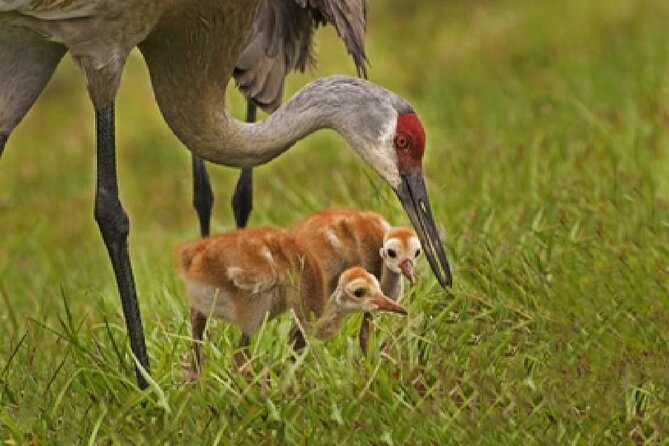
From March through November, the safari usually includes a stop in the Mormon Row Historic District. This was home to some of Jackson Hole’s early Mormon homesteaders, and the old barns now sit with the Tetons behind them.
You’ll have about 20 minutes for photos. The T. A. Moulton Barn is one of the most famous barns in the world, and the John Moulton Barn may be used instead. The itinerary specifies one or the other, not necessarily both, so do not count on photographing every historic building.
This stop changes the rhythm of the morning or evening. After spending time searching the roadside for movement, you get a clear landmark and a straightforward photo opportunity. It is also useful for anyone who wants a classic Grand Teton image but does not have time to explore the park independently.
Snow changes the plan. Tours running from December through February do not make the Mormon Row stop because of snow coverage. The winter route focuses more directly on wildlife and accessible park areas.
Dawn or sunset: choosing your departure
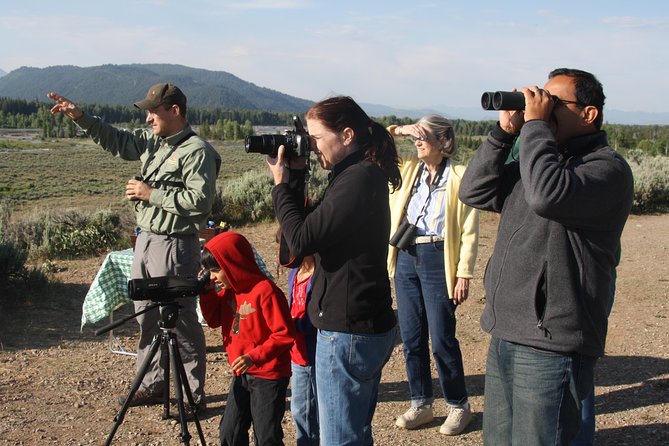
A sunrise safari gives you the earliest start and may put you out during a busy period for wildlife. It also brings the coldest conditions of the day. One early departure included wool blankets, but coffee was not provided, so bring your own warm drink if that matters to you.
Sunset departures offer softer light and a more relaxed start. They can also become chilly as the ride continues. A sunset group with guides Kelsey and Taylor received praise for detailed explanations of wildlife, local settlement, and Jenny Lake, along with patient efforts to find animals.
I would choose sunrise if animal sightings are your top goal and you can handle cold and an early start. Choose sunset if you prefer a gentler schedule and want warm evening light for photos. Neither option guarantees better sightings.
Snacks, photos, and the small comforts
Snacks, bottled water, and soda are included. That is not a full meal, but it is enough to keep a four-hour outing from becoming uncomfortable. You should still eat before a sunrise departure if you need a substantial breakfast.
Several guides also take photos for the group or send images afterward. This can be a valuable bonus when you are busy watching through a scope and do not want to fumble with your own camera. Do not treat it as the core service, though. Confirm the photo arrangement with your guide, since the quality and timing may depend on the individual guide and equipment.
The strongest guide experiences combine practical care with good storytelling. Kelsey was praised for blankets, snacks, and drinks, while Phil and Anthony were noted for helping with wildlife photos. Neil was praised for hotel pickup, comfort, and allowing plenty of time to watch animals. Those details matter because a wildlife outing can become tiring if everyone is rushed, cold, or unsure where to look.
Is $159 a fair price?
At $159 per person, this is not the cheapest way to drive through Grand Teton. You could enter the park in your own car, bring binoculars, and search the roads without paying for a guide. One disappointed guest felt that a private drive produced a similar number of sightings.
The value appears when you use the guide well. You are paying for a small group, a guide who searches while driving, binoculars and a spotting scope, park interpretation, snacks, scenic stops, and the chance to see animals you might pass without noticing. You are also paying to avoid doing all the route planning yourself.
Park entrance fees are not included, and gratuity is optional, with 10 to 15 percent suggested for good service. Summer hotel pickup and drop-off are also not included. Those extra costs should be part of your budget.
I think the price works best for first-time visitors, families, photographers who want help finding wildlife, and anyone with only a short stay in Jackson Hole. If you already know the park well and own good optics, driving yourself may offer better value.
Practical details before you reserve
Children age five and younger are not allowed. Most people can participate, and service animals are allowed. The experience is offered in English and uses a mobile ticket.
The outing requires suitable weather. If poor weather cancels it, you can receive a different date or a full refund. It can also be canceled if the minimum number of participants is not met, with a new date, another experience, or a full refund offered.
The cancellation policy is strict for customer cancellations. This experience is non-refundable and cannot be changed for personal reasons, so check your schedule carefully before paying. With an average booking lead time of about 33 days, reserving early is wise during busy seasons.
The experience receives a 4.9 rating from 1,212 reviews, with 97 percent recommending it. That strong record reflects excellent guide service in many cases, but it does not erase the basic fact that wildlife sightings vary.
Who should book this Grand Teton safari?
Book it if you want a guide to handle the searching, prefer a small group, and value explanations of wildlife, geology, and local history. It is especially useful for a short Jackson Hole visit, a family that needs help spotting distant animals, or anyone without binoculars and a scope.
Think twice if you dislike early mornings, cold air, bumpy roads, or uncertain results. You should also consider driving yourself if your main goal is simply to see Grand Teton’s views and you are comfortable finding your own route.
My advice is to book the safari when wildlife is a major goal, not as a guaranteed animal show. Come prepared for a quiet stretch, then enjoy the bonus when a moose steps from the trees, an eagle crosses the sky, or a guide finds bears far beyond the roadside. The mix of expert searching, useful interpretation, and memorable mountain scenery makes the outing worth considering, as long as you accept nature’s terms.
FAQ
How long does the Grand Teton wildlife safari last?
The safari lasts approximately four hours and returns to the meeting point at 210 N Cache Street in Jackson.
What vehicle is used during the safari?
Open-air safari vehicles are used roughly from June through mid-September when weather allows. Enclosed heated or air-conditioned vehicles are used from roughly mid-September through May.
What wildlife might I see?
Possible sightings include elk, moose, mule deer, pronghorn, bison, bighorn sheep, black bears, grizzly bears, and wolves. Birds may include bald and golden eagles, ospreys, hawks, owls, and sandhill cranes. Sightings vary by season and are not guaranteed.
Are binoculars and snacks included?
Yes. Binoculars and a spotting scope are supplied, and snacks, bottled water, and soda are included.
Does the safari stop at Mormon Row?
Tours from March through November include a stop at Mormon Row, usually for about 20 minutes. Tours from December through February do not make this stop because of snow coverage. The guide stops at either the T. A. Moulton Barn or the John Moulton Barn.
Is hotel pickup included?
Hotel pickup from approved Jackson Hole locations is available from November through mid-May upon request. Summer hotel pickup and drop-off are not included.
Newest safaris around the USA
- 3 Hour See Crystal River Wildlife Safari Boat Cruise★ 4.5 · 25 reviews
- Northern Yellowstone Safari from Cody, WY★ 4.5 · 24 reviews
- Red Canyon Wild Mustang Tours And Safaris In Cody Wyoming★ 5.0 · 27 reviews
- Wetlands Safari Eco-Cruise in Cape May (Osprey Birding By Boat)★ 5.0 · 113 reviews
- Private Yellowstone Winter Wolf Watching and Wildlife Safari★ 5.0 · 26 reviews
- Yellowstone Winter Wildlife & Snowshoe Tour | PRIVATE★ 5.0 · 19 reviews
- Yellowstone Snowshoe Safari from Bozeman – Private Tour★ 5.0 · 18 reviews
- Yellowstone Wildlife Safari from Bozeman – Private Tour★ 5.0 · 140 reviews
Big Five & Wildlife Safaris, compared.
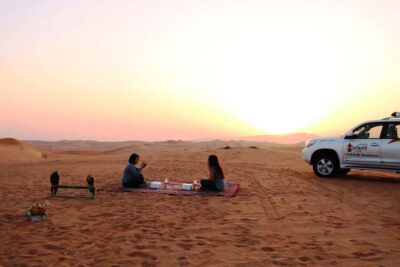
Sunrise Desert Jeep Safari with Wildlife Experience
Read our review →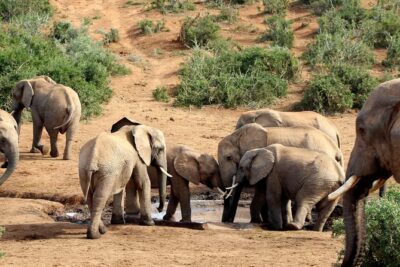
Addo Elephant National Park All Inclusive Full-Day Safari
Read our review →
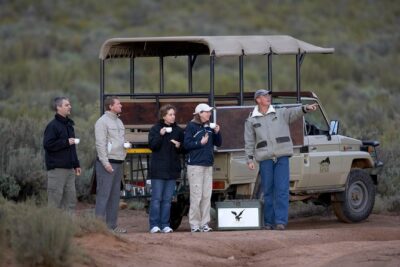
Big Five Game Reserve Wildlife Safari from Cape Town
Read our review →
Big Five Safari and Breede River Valley Guided Day Trip
Read our review →

Browse the lists this tour appears in