
Review · WINDWARD ISLANDS, FRENCH POLYNESIA
Moorea : Safari Nature and Culture Tour with local guide
Moorea reveals its story on this four-hour tour, which links lookout points, bays, forest, pineapple fields, archaeological sites, churches, and a distillery. I like that it gives you far more than a drive around the island: you get cultural context at each stop and a virtual reality look at a 17th-century marae ceremony and naval battle.
I also like the small-group format, limited to eight people, and the hotel pickup and drop-off. Guide Christine receives especially warm praise for her clear explanations, patience, and personal connection to Moorea. The main consideration is that this is an active half-day, with walks, a river crossing, and uneven outdoor sites, so it is not suited to people with mobility, back, pregnancy, or age-related restrictions.
Key points to know before booking
- Virtual reality at an archaeological site: A headset helps reconstruct an ancient village, marae ceremony, and naval battle in the places connected to those events.
- Christine’s personal storytelling: Her talks cover Polynesian traditions, plant uses, missionary history, myths, and Moorea’s past.
- Four hours with varied stops: You move from Toatea and Cook’s Bay to forest, farms, Opunohu, the Belvedere, temples, and a distillery.
- A maximum of eight people: The small vehicle group should make questions and conversation easier than on a large island coach.
- Tastings without a meal: Fruit, juice, punch, and local drinks are part of the experience, but lunch is not included.
- Best for active adults: Comfortable shoes, water, insect repellent, and clothes suited to walking will make the outing easier.
Why this tour works for a first look at Moorea
Moorea can tempt you to focus only on its bays and dramatic mountain views. Those sights are excellent, but they tell only part of the island’s story. This outing adds the human layer: early Polynesian settlement, agriculture, navigation, religion, colonial-era change, and the stories attached to sacred places.
The route also has a good rhythm. You spend some time in the vehicle, then get out for a viewpoint, a guided stop, a short walk, or a tasting. That variety matters in four hours. You are not stuck in a van all morning, but you also do not need to manage the island’s roads yourself.
The strongest part is the link between place and story. At Opunohu, you do not simply hear that Polynesians once lived there. The virtual reality presentation helps you picture an ancient village and ceremonial life in the same broader setting. That makes the archaeological site easier to understand than a few stone remains and a sign.
A few more safaris around French Polynesia worth a look
- Private Safari Adventure Tour in Bora Bora with Local Guide
★ 5.0 · 15 reviews - Dubai Desert Trail: Guided Quad/Polaris and Red Dunes Safari
★ 4.9 · 1,059 reviews - Salou: Off-Road Guided Quad Safari with Hotel Pickup
★ 4.8 · 896 reviews
Toatea Lookout starts the morning with a wide view
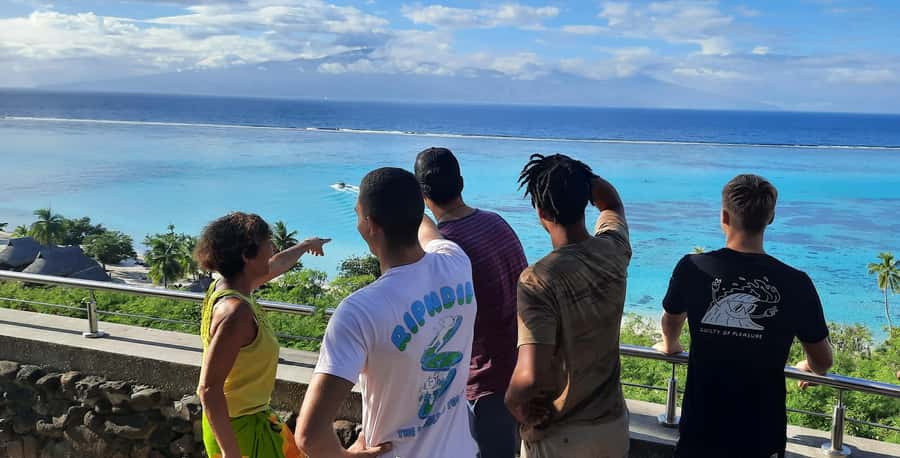
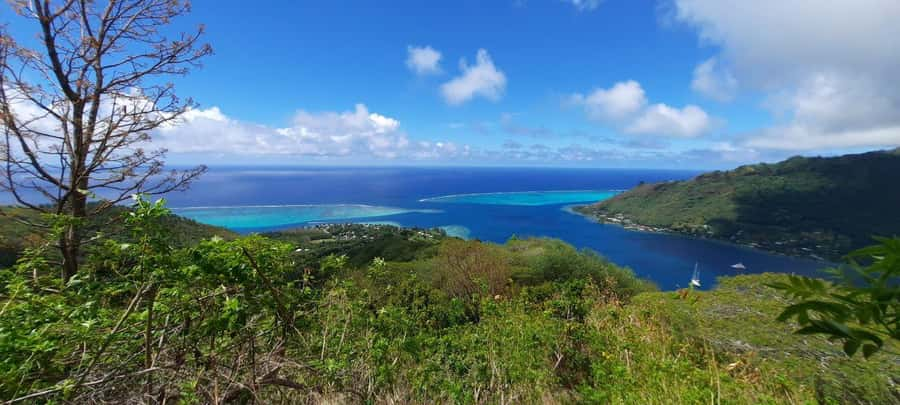
The first stop is Toatea Lookout, with about 20 minutes for photographs and orientation. It is a useful opening because you can get a sense of Moorea’s setting before the cultural explanations begin, including the coral reef and the water around the island.
Do not expect a long walk here. This is a short viewpoint stop, so have your camera ready and listen for the guide’s introduction to the places ahead. The brief timing is practical, though photographers who like to wait for changing light may find it quick.
Cook’s Bay connects Moorea with the first navigators
The tour then reaches Cook’s Bay for roughly 25 minutes. The focus here is the arrival of the first navigators who discovered Tahiti and Moorea, giving you a starting point for understanding the islands through voyaging, contact, and movement across the Pacific.
This is one of the stops where Christine’s storytelling matters most. A bay can look like a simple scenic pause if you do not know what happened there. With historical explanation, it becomes part of a larger story about how people reached, named, used, and understood these islands.
The stop is short, so you will likely get a guided talk and time to take in the view rather than a long exploration of the shoreline. That is a fair trade in a tour covering much of Moorea in half a day.
Forest roads and the island’s crater add a change of pace
After the bays, the route heads through tropical forest and crosses a river. You then reach the center of the island’s crater, where the setting changes again. Pineapple fields and mountain views provide the backdrop, and a tasting is included in this part of the day.
This section is valuable because it shows Moorea as a working island, not only a postcard destination. The agricultural side of Moorea gives context to the plants and products discussed later. One especially good detail from the tour is the chance to see varied crops at an agricultural school, with Bali Hai as a backdrop, and learn how plant products have been used over time.
The exact stop is scheduled for about 35 minutes, including scenic driving, views, and refreshments. Bring water anyway. Fruit juice or a small tasting does not replace regular hydration, especially in warm weather.
Same region, a very different drive:
- Découvrez le Mana durant la traversée de Tahiti en 4×4 Safari
★ 5.0 · 456 reviews - Bora Bora: Full day Lagoon Safari & Lunch on a Motu – ST
★ 4.9 · 443 reviews - Bora Bora Half Day 4X4 Island Safari Tours
★ 5.0 · 431 reviews - Crossing Over Tahiti Island Safari 4×4
★ 4.5 · 307 reviews
Opunohu brings ancient Moorea to life
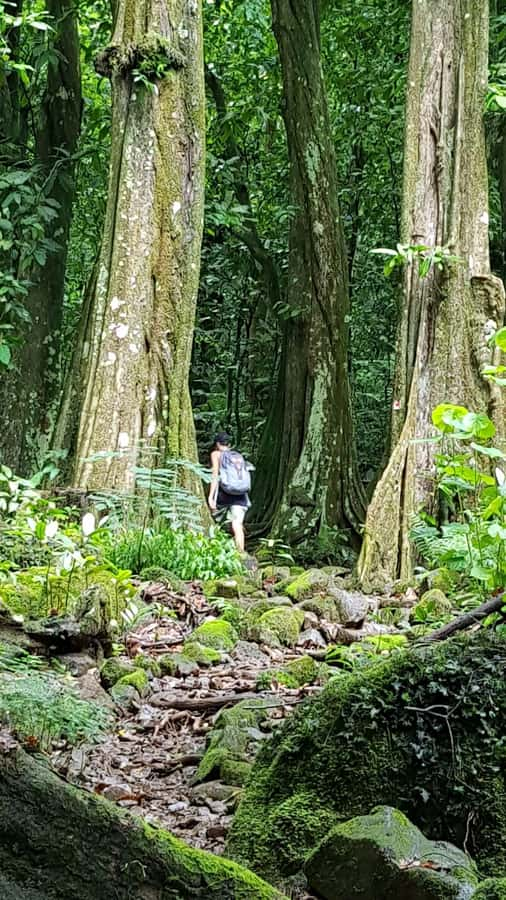
The archaeological stop at Opunohu is the heart of the tour. You walk through a site linked to the first Polynesians and hear about the people, customs, myths, and sacred practices connected with the area.
The walking portion is listed at about 45 minutes. Wear shoes with a good grip and expect an outdoor setting rather than a polished museum. Insect repellent is a sensible addition to your day bag, particularly because part of the route passes through forested areas.
The special feature here is the virtual reality presentation. You put on a headset on site and see archaeological reconstructions supported by the Department of Culture. The experience takes you back to the 17th century, with a marae ceremony and a naval battle in the bay.
That technology is not just a gimmick. Archaeological sites can be hard to read when structures are incomplete or worn by time. A reconstructed view gives you a clearer idea of how the village may have been arranged and how ritual activity shaped community life.
You should also expect the guide to add oral traditions and legends. That combination of archaeology, digital reconstruction, and spoken storytelling gives the stop more depth than either a technology demonstration or a standard guided walk alone.
The main limitation is that virtual reality may not suit everyone. If headsets make you uncomfortable, you can still listen to the guide and view the site, but the tour’s signature feature is designed around using the headset.
The Belvedere shows Moorea’s two famous bays
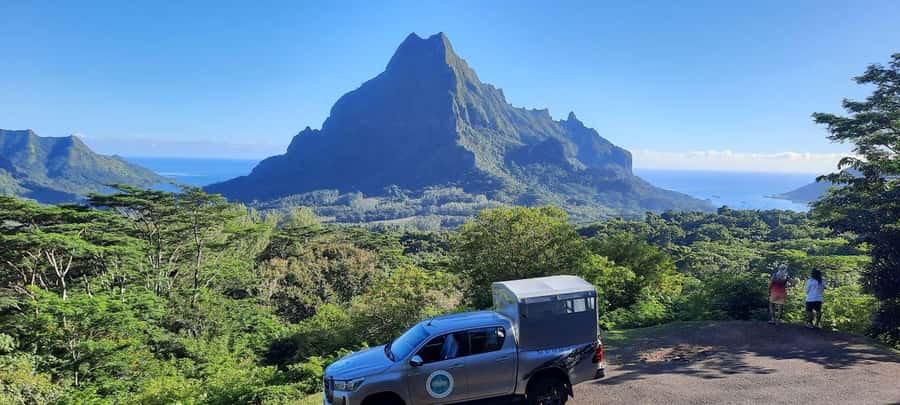
The route continues to the Belvedere Lookout, with about 15 minutes for photographs and views. From here, the panorama takes in Moorea’s two major bays, a scene that explains why the island is so often photographed.
This is another short stop, so use the time well. The view is the point, but the guide’s comments help connect the bays, mountains, roads, farms, and archaeological areas you have already seen.
The Belvedere is also a good moment to appreciate the route’s structure. You began near the coast, moved through the forest and crater, visited an archaeological site, and now see the island from above. In only a few hours, you get several different ways to understand Moorea’s shape and communities.
Missionary history gives the island another layer
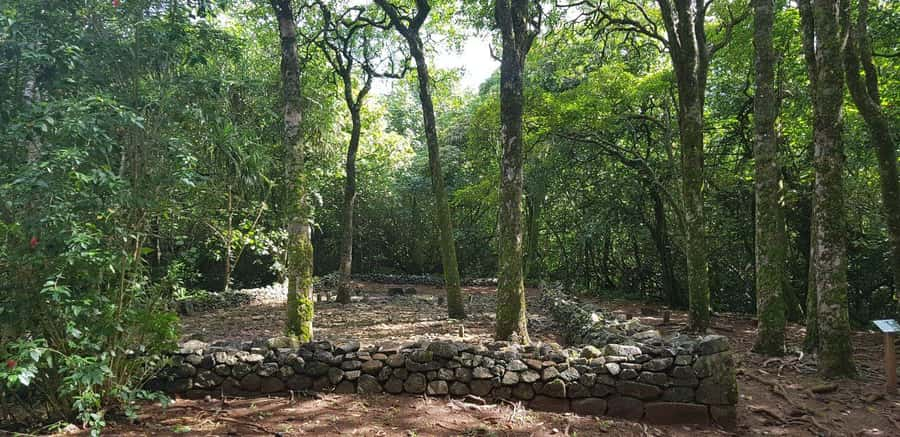
Moorea changed sharply after the arrival of the first Protestant and Catholic missionaries in the early 19th century. The tour includes the history of that period and visits to temples connected with the island’s religious life.
This part is important because it avoids presenting Polynesian culture as something frozen in the distant past. Moorea’s traditions, beliefs, communities, and buildings were affected by outside contact and new religions. Hearing that story on location gives you a better sense of how change took place.
The itinerary allocates about 20 minutes to a guided walk in this section. That is enough for an introduction, but not a full study of every church or denomination. Think of it as a concise chapter in the larger story rather than a specialist religious tour.
The final tasting ends the tour on a social note
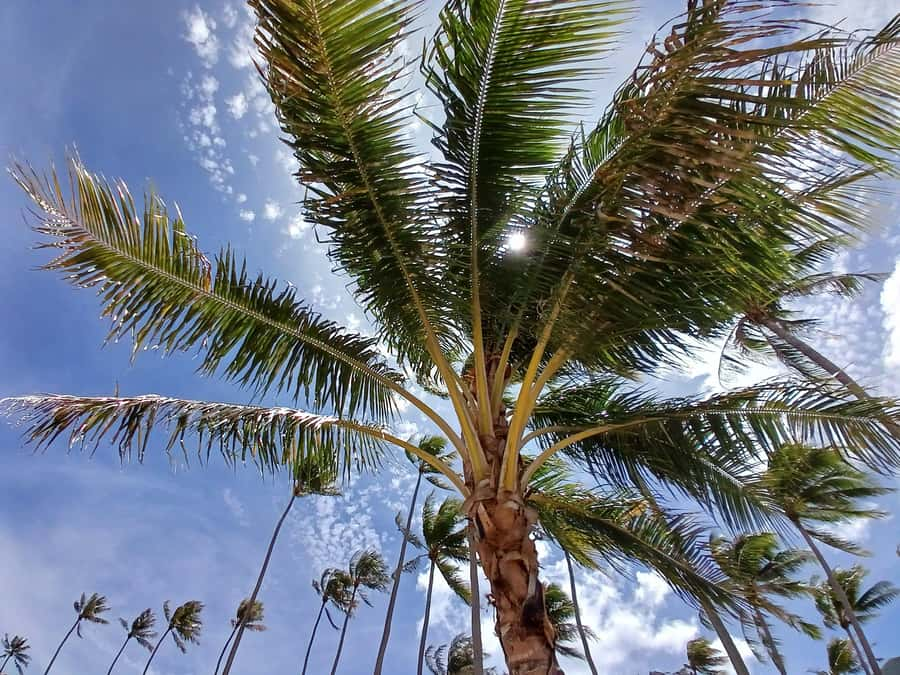
The closing stop is at the Rotui Juice Factory and Distillery, with about 20 minutes for a break, shopping, and tasting. The included refreshments feature fruit and juice, while the broader end-of-tour tasting is described as including tropical fruit juices, punch, and local beer.
This is a pleasant finish after the archaeological walk and viewpoints. It also gives you a chance to consider Moorea through its agricultural products. If you want to buy something, this is the planned shopping stop, so you do not need to squeeze purchases into the earlier viewpoints.
A meal is not included. That matters because four hours can span breakfast and lunch depending on your start time. Eat beforehand or plan food afterward rather than treating the tasting as a substitute for lunch.
What Christine adds to the experience
The guide is central here. Christine is praised for being friendly, patient, optimistic, and generous with her knowledge of Moorea. Her strongest skill appears to be explaining difficult subjects in a way that keeps the tour personal rather than academic.
You can expect information about Polynesian history and traditions, local myths, missionary influence, agriculture, and the uses of plant products. Her connection to the island also seems to shape the tone. This is not simply a sequence of facts delivered from a script. The tour is designed around sharing a place she cares about.
The language options are English and French. That is useful for mixed-language groups, and the small maximum of eight people should make it easier to ask questions. If you want a quiet sightseeing drive with little explanation, this may feel too talkative. If you want to understand what you are seeing, the commentary is the main reason to choose it.
Is $117 a fair price for four hours?
At $117 per person, the tour is not the cheapest way to see Moorea. Still, the price includes hotel pickup and drop-off, a live guide, a small group of no more than eight, fruit and juice tastings, and the virtual reality equipment.
The value depends on how you would otherwise spend your morning. If you rented a car, you would still need to find each viewpoint, understand the archaeological site, arrange transport, and learn the background yourself. A larger coach tour might cost less, but it could offer less personal time with the guide.
The VR feature is also hard to compare with a standard sightseeing drive. It gives the ancient village and marae ceremony a visual form that you would not get from a viewpoint alone. I would consider the price reasonable for someone who values history and local explanation, particularly if hotel transport saves you from arranging a vehicle.
You should not book it for a meal, beach time, or a relaxed resort morning. It is a packed educational outing with several stops and some walking.
Who should book, and who should skip it?
I would recommend this tour to you if you want a broad introduction to Moorea and prefer a guide to independent driving. It suits people interested in Polynesian culture, archaeology, agriculture, missionary history, and local legends, as well as anyone who wants scenic stops built into a single morning.
It is also a good fit for visitors who prefer small groups. Eight people is large enough for a social outing but small enough for direct questions and a more flexible feel than a full-size bus.
You should think carefully if you have back problems, limited mobility, or difficulty walking on outdoor paths. The activity is not suitable for wheelchair users, pregnant women, children under five, babies under one, or people over 70. The information also separately mentions people over 80, so anyone in an older age bracket should confirm suitability before paying.
Bring comfortable shoes, water, insect repellent, a camera, and clothes that are easy to walk in. The tour is offered with free cancellation up to 24 hours before departure, and you can reserve now and pay later, which helps if your island plans are still changing.
Should you book the Moorea Safari Nature and Culture Tour?
Book it if you want Moorea explained, not merely photographed. The best reasons are Christine’s warm and personal guiding, the archaeological site at Opunohu, and the VR reconstruction that gives Polynesian history a clear visual form.
Skip it if you want a slow day with long beach stops, a full meal, or no walking. For an active four-hour introduction, though, the route packs in an impressive amount: two bays, forest, farming, crater views, an ancient site, a Belvedere panorama, missionary history, and a final tasting. That is solid value for a first day on Moorea.
FAQ
How long is the Moorea Safari Nature and Culture Tour?
The tour lasts four hours. Pickup and drop-off at your Moorea hotel are included.
What languages does the guide speak?
The live tour is available in English and French.
How large is the tour group?
The group is limited to eight participants.
Is virtual reality included?
Yes. A VR headset is provided at the archaeological site so you can view reconstructions of an ancient village, a marae ceremony, and a naval battle.
Is food included?
No meal is included. Fruit and juice tastings are included, and the final tasting includes tropical drinks and local beverages. You should plan separate food if you need lunch.
What should I bring?
Bring comfortable shoes, water, a camera, comfortable clothes, and insect repellent.
Is the tour suitable for people with mobility restrictions?
No. The activity is not suitable for wheelchair users or people with mobility impairments. It is also not recommended for people with back problems, pregnant women, babies under one, children under five, or people over 70. The information also separately lists people over 80, so confirm eligibility if that applies to you.
Newest safaris around French Polynesia
- Private Full Day Lagoon Safari and Lunch on a Motu in Bora Bora★ 5.0 · 10 reviews
- Full-day Lagoon Safari Tour with Lunch in Bora Bora – Shared tour★ 5.0 · 74 reviews
- Half day lagoon safari tour in Bora Bora- Shared tour★ 5.0 · 118 reviews
- Private Safari Adventure Tour in Bora Bora with Local Guide★ 5.0 · 15 reviews
- Moorea:4X4 safari excursion between land and sea with lunch★ 4.7 · 28 reviews
- Bora Bora: Eco Shark and Snorkeling Safari★ 4.8 · 156 reviews
- Bora Bora: 1/2 day lagoon safari – Shared tour★ 4.8 · 163 reviews
- Bora Bora by Land and Sea: 4WD Safari and Snorkel★ 4.7 · 80 reviews
French Polynesia Safaris, compared.

Découvrez le Mana durant la traversée de Tahiti en 4×4 Safari
Read our review →

Half-Day Open-Air 4WD Safari with Hotel Transfers
Read our review →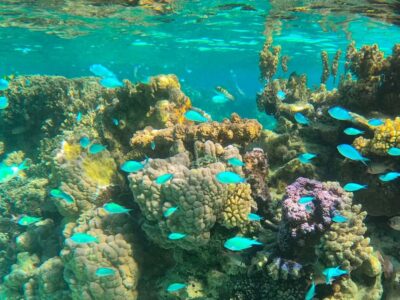

Half day lagoon safari tour in Bora Bora- Shared tour
Read our review →Browse the lists this tour appears in