
Review · ANCHORAGE, USA
Sunset Photo Safari
Bring your camera, then chase the light. Anchorage’s Sunset Photo Safari packs city views, wetlands, mountains, float planes, and a rushing creek into roughly four hours. Led by a professional photographer and capped at 10 people, it is built for visitors who want better pictures and a more personal look at Anchorage.
I especially like the small-group format, which gives you room to ask questions instead of being lost in a crowd. I also like the range of subjects, from migratory birds at Potter Marsh to slow-shutter water shots at McHugh Creek. The main drawback is that wildlife and dramatic sunset color are never guaranteed, and a rainy evening can change the feel of the outing.
At a glance
- Five very different photo stops: You move from the Anchorage skyline and Chugach Mountains to wetlands, a harbor, high mountain views, and a waterfall.
- Practical camera instruction: Guides can help with camera settings, composition, changing light, and slow shutter speeds.
- A maximum of 10 people: The group size supports questions and some adjustment to different skill levels.
- Hotel pickup may be available: Pickup and drop-off can be arranged, though the main meeting point is downtown.
- Wildlife is possible, not promised: Birds, moose, eagles, whales, and even belugas have been seen, but nature keeps its own schedule.
- Expect changing conditions: The outing runs in all weather conditions, so warm layers, rain protection, and mosquito spray are sensible.
Why this four-hour outing works
This is not simply a ride to a viewpoint. It is part sightseeing tour, part outdoor photography lesson, and part scavenger hunt for good light. The route gives you several chances to make useful pictures, even if the sunset fades behind clouds or wildlife stays out of sight.
That variety matters. A single scenic overlook can feel disappointing if the sky turns gray. Here, you might still come away with a bird photograph, a city panorama, a float plane image, and a waterfall shot that teaches you something new.
The instruction is aimed at real people with real cameras. You do not need to be an expert. Guides have helped beginners understand their camera controls, while more experienced photographers have received suggestions on composition and technique. One guide lent a tripod for a river photograph, and another taught slow shutter work at McHugh Creek.
The tour also works well for couples or families with mixed skill levels. A beginner can ask basic questions, while a more practiced photographer can work on exposure or composition. Since the group is limited to 10 people, it should be easier to get individual help than on a large sightseeing bus.
More Sunset Safaris in the USA
- 3 Hour Off-Road Sunset Safari to Grand Canyon with Entrance Gate Detour
★ 5.0 · 904 reviews - 2-Hour Sunset Safari Eco Cruise on the Osprey from Cape May
★ 5.0 · 215 reviews - Grand Canyon: Off-Road Sunset Safari with Skip-the-Gate Tour
★ 4.6 · 171 reviews
Point Woronzof and the Anchorage skyline
The first stop is Point Woronzof, described as the Anchorage Viewpoint. From here, you photograph the city with the Chugach Mountains behind it. It is a useful opening because you can begin with a broad scene before dealing with smaller, more active subjects.
Your guide can help you frame the skyline, mountain range, and evening light together. This is also a good moment to get a feel for how your camera handles a bright sky beside darker landforms. If you normally use automatic settings, ask how the camera is reading the scene and how exposure changes as the light drops.
The stop lasts about 20 minutes. That is enough time for several compositions, but not enough for a long, patient search for the perfect cloud or reflection. Think of it as a quick orientation to Anchorage’s setting rather than a full sunset session.
The skyline can also look quite different depending on the weather. Clear air may give you strong mountain detail. Rain or cloud can flatten the view, though soft light can still produce pleasing photographs. The tour does not promise a blazing sunset, so keep your expectations flexible.
Potter Marsh for birds and wildlife
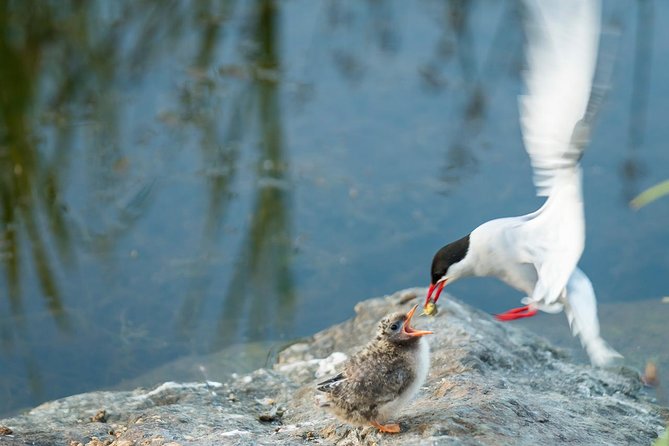
Potter Marsh Bird Sanctuary is one of the most useful stops for anyone hoping to add wildlife to a scenic photo collection. The wetland formed by construction of the Alaska Railroad and now serves as an important migratory bird nesting area.
You will have about 30 minutes here to look for birds and other wildlife. The stop gives you a break from wide views and asks you to pay attention to movement, distance, and timing. A professional photographer can help you decide when to use a faster shutter speed for a bird in motion, or how to frame a still subject among reeds and open water.
Wildlife sightings are a bonus, not the foundation of the tour. Past outings have included eagles and a female moose at close range, and one evening included a beluga whale sighting. Another outing produced very little wildlife because the conditions did not cooperate. That is normal in Alaska, where animals are not actors waiting at marked stops.
If wildlife is your only reason for booking, this may feel uncertain. If you want a chance to practice wildlife photography while also seeing Anchorage’s wetlands, Potter Marsh earns its place on the route.
Glen Alps and sunset above Anchorage
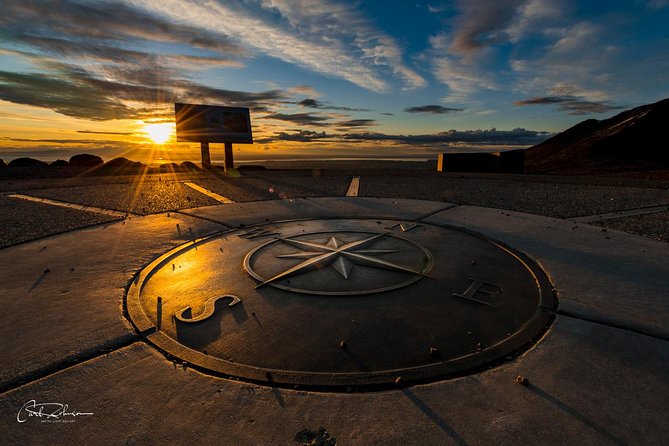
The Glen Alps area of Chugach State Park is the high point of the tour, both literally and photographically. Here you photograph wide views over Anchorage and Cook Inlet as the evening light changes.
This is likely to be the stop that most clearly feels like an Alaska postcard. The open view gives you room to work with layers: foreground, city, water, and distant mountains. Your guide can help you choose a composition that does not simply place the horizon across the middle of the frame.
Plan for colder and windier conditions here than in town. One couple returned to the vehicle grateful for hot chocolate after a chilly, windy mountain stop. That small detail says plenty about the need for warm clothing, even during summer.
The listed time is about 30 minutes, though the exact feel of the stop depends on the light. One guide stayed for the afterglow, which can be more subtle and attractive than the brightest part of sunset. If the sky is clear, you may get strong color. If clouds move in, you may instead work with moody layers and softer contrast.
State Park fees are included in the price. That saves you from handling an extra admission charge during the evening.
Same region, a very different drive:
- Grand Teton Wildlife Safari in a Enclosed or Open-Air Vehicle (season dependent)
★ 5.0 · 1,212 reviews - Everglades Airboat Safari Adventure with Transportation
★ 3.0 · 956 reviews - Kauai Deluxe Waterfall Safari: Helicopter Tour
★ 5.0 · 900 reviews - Wild Florida Drive-Thru Safari and Gator Park Admission
★ 4.5 · 892 reviews
Lake Hood and Alaska’s float planes
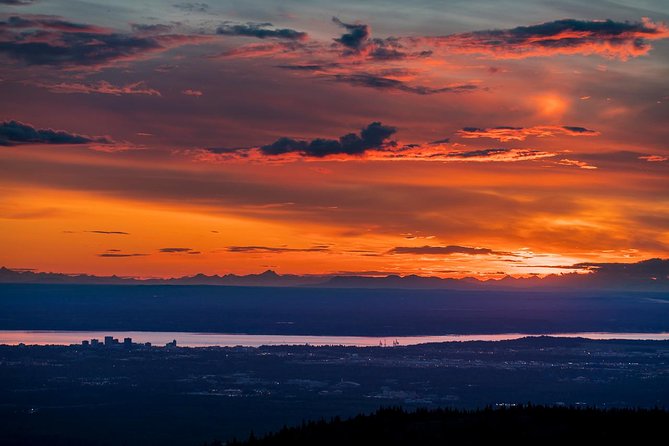
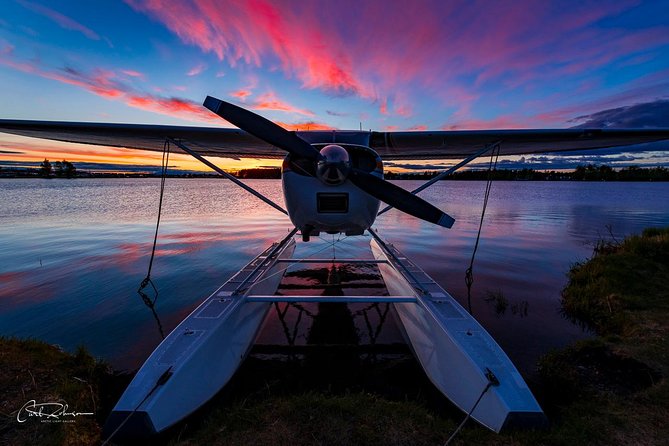
At Lake Hood Harbor, the subject changes completely. This is the world’s busiest seaplane base, and the goal is to photograph Alaska’s iconic float planes.
The stop lasts about 25 minutes. You will have a chance to work on a different kind of image, one with machinery, water, shoreline details, and recognizable local character. Float planes are more than a scenic prop here. They are part of the way people reach remote parts of Alaska, so this stop gives your photo set a stronger sense of place.
Your guide may help you think about reflections, lines, and timing as planes sit on the water. The harbor also gives you a useful change of pace after the broad mountain view at Glen Alps. You are no longer waiting for a distant sunset or animal. The subject is closer and more defined.
This is a particularly good stop if your Alaska photos have begun to look like a string of mountains. A float plane image adds something distinctly local and helps show how Anchorage connects to the wider state.
McHugh Creek and slow shutter technique
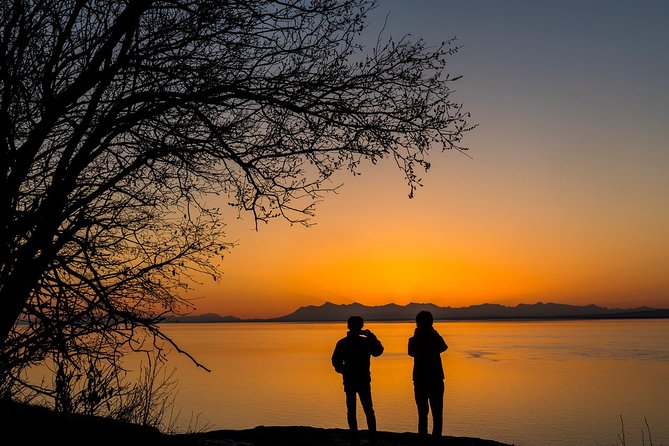
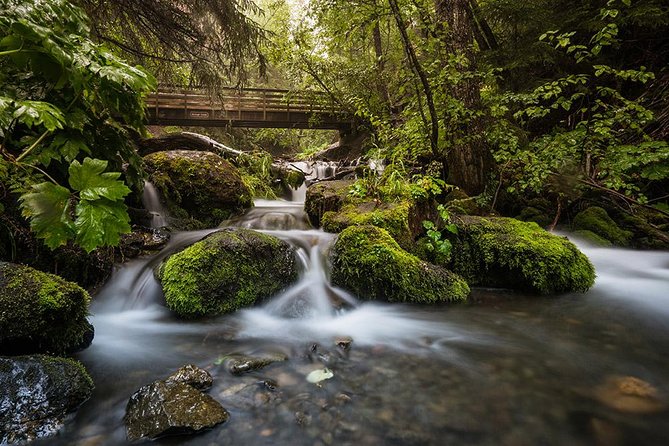
The final listed stop is McHugh Creek Recreation Area, where water runs down a craggy mountainside. You will learn how to use a slow shutter speed to blur the moving water and create a smoother, more deliberate image.
This is one of the tour’s most useful lessons because it applies well beyond Alaska. A slow shutter can turn an ordinary stream into a photograph with motion and texture, but it also requires care with camera stability and exposure. A tripod can help, and one guide has lent one when needed.
The 30-minute stop should give you time to try several settings. You can compare a faster exposure that freezes the water with a slower one that softens it. Ask your guide to explain why the settings change as the available light fades.
The creek also provides a safer fallback if the sunset is underwhelming. Even on a cloudy evening, moving water remains a workable subject. Watch your footing, though. The tour is not recommended for people with severe mobility problems, and uneven ground can make this stop less comfortable.
The guides make the difference
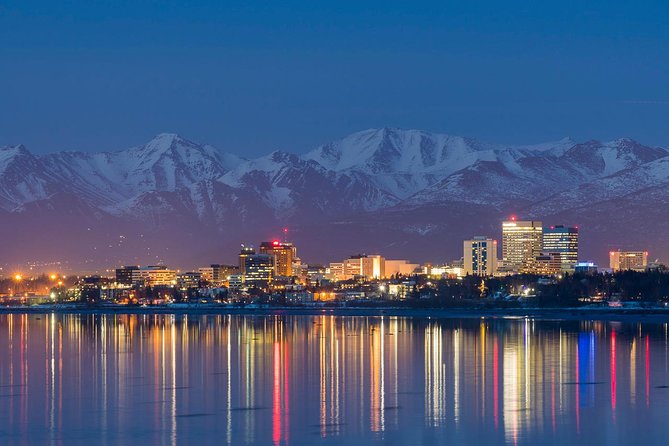
The strongest part of the experience is the guide’s ability to combine local knowledge with camera instruction. Colin has helped people improve their gear settings and look for photographs they were not initially seeking. Tyler has shared both photography advice and a broad understanding of Anchorage and Alaska.
Ben has earned particular praise for patience, practical tips, and local knowledge. He has suggested different ways to photograph a river, helped set up a walk to an overlook, and supplied hot chocolate after a cold mountain stop. Jody has been good at adjusting suggestions for people with different skill levels, while Harry Walker has shaped the outing around what each couple wanted from the evening.
You should tell your guide your experience level and what you hope to photograph at the start. If you want camera instruction, say so clearly. If you mainly want scenic views with occasional advice, say that instead. The small group makes this kind of adjustment more realistic.
The experience is offered in English. Bring the camera you actually know how to use, but do not worry if you are still learning. The instruction is practical rather than formal, and the stops give you immediate chances to try each suggestion.
Is $195 a fair price?
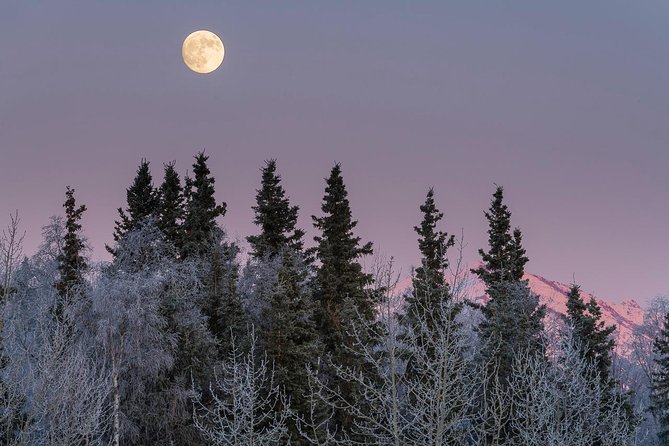
At $195 per person, this is not a cheap evening drive. The value comes from combining transport around several Anchorage locations, a professional photographer guide, a local guide, state park fees, snacks, and possible hotel pickup.
For someone who already owns camera gear and wants help using it, the price can make sense. A private photography lesson could cost a similar amount, while this outing adds several locations and local sightseeing. The small group also means you are paying for access to instruction, not just a seat in a vehicle.
The value is weaker if you only want a quick sunset viewpoint or if you are unlikely to use the camera advice. You can see Anchorage’s public views for less on your own, but you would need to arrange transportation, choose the stops, judge the light, and figure out the camera settings yourself.
The experience is booked an average of 114 days ahead, so summer dates may fill early. That advance demand is worth noting if your Anchorage schedule is fixed.
Pickup, timing, and what to bring
The main meeting point is the Visit Anchorage Log Cabin Visitor Information Center at 546 West Fourth Avenue. The outing ends back at the meeting point. Hotel pickup and drop-off are available if you select that option or arrange it with the provider.
Airbnb pickup is limited to homes near a hotel in the Downtown, Midtown, or Spenard areas. Confirm this before assuming a private rental qualifies.
Bring warm layers, rain protection, and mosquito spray. One outing had enough mosquitoes to make repellent a useful reminder, while another became cold and windy in the mountains. The tour operates in all weather conditions, so you should dress for more than a mild city evening.
A tripod may be useful, but it is not essential if the guide can lend one. Snacks are included. Service animals are allowed, and the activity is near public transportation. Most people can participate, but it is not recommended for children aged 8 and under or people with severe mobility problems.
The provider offers free cancellation up to 24 hours before the start time. If poor weather causes a cancellation, you can choose another date or receive a full refund. The same applies if the minimum number of participants is not met.
Who should book the Sunset Photo Safari?
I would recommend this outing most strongly to photographers who want hands-on guidance without committing to a full private tour. It also suits couples, families with older children, solo visitors, and anyone who wants to see several parts of Anchorage in one evening.
It is a good fit if you want to learn how to handle changing light, wildlife, moving water, and wide mountain views. It is less suitable if you need guaranteed animals, a guaranteed colorful sunset, or a completely easy-access sightseeing trip.
Book it if you see the camera lesson as part of the value. The best result may not be one perfect sunset photograph. It may be returning home able to make better photographs in many different conditions, with a handful of distinctly Alaskan scenes to show for the evening.
FAQ
How long does the Sunset Photo Safari last?
The experience lasts approximately four hours.
Where does the tour start?
The primary meeting point is the Visit Anchorage Log Cabin Visitor Information Center at 546 W 4th Avenue in Anchorage.
Where does the tour end?
The activity ends back at the meeting point.
Is hotel pickup available?
Yes. Hotel pickup and drop-off are available if that option is selected or arranged. Airbnb pickup is limited to homes near hotels in the Downtown, Midtown, or Spenard areas.
How many people can join the tour?
The maximum group size is 10 people.
Is photography instruction included?
Yes. A professional photographer guide provides tips for improving your photographs and can help with camera technique.
What places does the tour visit?
The route includes Point Woronzof, Potter Marsh Bird Sanctuary, Chugach State Park near Glen Alps, Lake Hood Harbor, and McHugh Creek Recreation Area.
Is wildlife guaranteed?
No. The route offers chances to photograph birds and wildlife, but sightings depend on conditions and animal activity.
What happens if bad weather cancels the tour?
You will be offered a different date or a full refund if the provider cancels because of poor weather.
More Evening Trips in the USA
- Half Day Group Sunset Wildlife Safari
★ 5.0 · 134 reviews - Dubai Evening Desert Safari BBQ Dinner & Transfer to Noble Camp
★ 5.0 · 4,365 reviews - Abu Dhabi Evening Desert Safari BBQ, Camel Ride, Entertainments
★ 5.0 · 2,790 reviews - Evening Dubai Safari with BBQ, Dance Shows & Quad Biking optional
★ 5.0 · 2,349 reviews
Newest safaris around the USA
- 3 Hour See Crystal River Wildlife Safari Boat Cruise★ 4.5 · 25 reviews
- Northern Yellowstone Safari from Cody, WY★ 4.5 · 24 reviews
- Red Canyon Wild Mustang Tours And Safaris In Cody Wyoming★ 5.0 · 27 reviews
- Wetlands Safari Eco-Cruise in Cape May (Osprey Birding By Boat)★ 5.0 · 113 reviews
- Private Yellowstone Winter Wolf Watching and Wildlife Safari★ 5.0 · 26 reviews
- Yellowstone Winter Wildlife & Snowshoe Tour | PRIVATE★ 5.0 · 19 reviews
- Yellowstone Snowshoe Safari from Bozeman – Private Tour★ 5.0 · 18 reviews
- Yellowstone Wildlife Safari from Bozeman – Private Tour★ 5.0 · 140 reviews
Sunset & Sunrise Safaris, compared.
Sunrise Desert Jeep Safari with Wildlife Experience
Read our review →
3 Hour Off-Road Sunset Safari to Grand Canyon with Entrance Gate Detour
Read our review →
Sunset Desert Safari, ATV, Camel Ride and Sandboarding
Read our review →
dolphin safari and sightseeing in Brijuni at sunset
Read our review →
Sunset Desert Safari Quad bike Camel ride Sand Board & BBQ Dinner
Read our review →
Sunset Desert Safari with Camel Ride & Sandboarding
Read our review →
Cappadocia ATV Safari: Explore Valleys by Day or Sunset Glow
Read our review →Browse the lists this tour appears in