
Review · BOZEMAN, USA
Yellowstone Wildlife Safari in Lamar Valley from Bozeman
Wildlife rewards patience in Yellowstone. This long day from Bozeman puts the emphasis on finding animals, not simply checking off famous sights, with a professional naturalist guide, quality binoculars, and spotting scopes helping you make sense of distant movement. I especially like the small group of up to eight and the chance to follow current sightings rather than stick to a rigid route. The locally sourced picnic lunch and snacks are another thoughtful touch. The main drawback is the early 6:00 a.m. start and the long 10 to 11 hour day, with no hotel pickup included.
I also like that the guide can shape the outing around your priorities, weather, road conditions, and wildlife activity. Guides such as Allen, Grant, and other experienced Yellowstone staff have earned praise for patience, animal knowledge, and good driving judgment. Still, this is not a private tour, and stops such as Tower Fall or Petrified Tree are not guaranteed. You pay $350 per person, plus the Yellowstone entrance fee.
Key points to know before booking
- Wildlife comes first: The guide may adjust the route to chase current sightings and avoid road delays.
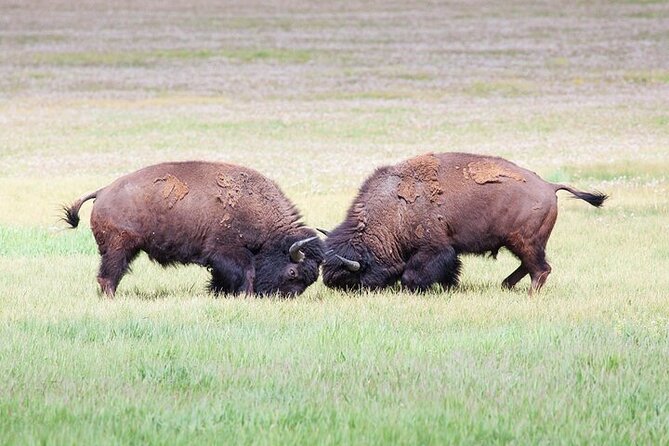
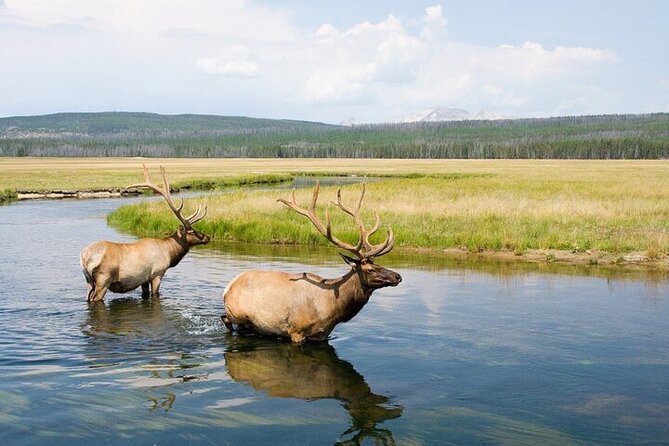
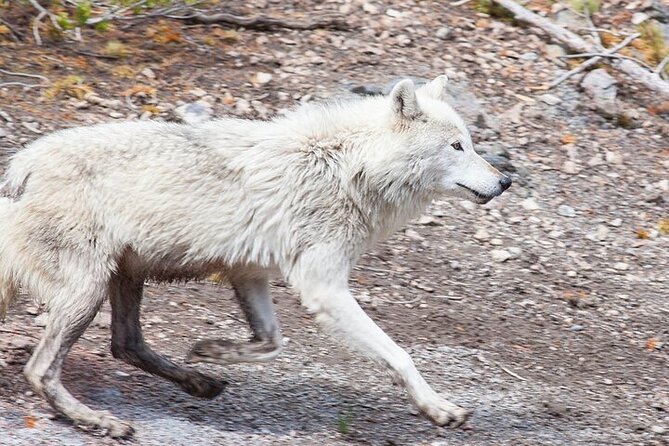
- Lamar Valley is the main event: Plan on several stops and about two hours searching for bison, elk, bears, wolves, coyotes, pronghorns, and other animals.
- Optics are supplied: UHD binoculars and spotting scopes make a real difference when animals are far across the valley.
- It is a full day: The tour leaves a Bozeman café at 6:00 a.m. and returns to the same meeting point after roughly 10 to 11 hours.
- Food is covered: You receive a locally sourced picnic lunch, snacks, and non-alcoholic drinks.
- The route changes: Weather, roadwork, traffic, and your own wildlife priorities can alter the planned stops.
Why this Yellowstone safari works
Yellowstone can be frustrating if you arrive with a short list of animals and expect them to appear on schedule. This safari takes a more sensible approach. Your guide watches the conditions, listens to what you hope to see, and adjusts the day when possible.
That matters most in the Lamar Valley, where animals may be spread across a broad area. A quick roadside stop can reveal nothing to the naked eye, while a trained guide with a spotting scope may locate a wolf, bear, or distant herd. The supplied UHD binoculars and scopes save you from carrying your own equipment and give you a better chance of seeing details.
The tour is also useful if you want more than animal sightings. Guides explain geology, park history, animal behavior, and the role of the Yellowstone River and Lamar ecosystem. The best moments are not only the dramatic ones. You may spend time learning how to scan a hillside, recognize a herd, or tell where an animal has recently moved.
The trade-off is time. Bozeman is outside the park, so getting to the North Entrance takes a good part of the morning. You are paying for a serious field day, not a quick half-day excursion.
More Wildlife Safaris in the USA
- Grand Teton Wildlife Safari in a Enclosed or Open-Air Vehicle (season dependent)
★ 5.0 · 1,212 reviews - Half-Day Wildlife Safari Tour in Grand Teton National Park
★ 5.0 · 341 reviews - Half Day Grand Teton Wildlife Safari Tour
★ 5.0 · 259 reviews
The 6:00 a.m. start from Bozeman
The meeting point is Café M at 777 E. Main Street in Bozeman. The tour begins at 6:00 a.m. and ends back there, with the full outing lasting about 10 to 11 hours.
That early start is practical for wildlife watching. Morning can be a productive time for animal activity, and leaving early gives the guide more daylight for the long route through the northern part of Yellowstone. It also gives you a better chance of reaching the Lamar Valley before the day feels rushed.
You should plan your morning carefully. Hotel pickup and drop-off are not included, so you need to reach the café on your own. If your child needs a car seat, you must bring it. Children aged eight and older may join, but the long drive and early departure may suit older children better than younger ones.
The vehicle carries no more than eight participants. That is small enough for the guide to hear your questions and learn what you want to see, though it is not the same as having a private vehicle. The tour is offered in English.
Entering Yellowstone through the North Entrance
The route enters Yellowstone through the North Entrance near Gardiner, Montana. The entrance area gives the day a strong sense of place, especially when paired with the Roosevelt Arch just outside the park.
The arch was built in 1903 from hexagonal blocks of columnar basalt and rises 52 feet high. It was intended as a grand gateway to the first national park, and it remains one of the most recognizable markers of the northern approach.
You may stop here for about 30 minutes, but the exact visit depends on the day’s wildlife plan and road conditions. That flexibility is useful, though it means you should not treat every listed stop as guaranteed.
The Yellowstone entrance fee is not included. The supplied price is $20 per person. Admission arrangements can matter when comparing this tour with other options, since the advertised $350 rate is not the final total.
Paradise Valley and the Yellowstone River
On the way to the North Entrance, the route passes through Paradise Valley in Montana. About 90 minutes is assigned to this section, though the exact timing can shift with traffic and the guide’s plan.
Paradise Valley gives you a long look at the open country between Bozeman and Yellowstone. It is not merely a transfer from one point to another. The guide can use the drive to explain the surrounding area and prepare you for the park’s wildlife country.
The Yellowstone River is another possible stop, with about 30 minutes set aside. The river begins in the Absaroka Range, passes through Yellowstone and Paradise Valley, and continues across Montana toward the Missouri River. Its tributaries and trout waters support many species in the Greater Yellowstone ecosystem.
This is one of the places where the guide’s skill matters. A river stop may be scenic, but it can also become a wildlife search. Keep your eyes open rather than assuming every stop is only for photographs.
Same region, a very different drive:
- Everglades Airboat Safari Adventure with Transportation
★ 3.0 · 956 reviews - 3 Hour Off-Road Sunset Safari to Grand Canyon with Entrance Gate Detour
★ 5.0 · 904 reviews - Kauai Deluxe Waterfall Safari: Helicopter Tour
★ 5.0 · 900 reviews - Wild Florida Drive-Thru Safari and Gator Park Admission
★ 4.5 · 892 reviews
Mammoth Hot Springs and the park’s volcanic past
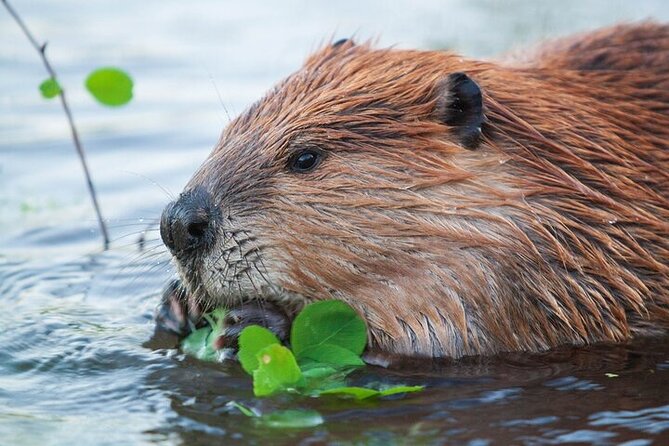
Mammoth Hot Springs is a strong contrast to the open grasslands of Lamar Valley. Its pale travertine terraces form as mineral deposits build up around hot water. Algae in the pools adds brown and reddish shades.
A visit here may last about an hour. That is enough time to take in the terraces and hear an explanation of the geothermal forces at work, though it is not an extended walking visit. The surfaces and water are delicate and dangerous, so follow posted routes and guide instructions.
Mammoth is also close to the northern entrance, making it a practical stop on an upper-loop style day. Still, if wildlife activity is unusually good elsewhere, the guide may shorten or skip it. You should tell the guide at the start what matters most to you. If bears and wolves are your priority, you may prefer less time at a scenic or geological stop.
Tower Fall and Petrified Tree
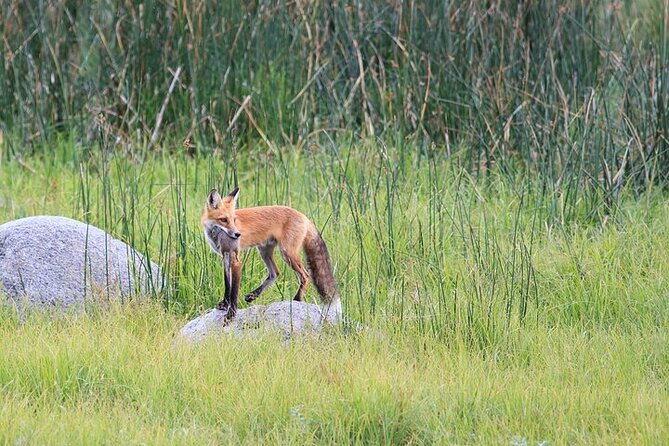
Tower Fall is another possible stop in northern Yellowstone. The waterfall is named for the rock pinnacles at its brink, and erosion is slowly moving the falls upriver. You will not see that movement during a visit, but the fact adds a useful bit of geological perspective.
The planned visit is about 30 minutes. That makes it a worthwhile short break, especially after time in the vehicle. The drawback is that it may not fit the day if roadwork, traffic, or animal sightings demand a different schedule.
Petrified Tree offers another view of Yellowstone’s volcanic past. The petrified redwood seems surprising in the modern park, but it is a natural remnant from a much older period. A guide can connect the tree to the region’s changing geology rather than treating it as an isolated curiosity.
This stop is also listed for about 30 minutes and may be omitted. That is not a flaw in the tour so much as a reminder that this is a wildlife safari with optional scenic and geological stops, not a fixed sightseeing circuit.
Slough Creek: learning to search for animals
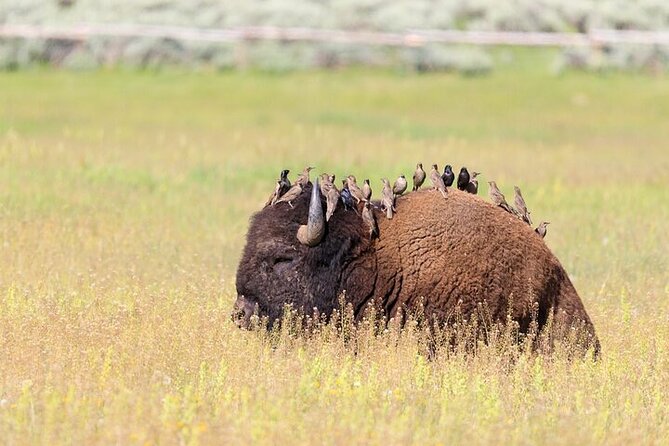
Slough Creek is a tributary of the Lamar River that begins in the Absaroka Range. The surrounding watershed supports varied plant and animal life, so the area is useful for repeated wildlife searches.
About 30 minutes is assigned here, but the guide may make several short stops in the wider area. That is better than pulling over once, taking a quick photograph, and moving on. Wildlife watching often means scanning with binoculars, waiting, and checking the same area from another angle.
This is where the safari format earns its keep. A naturalist guide can help you understand why an animal might be near water, high ground, or open grass. You may see nothing dramatic at one stop and then find a moving herd a few minutes later.
The guide’s temperament matters here. Feedback about Allen and Grant points to patient, engaging instruction, with guides willing to answer questions and give each person attention. In a group of eight, that personal approach can make the difference between feeling hurried and feeling involved.
Lamar Valley and the best chance for wildlife
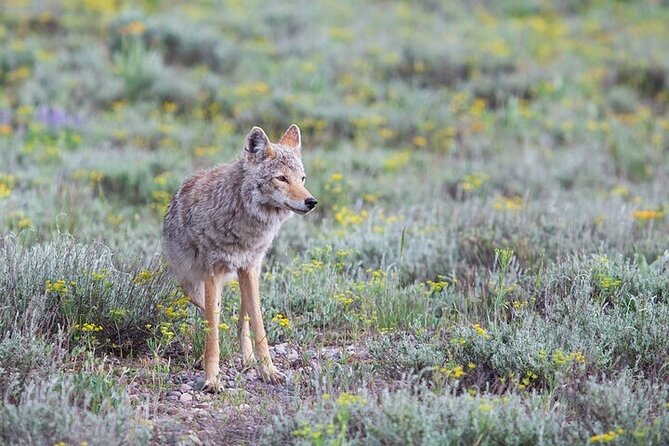
Lamar Valley is the heart of the outing. It lies in northeastern Yellowstone and is famous for its wide views and large range of wildlife. The valley is often called the Serengeti of North America, a nickname that reflects its open setting and concentration of animals.
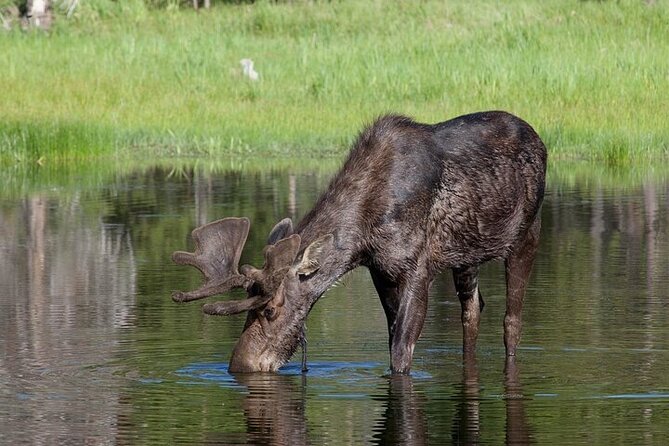
You can expect several stops here and roughly two hours devoted to searching. That time may produce bison, elk, pronghorns, coyotes, wolves, black bears, grizzly bears, mountain goats, sandhill cranes, and other species. Sightings are never guaranteed, but the route and equipment give you a stronger chance than a casual drive through the park.
Bring patience. An animal may be too far away for a phone camera, which is why the spotting scope matters. The supplied optics also let several people take turns without everyone crowding around one small pair of binoculars.
The best reported days have included grizzly and black bears, a wolf, coyotes, bison, pronghorns, sandhill cranes, elk, and mountain goats. Those are exceptional lists, not promises, but they show what a full day in the right conditions can deliver.
You should also expect quiet stretches. A safari does not mean nonstop action. The guide may spend time studying distant hillsides or stopping where tracks and animal movement suggest a possibility. If you need constant sightseeing, this may feel slow. If you enjoy the search itself, it is a major strength.
Albright Visitor Center and Mammoth’s park story
The Albright Visitor Center is housed in a historic building that once served as quarters for cavalry troops protecting Yellowstone before the National Park Service was created. A planned stop of about 30 minutes adds context to the park beyond scenery and animals.
This is a useful pause during a long day. You can learn how Yellowstone was managed before the modern park service and see how the northern area developed. It also gives you a chance to stretch before the return drive.
As with the other named stops, the guide may leave it out if wildlife sightings, construction, or weather make another plan wiser. You should view the itinerary as a menu of possibilities rather than a checklist.
Lunch, snacks, and vehicle time
The tour includes a picnic lunch sourced locally with seasonal ingredients. It is packaged in recyclable and compostable materials, and snacks are also provided, with local and organic choices when possible. Non-alcoholic drinks are included.
This has real value on a remote, full-day route. You do not need to spend time finding a restaurant or risk losing a productive wildlife window. One detailed account described lunch beside a lake, though the exact picnic setting will depend on the day’s route and weather.
The food also helps justify part of the price. You are not simply paying for transport into the park. You are paying for a guide, wildlife equipment, food, drinks, and a carefully managed day in a place where distances are large and services are limited.
Is $350 a fair price?
At $350 per person, this is not a budget park outing. It becomes easier to justify if you value expert guiding, a small group, supplied optics, and a full day focused on wildlife.
A self-drive visit may cost less, especially if you already have a vehicle and park access. But you would need to plan the route, watch road conditions, carry food, find animals without professional equipment, and drive for many hours. The tour shifts those tasks to someone with thousands of hours in the field.
The value is strongest for first-time Yellowstone visitors, photographers who need help locating animals, couples seeking a special day, and anyone who does not want to handle the driving. One honeymoon outing received especially warm praise for finding every animal on the couple’s wish list, though you should remember that wildlife can never be promised.
Group discounts may be available. The $20 park entrance fee is extra, and the tour is not private. If you want control over every stop or need a custom pace, ask about private options before booking.
Who should book this day in Yellowstone?
I would choose this safari if wildlife is your top goal and you have only one serious day for northern Yellowstone. The guide-led format is particularly helpful if you do not own binoculars or a spotting scope.
It also suits couples, families with children aged eight and older, and small groups that value explanation as much as photographs. Guides have been praised for being friendly, patient, and willing to engage with everyone in the vehicle.
I would hesitate if you dislike early mornings, long drives, or waiting quietly for distant animals. I would also hesitate if your main aim is to visit a fixed list of waterfalls and geothermal sights. The route changes, and wildlife conditions lead the schedule.
The tour needs good weather and a minimum number of participants. If poor weather or low enrollment forces cancellation, you can choose another date or receive a full refund. You can cancel for a full refund up to 24 hours before the start time, but late cancellations and changes are not accepted.
Should you book it?
Book this tour if you want a well-supported wildlife day rather than a simple ride through Yellowstone. The strongest reasons are the small group, field-tested guides, spotting scopes, and flexible route. The combination gives you a better chance of seeing animals and understanding what you are looking at.
Skip it if you need hotel pickup, a private vehicle, or a guaranteed stop at every attraction listed. For everyone else, the $350 price can be fair, especially when lunch, snacks, drinks, and optics are included. Tell your guide your top priorities early, arrive ready for a 6:00 a.m. start, and treat the day as a search rather than a promise. That is the right mindset for Lamar Valley.
FAQ
Where does the Yellowstone wildlife safari begin?
The tour begins at Café M, 777 E Main Street, Bozeman, Montana, at 6:00 a.m.
Where does the tour end?
The activity ends back at the Bozeman meeting point.
How long does the safari last?
The experience lasts approximately 10 to 11 hours.
Is the Yellowstone entrance fee included?
No. The Yellowstone National Park entrance fee is listed as $20 per person and is not included.
Is hotel pickup and drop-off provided?
No. Hotel pickup and drop-off are not included. You must reach the Bozeman meeting point yourself.
How many people can join the tour?
The maximum group size is eight travelers.
Are binoculars and spotting scopes provided?
Yes. The tour includes UHD binoculars and spotting scopes for wildlife viewing.
Can children join the safari?
Children aged eight and older may participate. If your child needs a car seat, you must bring it with you.
Newest safaris around the USA
- 3 Hour See Crystal River Wildlife Safari Boat Cruise★ 4.5 · 25 reviews
- Northern Yellowstone Safari from Cody, WY★ 4.5 · 24 reviews
- Red Canyon Wild Mustang Tours And Safaris In Cody Wyoming★ 5.0 · 27 reviews
- Wetlands Safari Eco-Cruise in Cape May (Osprey Birding By Boat)★ 5.0 · 113 reviews
- Private Yellowstone Winter Wolf Watching and Wildlife Safari★ 5.0 · 26 reviews
- Yellowstone Winter Wildlife & Snowshoe Tour | PRIVATE★ 5.0 · 19 reviews
- Yellowstone Snowshoe Safari from Bozeman – Private Tour★ 5.0 · 18 reviews
- Yellowstone Wildlife Safari from Bozeman – Private Tour★ 5.0 · 140 reviews
Big Five & Wildlife Safaris, compared.
Sunrise Desert Jeep Safari with Wildlife Experience
Read our review →
Addo Elephant National Park All Inclusive Full-Day Safari
Read our review →
Big Five Game Reserve Wildlife Safari from Cape Town
Read our review →
Big Five Safari and Breede River Valley Guided Day Trip
Read our review →

Browse the lists this tour appears in