
Review · ARUSHA, TANZANIA
2 days Tarangire and Ngorongoro short safari
Two parks, one very full safari day. This short Tanzania safari combines Tarangire’s elephant country and baobab trees with the wildlife-packed Ngorongoro Crater. I like the private vehicle arrangement, since your group can travel together without sharing the experience with strangers, and I like the strong mix of scenery, animals, and local guiding.
The two park days are carefully packed, with meals, accommodation, water, park costs, and an English-speaking guide included. My main caution is time: eight hours on the first safari day and nine hours on the second can feel tiring, especially with the road journey back to Arusha after Ngorongoro.
Key points to know before booking
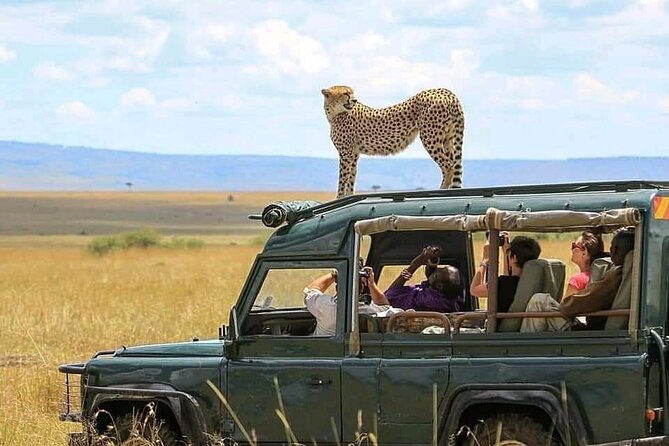
- Tarangire’s elephants and baobabs: The first park is famous for large elephant herds and distinctive old baobab trees.
- Ngorongoro Crater wildlife: A full day inside the caldera offers a strong chance to see buffalo, hippopotamuses, lions, elephants, and possibly black rhinoceros.
- Private travel: Only your own group takes part, with private transportation provided.
- Meals and water included: Full-board accommodation, six listed meals, and at least three liters of mineral water per day are part of the package.
- A demanding schedule: The tour lasts about two days, but both days are long, with eight and nine hours of activity.
- A solid short-safari score: The experience has a 4.5 rating and a 91 percent recommendation level from 11 published ratings.
Why this two-day route works
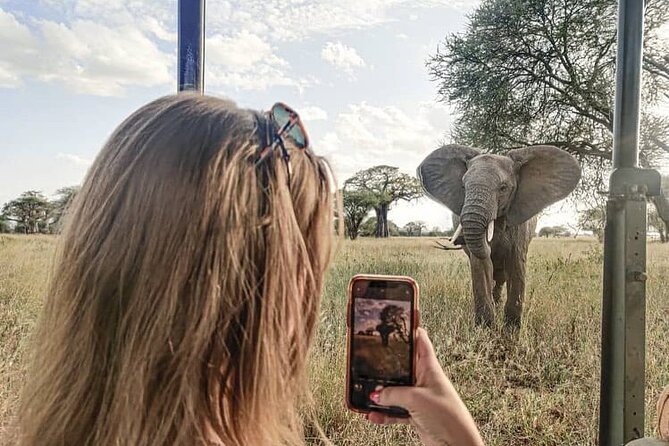
A two-day safari cannot cover every major park in northern Tanzania. That is not really the point. This route gives you two very different wildlife settings in a compact package.
Tarangire is open and dramatic, with elephants, baobabs, and seasonal animal movement. Ngorongoro feels enclosed and concentrated. Once you descend into the crater, the high walls create a natural bowl where many large animals live. You get variety without stretching the trip into a week.
I would consider this route if you are based in Arusha and have limited time before or after another Tanzanian activity. It also suits you if you want a private safari rather than a large shared departure. The schedule is short, but it is not light. You need to be comfortable with early movement, long road hours, and repeated time in a safari vehicle.
The price is listed at $1,100 per person. That is not a casual day-trip price, but the value depends heavily on what is included. Here, the package covers private transportation, fees and taxes, an English-speaking guide, accommodation, meals, and daily water. International flights, visas, alcoholic drinks, soft drinks, and tips are separate.
Before paying, I would ask for the exact accommodation name and room arrangement. The package says full board accommodation, but it does not identify the property or say whether the night is in a lodge, tented camp, or another type of stay. That detail can make a large difference to how you judge the price.
A few more safaris around Arusha worth a look
- 2 Days Tarangire and Ngorongoro Group Camping Safari
★ 5.0 · 146 reviews - 2 Days Group Joining Camping Safari Tarangire Park and Ngorongoro Crater
★ 4.5 · 28 reviews - 2 days Mid Range Safari in Ngorongoro and Tarangire Big 5 Parks
★ 5.0 · 27 reviews
Day one: Arusha to Tarangire National Park
The safari begins after breakfast. You first stop in Arusha for any last-minute purchases, then continue toward Tarangire National Park.
That town stop is a useful practical touch. You can use it to check that you have snacks, personal supplies, or anything else you forgot before leaving the city. Since the itinerary does not specify exactly how long the stop lasts, do not treat it as a shopping trip. Think of it as a final chance to get organized.
Tarangire is the main event of the first day. The park is especially known for its elephant population and baobab trees. These two features give the park much of its character. The baobabs create an unmistakable backdrop, while elephants often provide the most memorable animal sightings.
The information for the safari describes Tarangire as part of an annual movement involving up to 3,000 elephants, 25,000 wildebeest, and 30,000 zebras. Those figures describe the wider seasonal cycle, not a promise that you will see every species or number on your particular day. Wildlife changes with season, weather, and animal movement.
You will spend about eight hours on the first day, including the journey and game drive. A picnic lunch is taken in the park. That saves the time of returning to a town for a midday meal, but it also means your day follows the park schedule rather than a relaxed restaurant timetable.
I like the shape of this day because it puts the safari experience first. You are not spending the morning on a long list of minor stops. You make the necessary town visit, then head toward a park with a clear identity.
The tradeoff is fatigue. Eight hours is a long outing, and the drive from Arusha adds to the day. Bring a hat, sun protection, and comfortable clothing. The tour includes at least three liters of mineral water daily, but you should still treat hydration as your responsibility and use the water provided steadily rather than waiting until you feel thirsty.
What makes Tarangire different
Tarangire is not simply a warm-up for Ngorongoro. Its appeal comes from the combination of large mammals and unusual trees.
Elephants are the headline attraction. The park is well known for large herds, and seeing elephants near baobabs gives you a scene that feels distinctly Tarangire. The park’s scale also allows the drive itself to become part of the experience. You are not only checking animals off a list. You are watching how wildlife fits into a much larger setting.
The supplied information also refers to varied scenery and to Tarangire’s place in a wider migratory cycle. That matters when choosing a short safari. Even if your visit is brief, you are entering a park with movement beyond a single viewing area.
Still, no responsible operator can promise a particular animal sighting. The reference to black rhinoceros in Ngorongoro, for example, indicates that the species can be spotted there, not that every group will see one. Your guide’s skill in locating animals and explaining what you are seeing will matter greatly.
One published account gives special praise to a guide named Saidy, calling him exceptionally qualified and crediting him with making the adventure lasting and meaningful. That is useful evidence about the quality of guiding available on this operation, though your own guide may be different. I would confirm the assigned guide before departure if that is important to you.
Day two: the descent into Ngorongoro Crater
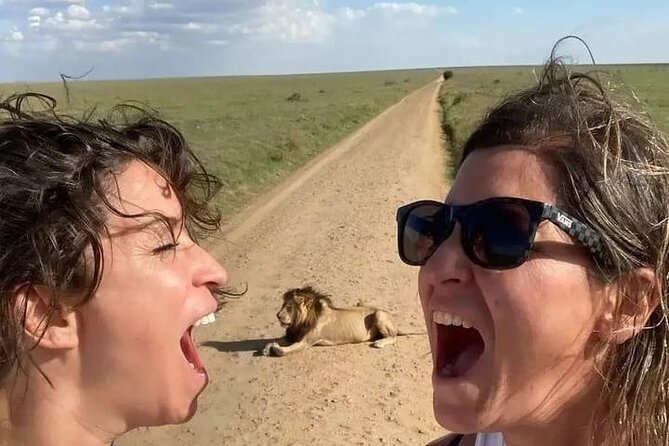
The second day centers on Ngorongoro Crater. You descend into the crater for a full-day tour with a lunch box, then ascend and return toward Arusha in the evening.
This is the most concentrated wildlife portion of the trip. Ngorongoro is described as the world’s largest intact volcanic caldera, measuring about 20 kilometers across and covering roughly 300 square kilometers. Its enclosed form helps explain why the area can feel so full of life.
The crater is home to more than 25,000 large wild animals, including Cape buffalo, black rhinoceros, hippopotamuses, lions, and elephants. Again, these figures describe the area rather than guaranteeing a checklist of sightings. Still, the concentration of wildlife makes Ngorongoro a powerful choice when you have only one full day for a major safari destination.
The crater also offers a different visual experience from Tarangire. Instead of broad open country shaped by baobabs, you are looking across a huge natural basin surrounded by high walls. The views are part of the attraction, not just a background for animal photographs.
Lunch is provided in a box, which keeps the day moving. This is practical, but it is worth setting expectations. A packed lunch is about convenience and time, not a long restaurant meal. If you prefer a slower midday break, this schedule may feel brisk.
The second day is listed at about nine hours. That includes a full crater tour and the evening journey back to Arusha. It is the longest and most demanding part of the experience. You may be thrilled by the amount of time inside the crater, but you should also expect to feel tired by the return.
Same region, a very different drive:
- Balloon Safari & Bush Breakfast in Serengeti – Miracle Experience
★ 5.0 · 1,646 reviews - 4 Days Group Camping Safari
★ 5.0 · 1,101 reviews - 5 Days Group Camping Safari
★ 5.0 · 730 reviews - 3 Days Serengeti & Ngorongoro Group Camping Safari
★ 5.0 · 574 reviews
Wildlife expectations in the crater
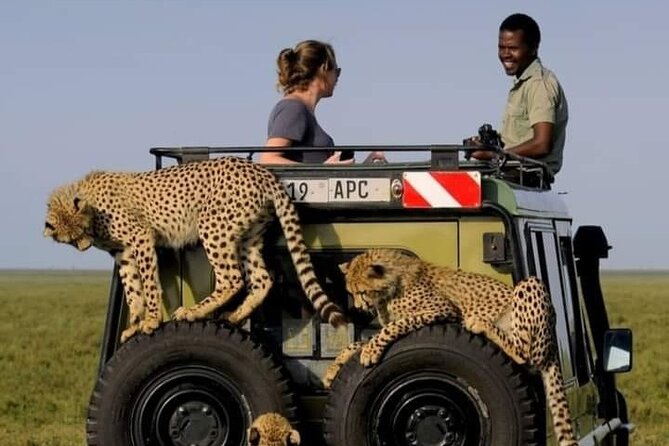
Ngorongoro offers a strong chance to see large animals in one compact setting. Cape buffalo and hippopotamuses are listed among the animals found there, while lions and elephants may also be spotted. The black rhinoceros is one of the more special possibilities.
I would choose this day for the range of animals rather than for a single target species. If you spend the whole morning thinking only about rhinos, you may miss the pleasure of watching buffalo, hippos, lions, elephants, and the crater itself.
The crater has a powerful sense of place. Its size is difficult to grasp from a description alone, and the views help make the day memorable even when animals are temporarily out of sight. Your guide can add value by pointing out wildlife and explaining what makes this environment different from Tarangire.
The route is also a reminder that a short safari involves compromises. You get a substantial crater visit, but you do not have a spare day for a second attempt if conditions are poor or sightings are limited. If finding a particular animal is your top priority, a longer safari gives you more flexibility.
The guide, vehicle, and private format

The tour includes private transportation, and only your own group participates. That is one of its clearest advantages.
With a private arrangement, you can share the vehicle with people you already know, rather than adapting to a larger group’s pace. It can also make the experience more comfortable when you are spending eight or nine hours on the road. The exact vehicle model and group size are not provided, so ask about seating and luggage space before booking.
The guide is another major part of the value. The package promises a professional English-speaking guide, and the strongest praise in the published feedback centers on guiding, service, and organization. Saidy is named positively in one account, while Baraka receives praise for making booking communication easy and adjusting a longer safari to match a client’s needs.
Those names do not guarantee that either person will lead this specific departure. Ask who will guide your trip and how the company handles vehicle or guide changes. A friendly, alert guide can make a long day feel manageable. A poor fit can make the same itinerary feel much harder.
Meals, accommodation, and what to clarify
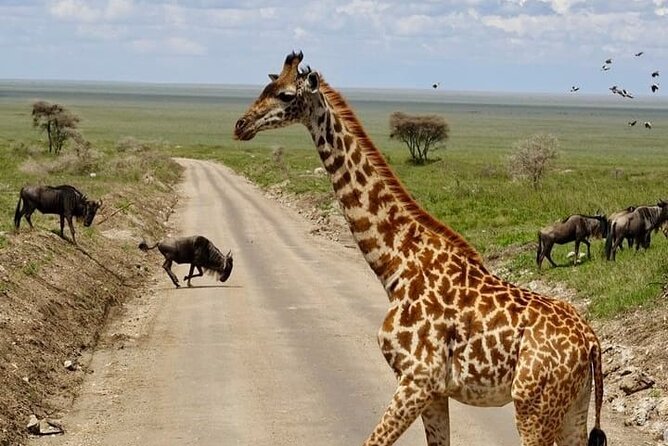
The package includes full-board accommodation, breakfast, lunch, and dinner, with the meal list showing two of each. The itinerary also identifies a picnic lunch in Tarangire and a lunch box for the crater day.
That level of inclusion makes budgeting easier. You are not paying the headline price and then discovering that every meal is extra. Water is also included at a minimum of three liters per day, which is important in a hot, active setting.
The missing piece is the accommodation description. No property name, location, room type, or comfort level is supplied. You should ask:
- Where will the overnight stay be?
- Is the accommodation inside or outside a park?
- Is the room private?
- Are breakfast and dinner served at the property?
- What happens if the accommodation changes?
The available feedback about the company’s other safaris refers to good meals and accommodation, including a camping experience inside a park. That is useful background, but it does not confirm the exact lodging for this two-day route. Get the details in writing.
Alcoholic and soft drinks are not included. International flights and visa fees are also separate. Tips for the safari driver, guide, and chef are not included, so leave room in your budget for gratuities if the service deserves them.
Who should choose this safari?
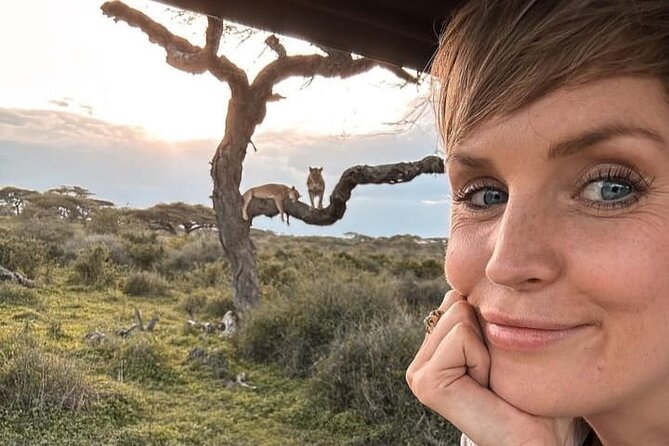
This trip suits you best if you want a private safari with two major destinations and have only two days available. It is also a good match if elephants, baobabs, crater views, and large mammals matter more to you than a relaxed pace.
I would recommend it for a first introduction to northern Tanzania, provided you accept the long days. The combination is impressive for a short schedule, and the included transport, meals, accommodation, water, and fees reduce the number of arrangements you need to make yourself.
It is less suitable if you dislike long drives, need a slower itinerary, or want several chances to search for rare wildlife. The second day especially asks a lot from you. You spend the day in the crater and then return to Arusha, rather than ending with a quiet evening near the park.
A moderate level of physical fitness is requested. You do not need to expect a strenuous hike, since the experience centers on vehicle travel and game drives, but you should be ready for a full day out. Service animals are allowed, according to the supplied information.
Should you book the two-day safari?
I would book this tour if your time is short and you want a private, well-covered route through Tarangire and Ngorongoro. The animal variety is strong, the two parks feel different, and the inclusion of meals, accommodation, water, transportation, and fees gives the $1,100 price a clearer value.
Before booking, confirm the accommodation, guide name, vehicle setup, departure time, and exact return plan. Those details matter more here than fancy promises. Free cancellation is available when you cancel at least 24 hours before the start time, but changes or cancellations within 24 hours are not refundable.
Choose this safari for efficiency and access, not for slow travel. If you can handle two long days, it offers a memorable snapshot of Tanzania’s northern circuit. If you have more time, adding another night would make the experience easier on your body and give you more room for wildlife viewing.
FAQ
Where does the safari start and end?
The tour is based in Arusha. Pickup is offered, and the activity ends back at the meeting point after the return from Ngorongoro to Arusha.
How long is the safari?
The experience lasts approximately two days. Day one is listed at about eight hours, while day two is listed at about nine hours.
Is this a private tour?
Yes. Private transportation is included, and only your own group participates in the activity.
What parks are included?
The route includes Tarangire National Park on day one and Ngorongoro Crater on day two.
What meals are included?
The package includes breakfast, lunch, and dinner, with the listed inclusions showing two breakfasts, two lunches, and two dinners. A picnic lunch is planned at Tarangire, and a lunch box is planned for Ngorongoro Crater.
Is drinking water included?
Yes. Mineral water is included at a minimum of three liters daily.
What is not included in the price?
Alcoholic and soft drinks, international flights, visa fees, and tips for the safari driver, guide, and chef are not included.
Newest safaris around Arusha
- Serengeti & Ngorongoro fly in safari★ 5.0 · 76 reviews
- 7 days great migration safari★ 5.0 · 77 reviews
- 5 days safari, hiking & culture (Serengeti & kilimanjaro)★ 5.0 · 27 reviews
- 6 days Tanzania budget safari★ 5.0 · 65 reviews
- 3 Days Tanzania Budget Group Joining Safari Tour★ 5.0 · 16 reviews
- Amazing 4 Days Tanzania Budget Camping Group Joining Safari★ 5.0 · 15 reviews
- 4 days safari★ 5.0 · 34 reviews
- 2 Day Budget Safari in Tarangire and Ngorongoro From Arusha★ 5.0 · 10 reviews
2-Day Experiences, compared.
2 Day South African Wildlife Tour with 4×4 Safari from Cape Town
Read our review →
2 Days Tarangire and Ngorongoro Group Camping Safari
Read our review →
Browse the lists this tour appears in