
Review · ARUSHA, TANZANIA
4 Days safari Tour Tanzania
Wildlife begins before the road ends. This four-day Tanzania safari packs Tarangire, Serengeti, and Ngorongoro Crater into one fast-moving route from Arusha. I like the private tour format, since only your group takes part, and I like that meals, camping equipment, a professional driver-guide, binoculars, and a pop-top 4×4 are included. The main trade-off is simple: this is a lot of Tanzania in four days, so expect long drives, early starts, and some rough roads.
The route gives you three very different wildlife settings. Tarangire brings elephants and baobabs, Serengeti delivers wide-open plains and major predator country, and Ngorongoro offers one of Africa’s most concentrated wildlife areas. I also appreciate the practical touches, including dietary requests handled in advance and pickup from your Arusha hotel at about 7:30 am.
Key points to know before booking
- Three major parks in four days: You visit Tarangire, Serengeti, and Ngorongoro Crater without adding internal flights.
- A private safari vehicle: Your own group participates, using a modern 4×4 with a pop-up roof for better viewing and photographs.
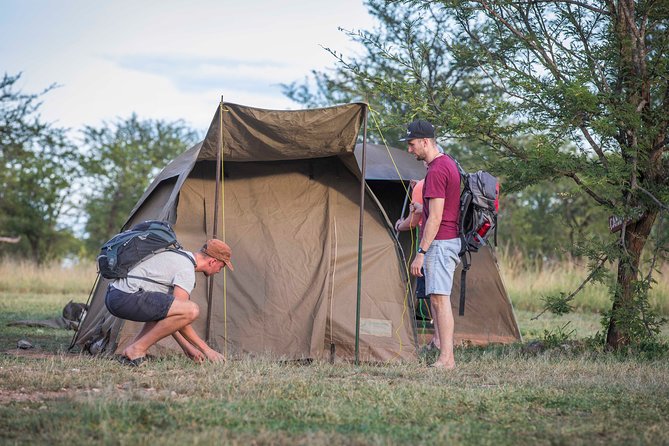
- Camping equipment is supplied: You do not need to organize the basic camping kit yourself.
- Long road sections are part of the deal: Day two includes roughly four to five hours toward Serengeti on a bumpy route.
- Wildlife viewing starts early: The Serengeti sunrise drive begins around 6 am, while Ngorongoro also uses an early start.
- Strong guide praise: Guides such as Max, Filex, Mr. Andersson, Zepha, Edward, and Maushir have received especially warm comments for safe driving, animal spotting, and personal service.
What $1,650 buys you on this safari
At $1,650 per person, this safari sits in the organized mid-range rather than the bare-bones backpacker category. The value comes from having the main moving parts bundled together: park visits, a private pop-top vehicle, a professional driver-guide, camping equipment, all listed breakfasts and lunches, three dinners, binoculars, wine, and beer.
That price matters because a safari is not just a room and a vehicle. Park access, fuel, food preparation, driving time, and the guide all shape the experience. Here, you are paying for a ready-made route through three famous northern Tanzania parks, rather than arranging each transfer and meal yourself.
I would still ask for a clear breakdown before paying. The description names Fig Tree Lodge on the first night, Seronera campsite on the second, and Simba campsite near Ngorongoro on the third. It also calls the package a camping safari while including a lodge, so the exact sleeping arrangements deserve confirmation.
The food plan is useful for anyone with dietary needs. Meals can be adapted if you communicate your requirements in advance. Some past bookings praised the cooking, with particular appreciation for the guide and cook teams. Benji and Dulla were singled out for combining safe driving, explanations, and outdoor food preparation, though your assigned crew may be different.
Tips are not included. Set aside money for gratuities, since the guide and cooking staff have a large effect on how smoothly the days run. The listed cancellation terms allow a full refund if you cancel at least 24 hours before the start time. Changes or cancellations inside that window are not accepted for a refund.
A few more safaris around Arusha worth a look
- 4 Days Group Camping Safari
★ 5.0 · 1,101 reviews - 4-Day Safari from Arusha: Tarangire, Serengeti and Ngorongoro
★ 5.0 · 173 reviews - 4 Days Tarangire, Serengeti and Ngorongoro Mid-Range Group Safari
★ 5.0 · 84 reviews
Day one: elephants and baobabs in Tarangire
The safari begins with hotel pickup after breakfast, usually around 7:30 am. The drive to Tarangire takes about two hours, making this the gentlest road day at the start of the trip.
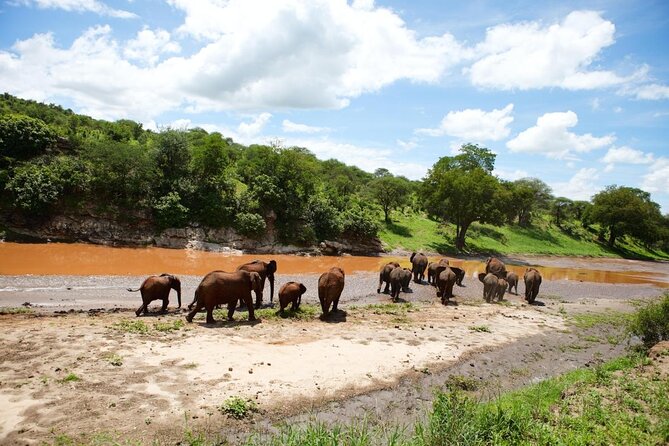
Tarangire is a strong first stop because it offers an immediate change from town to open bush. The park is known for large elephant herds and ancient baobab trees, those thick-trunked giants that give the area a look unlike the Serengeti. From the open roof, you can watch the scenery shift between seasonal swamps, savanna, and the Tarangire River.
The animal list here is broad. You might see elephants, giraffes, zebras, impalas, lions, leopards, elands, warthogs, and many bird species. The river and wet areas help draw wildlife, but sightings are still affected by season, weather, and animal movement. No responsible safari can promise every species, even when the goal is the big five.
Lunch is a picnic at a site with a broad view, followed by more game viewing. This is one of the better parts of the day because you are not rushed straight from a park gate to your bed. The six-hour park visit gives you time to watch animal behavior, not just collect quick photographs.
The night is at Fig Tree Lodge, where you can relax and have dinner. This is a useful comfort break after a full day in the vehicle. If you specifically want tent camping every night, ask how the lodge portion fits your booking before departure.
Day two: the long road to Serengeti
After breakfast, you leave for Serengeti. This is the day to prepare for the most demanding road section. The drive takes about four to five hours and is described as long and bumpy, heading through the crater highlands toward the open Serengeti plains.
That transfer is not wasted time. You see the country change as you move from the Tarangire area toward the highlands and then into the vast grasslands. Still, you should not treat this as a relaxed sightseeing drive. Wear comfortable clothes, keep water close, and expect dust and jolts.
A picnic lunch comes before check-in and the afternoon game drive. The timing is sensible: you cover the road distance first, then spend the later part of the day looking for wildlife. The drive continues until sunset, after which you head to Seronera campsite for dinner and the night.
Seronera is a central Serengeti area, making it a practical base for the next morning. The key benefit is time in the park rather than a quick pass through it. The drawback is that the day contains both a major transfer and a game drive, so you may feel tired by evening.
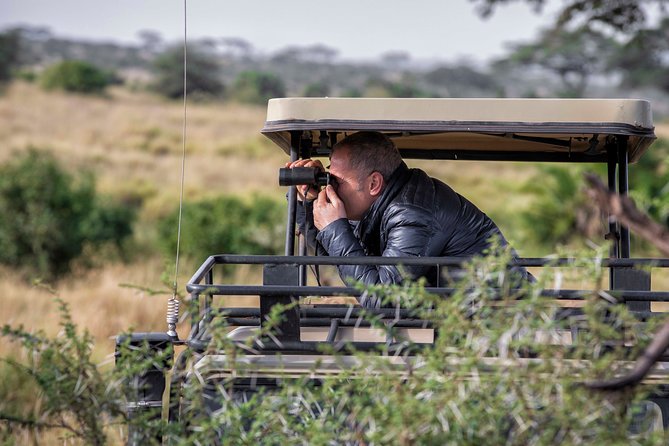
The pop-top roof is especially valuable here. It lets you stand or sit higher than the surrounding vehicle body, giving you a clearer view of animals and making it easier to follow activity across the plains. Binoculars are included, but I would still bring a camera with a useful zoom if wildlife photography matters to you.
Day three: a 6 am Serengeti sunrise drive
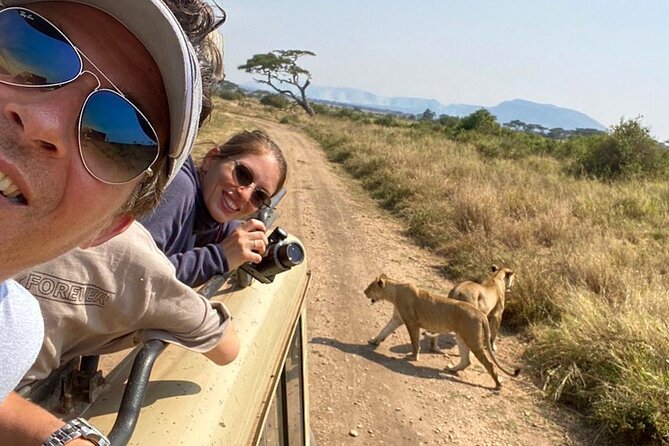
The early start is one of the best choices on the route. You leave around 6 am, when animals are often active and the light is soft. A sunrise drive also gives the Serengeti a different mood from the hotter middle of the day.
Breakfast is served at a picnic site in the bush, then the game drive continues. You return to camp around noon for a hot lunch, load the vehicle, and travel toward Ngorongoro for dinner and the night at Simba campsite.
This schedule gives you a proper morning in Serengeti, but it also makes day three another full day of movement. You are not getting a leisurely camp morning. If you enjoy maximizing wildlife time, that is a fair bargain. If you need a slow pace, four days may feel compressed.
The guide makes a major difference on this day. Strong praise has gone to guides including Filex, who was valued for spotting animals at a distance, and Mr. Andersson, who was praised for explanations and a welcoming manner. Zepha was also appreciated for knowing the park routes and controlling the timing carefully. These names are useful to note when discussing preferences with the operator, but they do not guarantee who will be assigned to your vehicle.
Some groups have reported seeing all of the big five on this kind of route, including black rhino, lions, elephants, leopards, and buffalo. That is an excellent possibility, not a fixed promise. The safari operator’s claim about guaranteed wildlife should be understood as a strong wildlife-focused itinerary, not a guarantee that every animal will appear on schedule.
Same region, a very different drive:
- Balloon Safari & Bush Breakfast in Serengeti – Miracle Experience
★ 5.0 · 1,646 reviews - 5 Days Group Camping Safari
★ 5.0 · 730 reviews - 3 Days Serengeti & Ngorongoro Group Camping Safari
★ 5.0 · 574 reviews - 7-Day Premium Luxury Tanzania Safari All-Inclusive
★ 5.0 · 426 reviews
Day four: descending into Ngorongoro Crater
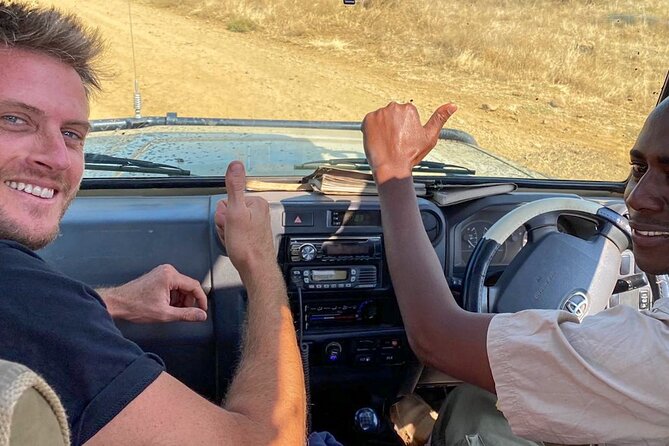
The final morning starts early after breakfast. You descend into Ngorongoro Crater for about five hours of game viewing before driving back to Arusha.
The crater is the route’s most compact wildlife setting. Its enclosed volcanic bowl contains open plains, swamps, a river, a soda lake, forest, and large numbers of animals. From the crater rim, the lake can appear pale and hazy, with flamingos around it. The range of habitats is what makes this stop feel so different from the open Serengeti.
Black rhino is one of the prized sightings here, although it is never assured. The crater is also known for large bull elephants with unusually large tusks. Elephants, lions, flamingos, and other East African species may all appear during the drive.
Five hours is enough to make the descent worthwhile, but this is not an overnight crater stay. You will need to leave the wildlife area and face the road back to Arusha the same day. The final drive can make day four feel long, particularly after several early mornings.
The payoff is that the trip ends with a concentrated wildlife visit rather than a simple transfer. If Ngorongoro is your main reason for coming, you may want to ask if a longer itinerary is available. On this four-day plan, you get a useful introduction, but not unlimited time.
The vehicle, guide, and private group setup
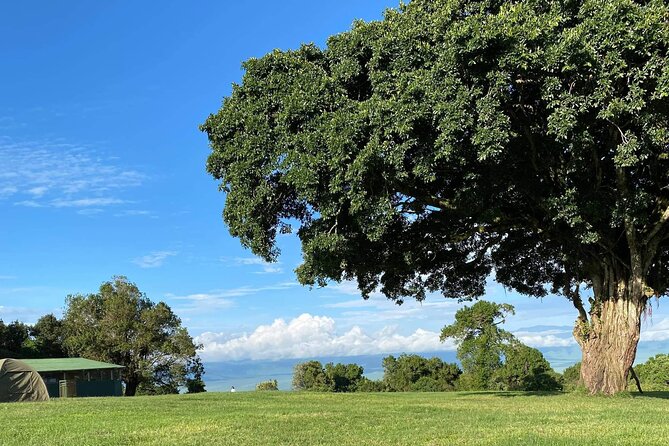
The safari uses a modern 4×4 with a pop-up roof. That roof is not a small detail. It helps you see over grass and vehicle doors, gives several people a clear viewing angle, and makes shared wildlife watching easier.
The tour is private, meaning only your group participates. That gives you more control than a large shared departure. You can ask the guide to spend longer with an interesting animal, within park rules and the day’s schedule, rather than fitting your wishes around strangers.
Driving skill is just as important as animal knowledge. The most consistent praise attached to the guides is practical: safe driving, good English communication, strong route knowledge, accurate animal spotting, and attention to what each group wanted to see. Max was praised for being friendly and responsive. Edward was valued for spotting animals from far away. Maushir was appreciated for safe driving and clear knowledge of the parks.
The package also includes binoculars, but you should confirm how many are supplied if your group is large. Since the experience is private, group size is determined by your own booking, but no exact vehicle capacity is provided here.
Camping, food, and daily comfort
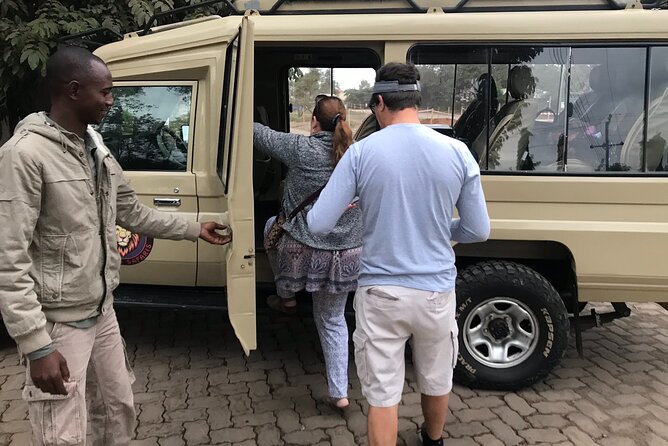
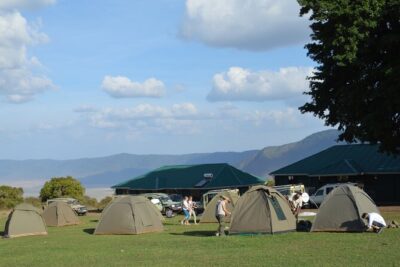
The camping equipment is supplied, which removes one of the biggest planning chores. You do not need to organize the basic gear before arriving. The named stops are Fig Tree Lodge, Seronera campsite, and Simba campsite, so the trip mixes lodge and camp accommodation.
That mix can suit you if you want a little comfort without giving up the outdoor feel. It can disappoint you if you expect luxury lodges or a fully fixed tent standard. Ask about bedding, bathrooms, power, Wi-Fi, and the exact camp setup before booking, since those details are not specified.
Food is included throughout the four days: four breakfasts, four lunches, and three dinners. Dietary requirements can be handled if you mention them ahead of time. Several bookings praised the meals, including honeymoon guests who found the food plentiful and enjoyable.
Wine and beer are included, another small advantage at the end of a long driving day. Do not confuse this with a full drinks package, though. The listed inclusion names wine and beer only, so confirm anything else you need.
Who should choose this four-day route?
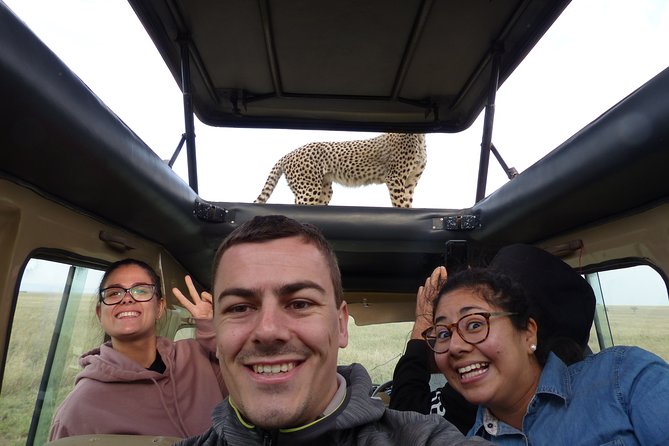
I would recommend this safari to you if you want the classic northern Tanzania circuit in a short window. It suits first-time safari visitors, couples, families, and small private groups who value a guide and vehicle arranged in advance.
Families can make it work, and one booking included children aged eight and fourteen. Still, the long road on day two, the 6 am start on day three, and the early Ngorongoro morning require patience. Younger children may find the vehicle time tiring.
This trip also suits you if your priority is wildlife rather than a slow camp holiday. You visit three major areas and spend meaningful time on game drives. It is less suitable if you dislike rough roads, want late mornings, or prefer to spend several nights in one place.
The price is strongest when you value convenience and private service. If you are comparing it with a cheaper shared safari, compare what is actually included: private participation, food, camping kit, guide, vehicle, binoculars, and drinks. A low headline price may not include the same package.
Final verdict: should you book it?
I would book this safari if you have four days, want Tarangire, Serengeti, and Ngorongoro, and are comfortable with early mornings and long drives. The route is well chosen, the included equipment simplifies planning, and the guide feedback points to an operator that has delivered strong service across many bookings.
Before paying, confirm the exact accommodation, vehicle capacity, guide assignment, dietary arrangements, park fees, and what the phrase guaranteed wildlife means in practice. If you can add more time, do so. If four days is all you have, this is a lively and efficient introduction to Tanzania’s northern parks, with enough variety to justify the road miles.
FAQ
Where does the safari start?
The safari starts in Arusha, Tanzania, with pickup offered from your hotel. The stated start time is about 7:30 am.
How long does the safari last?
The experience lasts approximately four days. The listed plan begins with Tarangire on day one and ends with a drive back to Arusha on day four.
Which national parks are visited?
The route visits Tarangire National Park, Serengeti National Park, and Ngorongoro Crater.
Is the tour private?
Yes. Only your group participates in this private tour or activity.
Are meals included?
Yes. The package includes four breakfasts, four lunches, and three dinners. Dietary requirements can be accommodated if you communicate them in advance.
Is camping equipment provided?
Yes. Camping equipment is supplied. The accommodation plan names Fig Tree Lodge, Seronera campsite, and Simba campsite.
Is a safari vehicle included?
Yes. The package includes a 4×4 safari vehicle with a pop-up roof, along with a professional driver-guide and binoculars.
Can I cancel for a full refund?
You can cancel for a full refund if you do so at least 24 hours before the experience begins. Cancellations or changes made less than 24 hours before the start time are not accepted for a refund.
Newest safaris around Arusha
- Serengeti & Ngorongoro fly in safari★ 5.0 · 76 reviews
- 7 days great migration safari★ 5.0 · 77 reviews
- 5 days safari, hiking & culture (Serengeti & kilimanjaro)★ 5.0 · 27 reviews
- 6 days Tanzania budget safari★ 5.0 · 65 reviews
- 3 Days Tanzania Budget Group Joining Safari Tour★ 5.0 · 16 reviews
- Amazing 4 Days Tanzania Budget Camping Group Joining Safari★ 5.0 · 15 reviews
- 4 days safari★ 5.0 · 34 reviews
- 2 Day Budget Safari in Tarangire and Ngorongoro From Arusha★ 5.0 · 10 reviews
4-Day Experiences, compared.
Private 4-Day Golden Triangle Tour with Ranthambore Tiger Safari
Read our review →
4-Day Safari from Arusha: Tarangire, Serengeti and Ngorongoro
Read our review →
Agadir Jeep Safari Sahara Desert 4×4 Day Tour with Lunch
Read our review →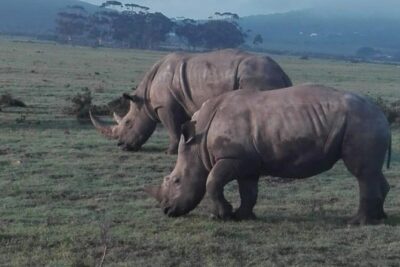
4 Day Golden Triangle with Ranthambore Tiger Safari Tour from Delhi
Read our review →4-Day Group 4×4 Safari to Masai Mara & Lake Nakuru with Pick-Up
Read our review →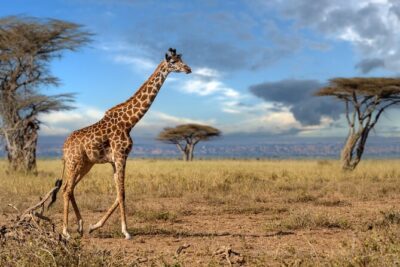
4 Days Tarangire, Serengeti and Ngorongoro Mid-Range Group Safari
Read our review →Browse the lists this tour appears in