
Review · ARUSHA, TANZANIA
5 Days Budget Private Safari, Tanzania
The Big Five can fit into five busy days. This private safari links four of Tanzania’s best-known parks with hotel pickup in Arusha, planned meals, game drives, camping, and lodge stays. I especially like the small private format and the chance to see four very different wildlife areas without arranging each transfer yourself. I also like that every breakfast, lunch, and dinner is built into the plan.
The main tradeoff is time. You will cover long distances on rough roads, with early starts and several hours in the vehicle each day. The displayed price is $0.00, which appears to be a placeholder rather than a usable safari fare, so confirm the real cost, lodging details, and vehicle arrangements before paying.
Key points to know before you book
- Four major wildlife areas in five days: Tarangire, Serengeti, Ngorongoro Crater, and Lake Manyara all appear on the route.
- Praise is central to the experience: This guide earned especially strong comments for finding animals and explaining wildlife, plants, and the area.
- Camping adds a real safari feel: You spend a night at Seronera in the Serengeti and a night at Simba Camp near Ngorongoro.
- Meals are included: Five breakfasts, five lunches, and four dinners are listed, including bush meals and picnic lunches.
- The route is demanding: Day two includes four to five hours on a long, bumpy road, and most days include several hours of game viewing.
- It is a true private outing: Only your group participates, which gives you more control than a large shared safari.
Why this five-day route works
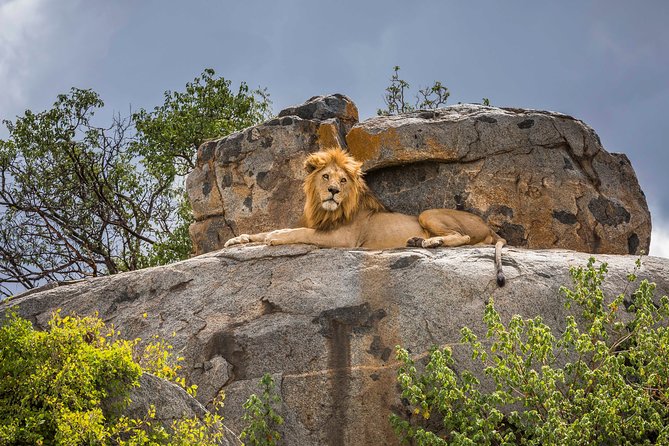
Tanzania rewards patience, but most visitors do not have unlimited time. This route gives you a quick taste of four very different settings: elephant country in Tarangire, open plains in the Serengeti, the enclosed wildlife world of Ngorongoro Crater, and the birdlife and woodland of Lake Manyara.
That variety is the strongest reason to consider the trip. You are not spending all five days in one park hoping conditions line up. You get several chances at big animals, along with changing scenery and different types of game viewing.
The plan is also easy to understand. You are collected from your Arusha hotel after breakfast, driven between parks, fed along the way, and returned to Arusha around 5 p.m. on the final day. That structure removes much of the work involved in arranging park entries, meals, camps, and road transfers.
Still, this is not a slow safari. You will spend long stretches in a vehicle, and the road to the Serengeti is described as bumpy. I would choose this schedule for variety and value, not for leisurely mornings or long stays in one place.
A few more safaris around Arusha worth a look
- 5 Days Group Camping Safari
★ 5.0 · 730 reviews - Tanzania Simba Safari – 5 Days
★ 5.0 · 217 reviews - 5-Day Private Northern Tanzania Safari from Arusha
★ 5.0 · 182 reviews
Day one: elephants and baobabs in Tarangire
Your first morning begins with pickup from your hotel in Arusha after breakfast. The drive to Tarangire National Park takes about two hours, a useful first transfer because it gets you into wildlife country without using up the entire day.
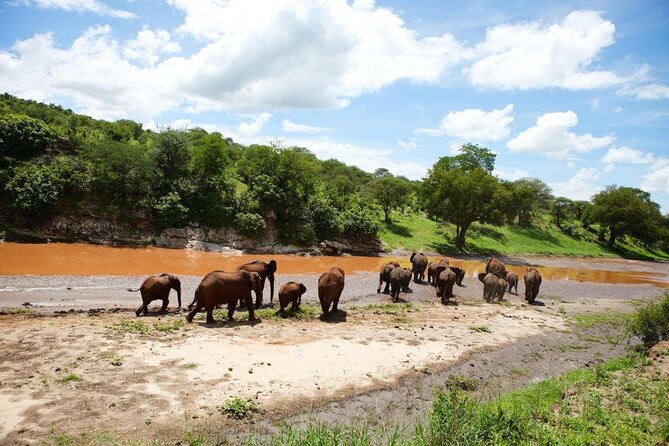
Tarangire is best known here for its large elephant herds and ancient baobab trees. The park’s seasonal swamps, open savanna, and Tarangire River attract a broad mix of animals. From the open-roof vehicle, you might see giraffes, impalas, zebras, lions, leopards, elands, warthogs, and elephants, along with many bird species.
I like this opening day because it gives you both iconic scenery and a fair chance at wildlife right away. Baobabs make the setting feel distinctly African, while the river and swamps help explain why animals gather here. The picnic site is also described as having a spectacular view, so lunch is part of the experience rather than a meal hurriedly eaten in the vehicle.
The listed game-viewing time is about six hours. Afterward, you continue to Fig Tree Lodge for dinner and the night. Since the lodging description elsewhere refers to both lodge accommodation and camping, ask the operator to confirm exactly where you will sleep on each night.
Day two: the long road to the Serengeti
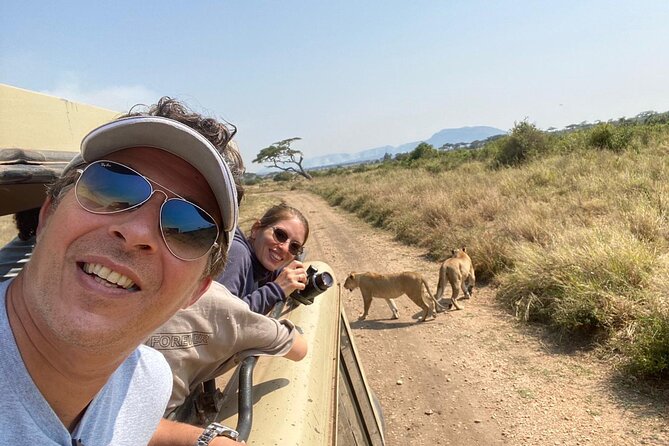
After breakfast, you leave for Serengeti National Park. This is the route’s hardest transfer day, with about four to five hours on a long, bumpy road through the crater highlands toward the open plains.
That drive is not simply dead time. It takes you from the greener highlands toward the broad spaces associated with the Serengeti. You stop for a picnic lunch, enter the park, and continue with an afternoon game drive. The day ends after sunset at Seronera campsite, where dinner and overnight accommodation are planned.
The main thing to understand is the pace. You may be eager to start spotting lions and cheetahs, but much of this day is spent getting into the Serengeti. Pack patience, keep water close, and expect the road to be part of the safari rather than a smooth connection between two attractions.
The reward is that you reach the central Serengeti area for an afternoon drive, when the light can become especially attractive for animal watching and photographs. No specific accommodation style beyond Seronera campsite is given, so confirm whether camping equipment, bedding, and any personal items are supplied.
Day three: sunrise in the Serengeti
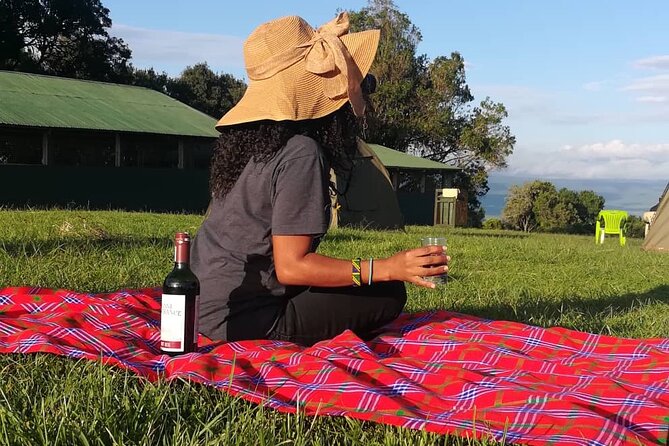
Day three starts around 6 a.m. with a sunrise game drive. This early departure matters because animals are often active at the start of the day, and the itinerary is designed to put you out among them before returning to camp around noon.
Breakfast is served at a picnic site in the bush. You then continue the drive before returning to camp for a hot lunch, loading the vehicle, and leaving for the Ngorongoro area. Dinner and the night are planned at Simba campsite.
This is likely to be the day when your guide’s skill matters most. One guest gave special credit to Praise, describing him as an animal whisperer after seeing a black rhino, lions feeding, a leopard, a cheetah, and a baby elephant. You should not treat that exact list as a promise, since sightings depend on location and luck, but it gives you a useful picture of the kind of wildlife day the route can produce.
Another strong point is the food. The safari chef received high praise for preparing excellent meals with limited camping resources. A hot lunch after a morning in the vehicle is a small comfort that becomes important on a demanding schedule.
The drawback is that this day combines a full game drive with another long transfer. You will have to leave the Serengeti before enjoying a second full night there. If you want maximum time on the plains, a longer Serengeti itinerary would be more suitable.
Same region, a very different drive:
- Balloon Safari & Bush Breakfast in Serengeti – Miracle Experience
★ 5.0 · 1,646 reviews - 4 Days Group Camping Safari
★ 5.0 · 1,101 reviews - 3 Days Serengeti & Ngorongoro Group Camping Safari
★ 5.0 · 574 reviews - 7-Day Premium Luxury Tanzania Safari All-Inclusive
★ 5.0 · 426 reviews
Day four: down into Ngorongoro Crater
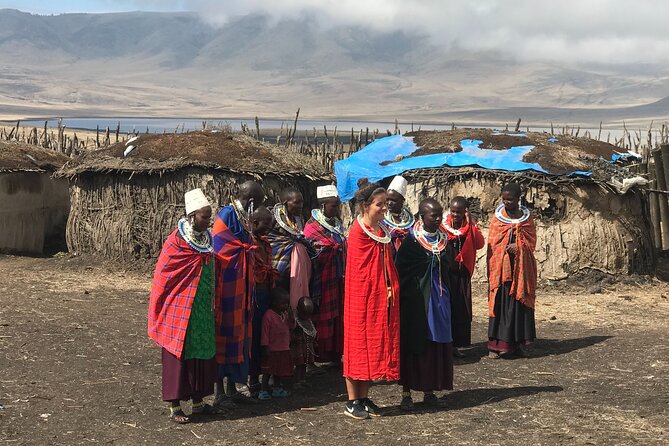
You eat an early breakfast, then descend into Ngorongoro Crater. The crater is one of Tanzania’s most concentrated wildlife settings, and the route promises the chance to see nearly every species native to East Africa, including the rare black rhino.
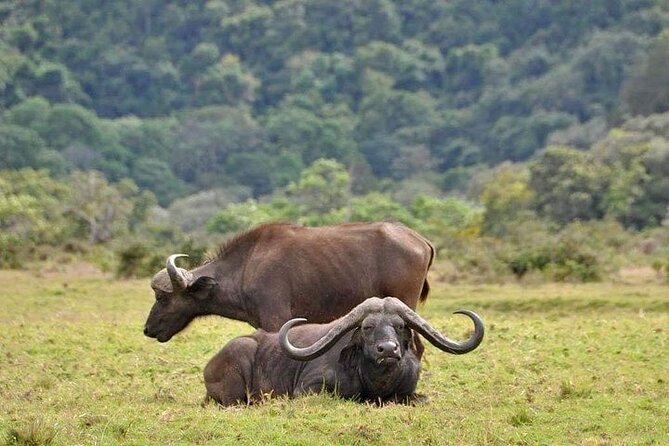
That rhino sighting is never guaranteed, but the crater gives you one of the better chances on this route. You may also find lions, elephants, buffalo, and other animals during the day, though the exact sightings will depend on conditions and your guide’s decisions.
For lunch, you choose between a picnic at Hippo Lake or a hot meal at camp. That choice gives the day a little flexibility, which is welcome after the early start. The crater portion lasts about five hours, then you continue to Fig Tree Lodge for dinner and the night.
Ngorongoro is a major reason this safari offers good geographic variety. Instead of another open plain, you spend time in a contained setting with steep crater walls and a high concentration of wildlife. It is also a reminder that this trip is not only about checking off famous animals. The setting itself is part of the appeal.
Again, confirm the accommodation plan. The route describes Simba campsite the previous night and Fig Tree Lodge after the crater, while the highlights also refer to camping in Ngorongoro. Those details may reflect different package arrangements, so get the exact room or tent plan in writing.
Day five: flamingos and forest at Lake Manyara
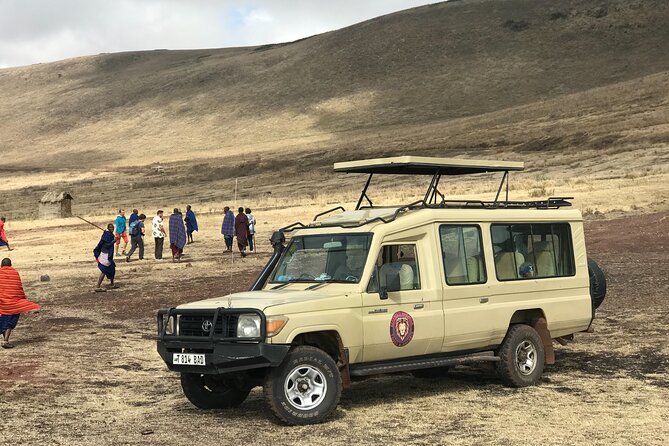
After breakfast, you make a short drive of about five minutes to the Lake Manyara gate. This final park is smaller than the Serengeti or Tarangire, but its habitats change quickly.
Lake Manyara includes a seasonal salt lake, grassy plains, woodland filled with primates, and baobab-dotted cliffs. When water levels suit them, thousands of flamingos gather around the lake. The park also has more than 300 bird species, making it a fine finish for anyone who enjoys birdwatching as much as large mammals.
The park is also associated with tree-climbing lions. That is a memorable possibility, though no wildlife encounter can be guaranteed. You may also see elephants, giraffes, buffalo, and other animals, but the park’s real value is its mix of habitats in a compact area.
The listed game-viewing time is about six hours, with a return to Arusha expected around 5 p.m. That makes the final day practical for an onward plan, though I would avoid booking a tight evening connection. Safari timing can shift, and the route has already included several long road days.
A private safari with a demanding rhythm
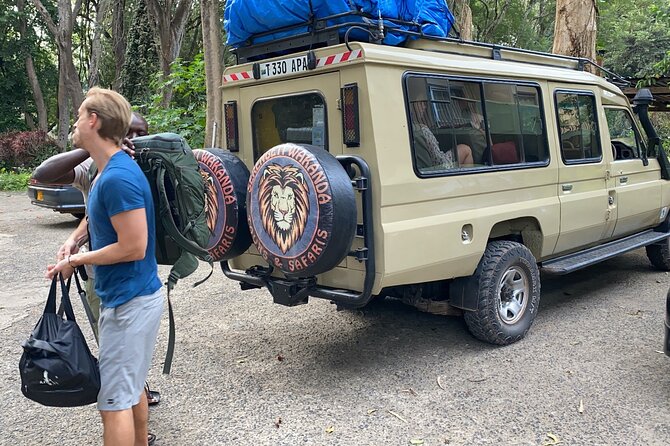
The private format is one of the clearest advantages. Only your group participates, so you are not automatically tied to a large vehicle full of strangers. That can make the long drives easier and may give you a better chance to ask questions or discuss how to spend your game-viewing time.
The guide can make or break a safari, and Praise receives unusually strong praise for animal spotting and explanations of wildlife, plants, and the region. The strongest practical advice I can give is to request that guide by name if he is available, though the company cannot promise that every departure will use the same person.
You should also be comfortable with early mornings, dusty roads, simple camp nights, and long periods of sitting. Most people can participate, according to the supplied information, and the tour is near public transportation, but the experience itself is still physically tiring because of the road conditions and schedule.
Meals, camps, and what is included
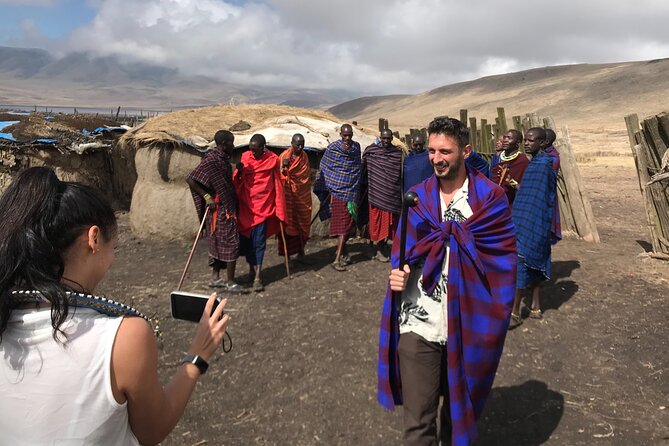
Food is a useful strength of this package. You receive five breakfasts, five lunches, and four dinners. Meals include picnic lunches, breakfast in the bush, and hot food at camp, so you do not need to arrange restaurant stops during the route.
The chef’s ability to prepare good food with limited camping resources received particular praise. That matters because food quality can affect your energy on a safari, especially after an early start and several hours of driving.
Tips and gratuities are not included. Set aside money for that separately and ask your operator about the expected amount, since the supplied details do not provide a figure.
Accommodation is the one point I would clarify most carefully. The schedule includes Fig Tree Lodge, Seronera campsite, Simba campsite, and another stay at Fig Tree Lodge, while the headline description refers to camping in both Ngorongoro and Serengeti. Ask for the final accommodation list, the number of people per tent or room, and what camping equipment is supplied.
Value, price, and booking questions
The displayed price is $0.00, but that should not be treated as a genuine free safari. A five-day private trip with park visits, transport, meals, a guide, camping, and lodge accommodation normally requires a real quoted price. Contact Serengeti Wakanda Tours & Safaris before making plans and confirm the complete cost.
Ask specifically if park entry fees, vehicle charges, camping fees, guide services, transfers, and accommodation are all included. The information confirms meals and park admissions on parts of the route, but it does not give a complete financial breakdown.
The value is strongest if you want a ready-made private route and do not want to coordinate four parks yourself. You are paying for planning, transport, meals, and access to a guide who can help locate animals. The value is weaker if your priority is a slow trip with several nights in one park, since this schedule moves often.
Confirmation is provided at booking, and free cancellation is available until 24 hours before the experience begins. Inside that 24-hour period, the payment is not refunded and changes are not accepted. Cutoff times follow local Tanzanian time.
Who should book this safari
I would recommend this trip to a first-time safari visitor who wants a broad introduction to northern Tanzania in five days. It suits you if you want the Big Five as a goal, appreciate having meals arranged, and prefer a private group rather than a shared departure.
It also fits people who want a mix of famous parks. Tarangire gives you elephants and baobabs, Serengeti provides the classic open-plains setting, Ngorongoro offers dense wildlife viewing and the possibility of black rhino, and Lake Manyara adds birds, flamingos, woodland, and the chance of tree-climbing lions.
I would hesitate if you dislike bumpy roads or if camping is not your style. The route is busy, and the Serengeti transfer takes several hours. I would also choose a longer safari if your main goal is to spend repeated days tracking one species or waiting for a particular sighting.
Should you book the five-day Tanzania safari?
Book it if you want maximum park variety in limited time, a private vehicle and group, and meals handled from start to finish. Praise’s animal-finding ability and the chef’s cooking are meaningful strengths, and the route includes four excellent wildlife areas.
Before booking, confirm the actual price, exact camp and lodge nights, what equipment is supplied, and whether Praise will guide your departure. If those details suit you, this is a busy but rewarding introduction to Tanzania, with a strong chance of memorable wildlife and very little planning work left for you.
FAQ
Where does the safari begin and end?
Pickup is offered from your hotel in Arusha, and the itinerary expects you to return to Arusha around 5 p.m. on day five.
Which national parks are included?
The route visits Tarangire National Park, Serengeti National Park, Ngorongoro Crater, and Lake Manyara National Park.
Are meals included?
Yes. The package lists five breakfasts, five lunches, and four dinners.
Is this a private tour?
Yes. Only your group participates in the activity.
Can I cancel for a full refund?
Yes, if you cancel at least 24 hours before the experience start time. Cancellations made less than 24 hours in advance are not refunded.
Are tips included?
No. Tips and gratuities are not included in the package price.
Newest safaris around Arusha
- Serengeti & Ngorongoro fly in safari★ 5.0 · 76 reviews
- 7 days great migration safari★ 5.0 · 77 reviews
- 5 days safari, hiking & culture (Serengeti & kilimanjaro)★ 5.0 · 27 reviews
- 6 days Tanzania budget safari★ 5.0 · 65 reviews
- 3 Days Tanzania Budget Group Joining Safari Tour★ 5.0 · 16 reviews
- Amazing 4 Days Tanzania Budget Camping Group Joining Safari★ 5.0 · 15 reviews
- 4 days safari★ 5.0 · 34 reviews
- 2 Day Budget Safari in Tarangire and Ngorongoro From Arusha★ 5.0 · 10 reviews
5-Day Experiences, compared.
5 Day Garden Route and Addo Safari – Best of South Africa Small Group Tour
Read our review →
5-Day Private Northern Tanzania Safari from Arusha
Read our review →
5 Days Best of Tanzania Luxury Safari Northern Circuit
Read our review →
5-Day private Camping Safari Tour in Tanzania
Read our review →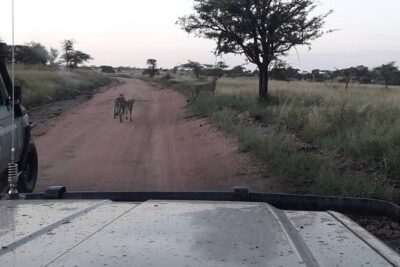
5 Days Tanzania Group Joining Safari, Tarangire/Serengeti/Ngorongoro Crater
Read our review →Browse the lists this tour appears in