
Review · WINDHOEK, NAMIBIA
6-Day Dunes and Wildlife Accommodated Safari from Windhoek
Red dunes, wild cats, and a salt pan await. This six-day Namibia trip packs Etosha National Park, the Namib Desert, Skeleton Coast, and a cheetah conservation visit into one well-organized route. I like the excellent mix of wildlife and scenery, and I like that transport, lodging, meals, and a local guide are included. The tradeoff is a demanding schedule with several long days in the vehicle.
You travel in a custom-built, air-conditioned safari vehicle with a pop-up roof, in a group capped at 12 people. That makes wildlife viewing easier than from a standard minibus, but this is still a group tour, so you will need to follow the set timetable. A strict guide and fixed program may frustrate you if you prefer slow mornings or choosing your own stops.
Key points at a glance
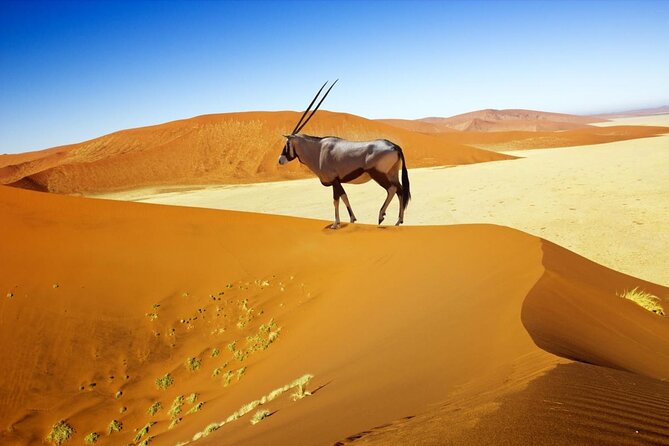
- Etosha gets proper time: You have one afternoon and one full day of game drives, including the Etosha Pan and Okaukuejo waterhole.
- The scenery changes fast: The route moves from wildlife country to Damaraland, the Skeleton Coast, coastal dunes, and the red sands of Sossusvlei.
- Dead Vlei is the visual high point: Sunrise, bleached camel thorn trees, cracked clay, and towering dunes create Namibia’s most famous desert view.
- The route includes human encounters: Stops with Herero, Damara, and Himba people offer chances to support small local markets and learn about daily life.
- A cheetah visit adds conservation context: The final morning includes a one-hour activity with cheetahs that cannot be released into the wild.
- The price covers the basics: At $2,127.99 per person, you receive five nights, most meals, park activities, transport, and a professional English-speaking guide.
Why this six-day route works
Namibia is a large country, and its major sights are spread far apart. This trip gives you a practical way to connect Etosha in the north with the Atlantic coast and the Namib Desert without renting a car or planning every lodge and park entrance yourself.
The route is ambitious. You cover large distances on Days 3 and 4, and the early start for Sossusvlei means this is not a sleep-in holiday. Still, the variety is the main appeal. One day you may be watching wildlife at a waterhole. A day later, you are looking at a shipwreck on a bare coast. Soon after, you are standing beneath immense orange dunes.
The tour has a 4.9 rating from 123 reviews, with 98 percent recommending it. The strongest praise centers on the guide service, clear pre-trip information, punctual pickup, comfortable lodging, and the amount of Namibia covered in six days. One person found the schedule too regimented, which is a fair warning. This is best for you if you value an efficient route over personal freedom.
More Wildlife Safaris in the world:
- Dubai: Sunrise Desert Jeep Safari with Wildlife Experience
★ 4.7 · 1,782 reviews - Grand Teton Wildlife Safari in a Enclosed or Open-Air Vehicle (season dependent)
★ 5.0 · 1,212 reviews - Addo Elephant National Park All Inclusive Full-Day Safari
★ 4.8 · 872 reviews
Day 1: From Windhoek to Etosha by afternoon
Pickup begins around 7:15 a.m. at the Chameleon Safaris office on Ferry Street in Windhoek. The stated start time is 7 a.m., so confirm the exact pickup details before departure and arrive early. Pickup and drop-off within Windhoek city limits are included, but airport transfers are not.
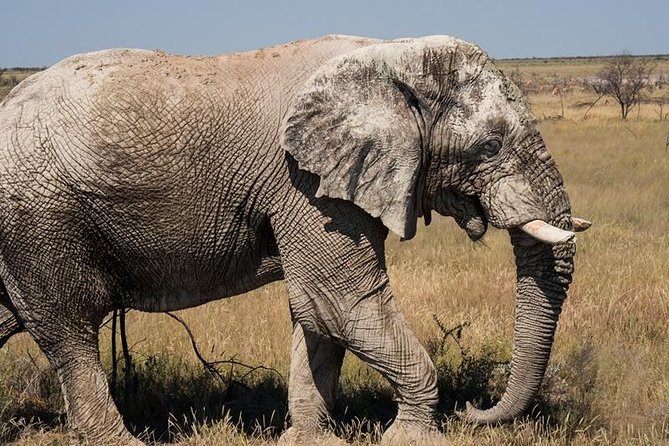
The first day takes you north to Etosha National Park. You arrive at Anderson Gate around 2 p.m., then spend the afternoon game driving toward Halali camp. This is a useful first taste of the park, though it is not a full day of wildlife viewing.
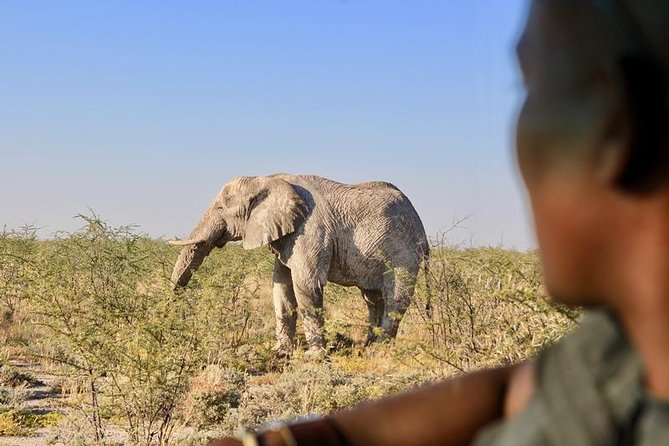
Etosha is built around a huge salt pan, and animals gather near water sources around its edge. Your guide will search for wildlife from the safari vehicle, with the pop-up roof giving you a better view than a closed van. Keep your camera ready, but remember that sightings are never guaranteed.
Halali offers twin-share rooms with private bathrooms. The camp’s floodlit waterhole is one of the best uses of your evening. After dinner, you can sit quietly and watch for animals coming to drink. It is a simple experience, but it gives you a chance to enjoy Etosha without bouncing along a road.
Four dinners, five lunches, and five breakfasts are included across the trip, with the itinerary indicating dinner at Halali. Tap water is provided, but bottled drinks, soft drinks, alcohol, and snacks cost extra. Bring some Namibian dollars or another accepted payment method for small purchases.
Day 2: Etosha Pan and the waterholes
Day 2 is the strongest wildlife day. Morning game drives take you through Etosha in search of predators, followed by a mid-morning drive toward the Etosha Pan. You also have time for a full day of wildlife viewing before leaving the park near sunset.
The Etosha Pan explains the park’s name and character. This vast, pale expanse is not simply an empty salt flat. It is a seasonal breeding area for flamingos, so the amount of water and bird activity can vary. The tour description calls it a mass breeding ground for flamingos, but nature sets the schedule. You should see the pan even if flamingos are not present in large numbers.
The day involves a lot of sitting in the vehicle. That is normal on safari, and the slow pace is part of the work. Your guide must scan the bush, read the road, and decide where to pause. You may spend time looking at a distant animal or waiting near water, then suddenly get a close sighting.
A stop at Okaukuejo gives you a chance to stretch your legs, use the bathroom, buy a cold drink, and climb the tower. It is a practical break after hours on the road. The park exit comes just before sunset, followed by a drive to Etosha Village.
Etosha Village is your second night’s base. The accommodation is included, and the location allows the group to leave the park after a full day rather than rushing back toward Windhoek. That saves time, though it also means another evening with a fixed dinner and early start.
Day 3: Damaraland, local markets, and the Zeila wreck
Day 3 is the hardest day for anyone who dislikes long road journeys. You travel through rural Namibia and Damaraland toward the coast. The reward is a sharp change in scenery, but the distance takes much of the day.
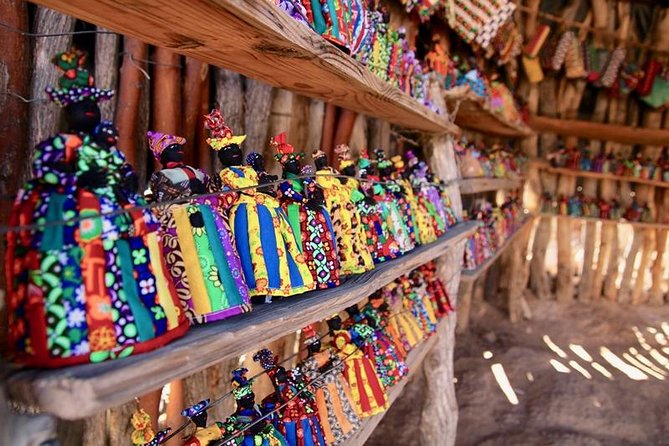
The route includes opportunities to meet Herero, Damara, and Himba people. These stops are connected with small local markets, giving you a chance to buy items directly and support local sellers. Treat these encounters with respect. Ask before taking photographs, listen to what your guide explains, and remember that people are not scenery.
The itinerary includes a one-hour Himba Village experience. The wider day also refers to contact with Herero and Damara communities, so the exact order and length of each stop may depend on road conditions and the group schedule. This is one of the more meaningful parts of the trip because it adds local life to a route otherwise dominated by rocks, sand, wildlife, and roads.
Lunch is taken at the roadside. That detail tells you something useful: this is a practical touring day, not a leisurely restaurant excursion. Pack snacks because snacks are not included, and carry any personal drinks you want beyond the supplied tap water.
At the coast, you stop at the Zeila Shipwreck. The Skeleton Coast earned its grim name from the remains left by ships, whales, and seals along a harsh shore. The Zeila is an easy place to understand that reputation. A stranded ship against a bare coastal setting makes a strong photograph, but the stop itself is brief compared with the hours spent driving.
You reach Swakopmund and check into your accommodation. The itinerary names the Shoprite Swakopmund area rather than a specific hotel, so confirm the final lodging details if the property matters to you. You have time to explore the town on foot before dinner, which is welcome after the long ride.
More Desert Safaris in the world:
- Dubai: Desert Safari, Quad Bike, Camel Ride & Al Khayma Camp
★ 4.9 · 68,962 reviews - Dubai: Desert Safari, Quad Bike, Camel Ride and Sandboarding
★ 4.9 · 43,505 reviews - Dubai: Desert Safari with BBQ Dinner & Quad Biking Options
★ 4.9 · 20,485 reviews - Dubai: Half-Day Desert Safari, Camel Ride, ATV & Dune Buggy
★ 4.9 · 19,221 reviews
Day 4: From Swakopmund into the Namib Desert
Swakopmund offers an optional activity after breakfast, including sandboarding in the coastal dunes. Optional activities are not included in the tour price, so ask about the cost and timing before committing. A pickup for the activity is scheduled from the guesthouse or hotel at 11:15, followed by a short briefing.
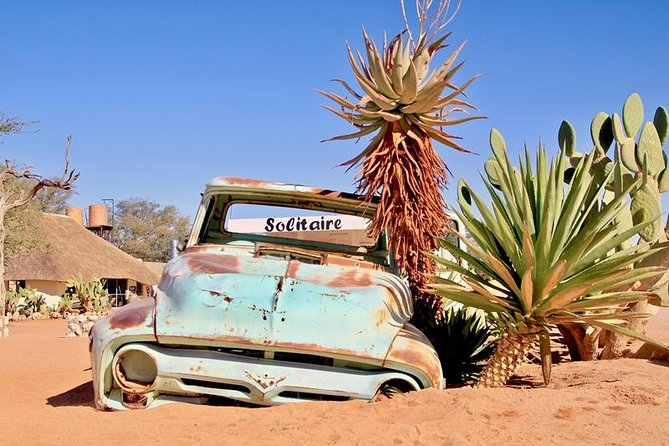
The main route then heads inland through Kuiseb Pass and Gaub Pass, continuing toward Solitaire and the desert camp. These passes bring relief from the flat coastal setting and show how quickly Namibia’s terrain can change.
The Tropic of Capricorn sign is listed as a stop, with about 30 minutes allocated. It is a quick photo opportunity rather than a major attraction, but it marks your move into the Namib region.
You arrive at Desert Camp in the late afternoon. The camp gives you time to relax and enjoy the views before a short sunset walk overlooking the Naukluft Mountains. This slower evening matters because Day 5 begins before dawn.
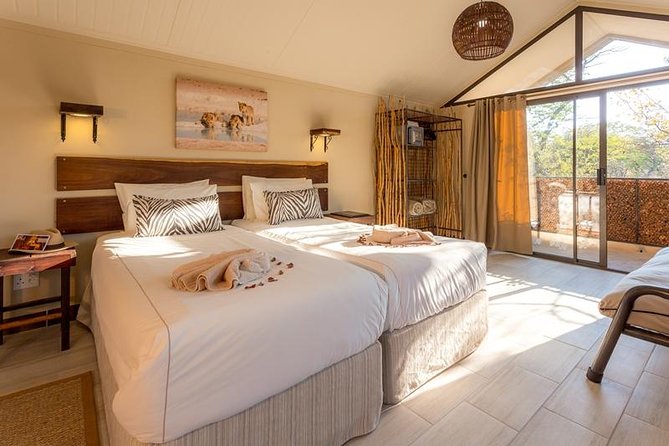
The accommodation throughout the trip is twin share with an en-suite bathroom. That is a useful middle ground: more comfortable than basic camping, but not a private room unless you pay or arrange otherwise. If you are traveling alone, expect to share with another participant unless the operator confirms a different arrangement.
Day 5: Sunrise at Dead Vlei and the big dunes
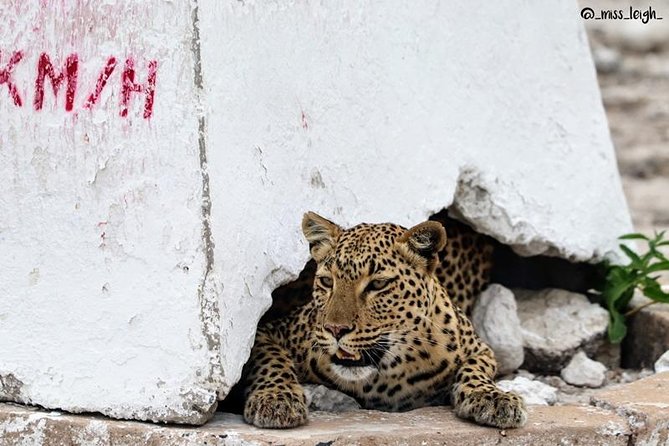
Day 5 is the visual center of the trip. You leave at dawn to reach the park gate around sunrise, then travel along an ancient riverbed surrounded by huge dunes. The drive continues for roughly 55 kilometers to the 2×4 parking area, where you transfer to a 4×4 shuttle into the Sossusvlei region.
That shuttle transfer is important. The final section includes soft sand, and the specialized vehicle removes the need for your group to handle that route itself. Once in the Sossusvlei area, you explore on foot.
Dead Vlei is the place most people picture when they think of Namibia. The white, cracked clay floor is scattered with bleached camel thorn trees, while massive dunes rise behind it in changing shades of red and orange. The contrast is stark and memorable. You have about two hours to explore, photograph, and take in the silence.
The physical demands are moderate, but the sand makes walking harder than the distance suggests. Wear sturdy shoes, carry water, and protect yourself from the sun. A current moderate level of fitness is recommended for the trip, and the optional climb up Big Daddy Dune is much more strenuous than simply walking around Dead Vlei.
Big Daddy is the highest dune in the area. The tour allows about an hour for the climb, but you do not have to go up. If you have the energy, the views across the Namib are the reward. If not, staying near the base still gives you the essential desert experience. Do not let the group pace pressure you into a climb you do not want.
From Dead Vlei, you continue to Sossusvlei, another dry pan surrounded by dunes. After exploring, you have brunch. The timing works well because you will have been awake since before sunrise and using plenty of energy in the sand.
The drive back includes a stop at Dune 45 for photographs. It is one of the most recognizable dunes in Namibia, and the 30-minute stop keeps the schedule moving. You then visit Sesriem Canyon, where you can climb down into a narrow geological formation that once held permanent water for wildlife.
This is a full day, but it is well planned around the light. Sunrise makes the dunes cooler and more striking, while the later canyon visit adds variety after hours of sand. You should expect dust, heat, early fatigue, and a very good collection of photographs.
Day 6: Cheetahs and the return route
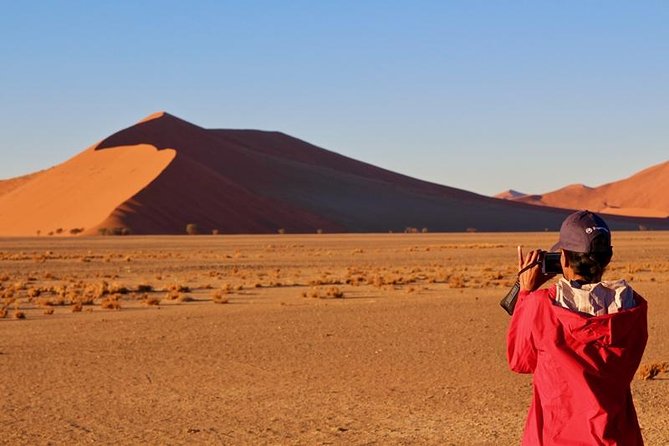
The final morning begins with breakfast before you head to Solitaire. There, an open vehicle takes you to a local conservation project with cheetahs that cannot be released into the wild.
The one-hour activity explains the animals and the conservation work. It also gives you a chance to take close photographs of the world’s fastest land mammal. This is not the same as seeing a wild cheetah in Etosha, and that distinction matters. The value is the chance to learn about animals under human care and why some cannot return to nature.
Cheetahs are among the most difficult large predators to spot in the wild. The final stop gives you a more reliable encounter, but it should complement, not replace, the Etosha game drives. The itinerary ends back at the Windhoek meeting point, with drop-off within Windhoek city limits included.
What the $2,127.99 price really covers
At $2,127.99 per person, this is not a budget bus trip. The value comes from combining several expensive and logistically difficult parts of Namibia into one six-day package.
Your price includes five nights of twin-share accommodation, park entry, one full day and one afternoon of game drives, the Sossusvlei day, the Himba Village experience, the cheetah activity, transport, a professional English-speaking driver and guide, tap water, four dinners, five lunches, and five breakfasts.
You are also paying for the vehicle and the route planning. Driving from Etosha to the coast and then into the Namib Desert requires a great deal of road time and coordination. If you tried to arrange the same route independently, you would need to manage park access, vehicle choice, lodging, fuel, long-distance driving, and desert transfers.
The price does not include drinks beyond tap water, snacks, optional activities, personal travel insurance, or airport transfers. Those extras can add up, so budget for them before you book. The tour is generally booked about 104 days in advance, which suggests you should not leave it until the last minute if your dates are fixed.
Who should book this Namibia safari?
I would recommend this tour if you have only six days and want Namibia’s major sights without driving yourself. It suits you if you enjoy wildlife, photography, big scenery, and a clear daily plan. The small maximum group of 12 is a real advantage over a large coach tour.
It also works well for first-time visitors who want a guide handling the roads and park logistics. The strongest parts are the range of experiences, the quality of the guide service, the comfortable accommodation, and the amount of ground covered.
I would hesitate if you need flexible meal times, long stays in one town, or the freedom to skip scheduled stops. The schedule is fixed, and Day 3 in particular involves many hours in the vehicle. Families should note that children must be accompanied by an adult, and the child rate applies only when sharing with two paying adults.
The experience is non-refundable and cannot be changed after booking, so check your dates, passport, dietary needs, fitness level, and accommodation arrangements before paying. A valid passport is required on the day of travel.
Final verdict: a strong choice for a first Namibia visit
Book this trip if your goal is to see a lot of Namibia in a short time and let someone else manage the difficult parts. Etosha, the Zeila Shipwreck, the desert camps, Dead Vlei, Big Daddy, and the cheetah project create a varied six-day route with real visual impact.
Skip it if you want a loose schedule or a private safari pace. For most people with limited time, though, the combination of wildlife, desert, coast, local encounters, included meals, and capable guiding makes the price reasonable. Pack patience for the long drives, water for the dunes, and a little extra cash for drinks and optional activities.
FAQ
Where does the tour start and finish?
It starts at the Chameleon Safaris office on Ferry Street in Windhoek. The tour ends back at the meeting point, with pickup and drop-off available within Windhoek city limits.
What time does the tour start?
The stated start time is 7 a.m., while pickup information says pickup begins at 7:15 a.m. Confirm the exact pickup time before departure.
How many people can join the tour?
The maximum group size is 12 travelers.
What type of vehicle is used?
Transport is provided in a custom-built, air-conditioned safari vehicle with a pop-up roof.
Are meals included?
Yes. The package includes five breakfasts, five lunches, and four dinners. Drinks, snacks, soft drinks, alcohol, and mineral water are not included.
What accommodation is provided?
You receive five nights in twin-share rooms with en-suite bathrooms. The listed accommodation includes Halali, Etosha Village, Swakopmund accommodation, and Desert Camp.
Is the Sossusvlei 4×4 transfer included?
Yes. The route includes a 4×4 shuttle from the 2×4 parking area into the Sossusvlei region.
Is climbing Big Daddy Dune required?
No. The climb is for people with enough energy and is listed as an optional part of the Sossusvlei visit.
Do I need a passport and travel insurance?
A current valid passport is required on the day of travel. Personal travel insurance is not included in the price.
More 6-Day Experiences in the world
- Cape Town: Garden Route and Addo Elephant Park 6-Day Safari
★ 4.7 · 175 reviews - 6 Days Private Budget Safari
★ 5.0 · 163 reviews - 6 Days Tanzania Budget Camping Safari
★ 5.0 · 145 reviews - 6 days Tanzania budget safari
★ 5.0 · 65 reviews
Newest safaris around the world
- Desert Safari in 4×4 Car with BBQ Dinner and Belly Dance★ 5.0 · 62 reviews
- Dubai Desert Safari: Quad Bike, Camel Ride and BBQ Dinner★ 5.0 · 29 reviews
- Desert Safari and Quad Bike Experience in Dubai with Dinner★ 4.5 · 44 reviews
- Dubai Evening Desert Safari with Thrilling Dune Buggy Adventure★ 5.0 · 109 reviews
- Desert Safari With Bab Al Shams Dinner★ 4.5 · 43 reviews
- Evening Desert Safari Tour With Dinner & Entertainment★ 5.0 · 41 reviews
- Dubai Desert Safari with Dinner, Camel Ride & Dune Bashing★ 5.0 · 73 reviews
- Desert Safari with 30 Minutes Quad Biking on High Red Dunes (Complete Package)★ 5.0 · 124 reviews
Desert Safaris, compared.
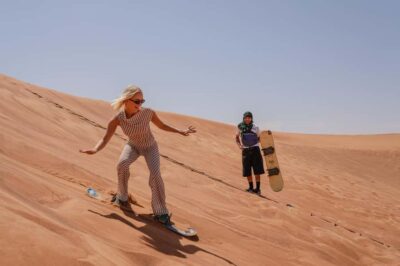
Desert Safari, Quad Bike, Camel Ride & Al Khayma Camp
Read our review →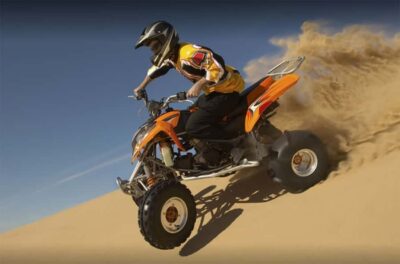
Desert Safari, Quad Bike, Camel Ride and Sandboarding
Read our review →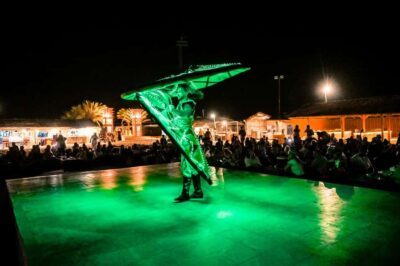
Desert Safari with BBQ Dinner & Quad Biking Options
Read our review →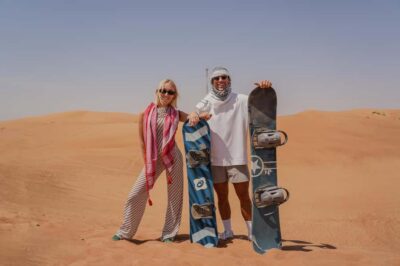
Half-Day Desert Safari, Camel Ride, ATV & Dune Buggy
Read our review →
Desert Safari, Camel Ride, Sandboarding, Quad Bike
Read our review →
Dubai Desert Safari – Camel Ride, Sandboarding & 30 Min Quad
Read our review →
Dubai Premium Red Dunes Safari, Camels & 5* BBQ at Al Khayma camp
Read our review →
Browse the lists this tour appears in