
Review · ARUSHA, TANZANIA
8 Days Safari (Lake Manyara /Tarangire/Serengeti/Ngorongoro)
The migration is only part of the story. This 8-day Tanzania safari links five major parks with camping, game drives, village visits, and airport transfers, giving you a broad look at northern Tanzania rather than one quick wildlife stop. I like the route’s variety, especially the contrast between Tarangire’s elephants, Serengeti’s open plains, and the enclosed world of Ngorongoro Crater.
I also like the amount of time given to Serengeti, with four nights or portions of days devoted to finding the wildebeest. The main consideration is the pace. Long drives, early breakfasts, basic camping, and uncertain migration timing mean you should come ready for dust, changing plans, and plenty of time in a safari vehicle.
Key points to know before booking
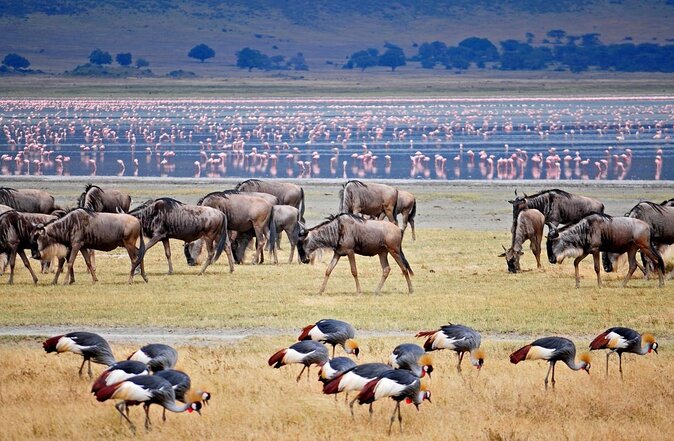
- Four Serengeti days give you a better chance of finding the moving herds than a one-night visit.
- Arusha National Park begins the trip with forest, blue monkeys, colobus monkeys, birds, buffalo, and Ngurdoto Crater.
- Tarangire is especially good for elephants, baobab trees, and the wildlife gathered near the Tarangire River.
- Ngorongoro Crater offers concentrated game viewing, including a chance to see black rhino and the Big Five.
- Lake Manyara adds tree-climbing lions, flamingos, hot springs, and a Maasai cultural visit.
- The price is shown as $0, which is almost certainly incomplete. Confirm the real total, camping arrangements, group size, and meal plan before paying.
Why this route works so well
This itinerary covers the main northern Tanzania circuit in a sensible order. You begin near Arusha, head toward Tarangire, continue to Serengeti, return through Ngorongoro, and finish at Lake Manyara before going back to Arusha.
That route gives you several different wildlife settings. Tarangire is tied to its river and broad stands of baobab. Serengeti is about distance, movement, predators, and the great wildebeest migration. Ngorongoro is a compact crater floor where many animals can be found in one day. Lake Manyara is smaller but adds forest, water, birds, and unusual tree-climbing lions.
I like that this is not built around a single sighting. The migration can shift location, and river crossings are never something a company can promise. By spending several days in Serengeti, you give your guide more time to adjust the route and look for the herds.
The tradeoff is that northern Tanzania involves long road transfers. Day 3, from the Ngorongoro area to Serengeti, includes views of the Rift Valley and Ngorongoro Crater before reaching central Serengeti around midafternoon. Day 6 also combines a morning game drive with a move toward Ngorongoro. These are rewarding days, but they are not restful.
A few more safaris around Arusha worth a look
- Balloon Safari & Bush Breakfast in Serengeti – Miracle Experience
★ 5.0 · 1,646 reviews - 4 Days Group Camping Safari
★ 5.0 · 1,101 reviews - 5 Days Group Camping Safari
★ 5.0 · 730 reviews
Day 1: Forest and crater views at Arusha National Park
The safari begins with a morning pickup from your Arusha hotel, around 8:00 am, followed by a drive of roughly 40 minutes to Arusha National Park. This is a gentle introduction to Tanzania’s wildlife areas, and it feels different from the open grasslands later in the trip.
The entrance road passes through montane forest. You may see blue monkeys, colorful turacos, and trogons. The park is also one of the best places on this northern route to look for black-and-white colobus monkeys, which move through the trees with a striking, flowing motion.
The main scenic feature is Ngurdoto Crater. Its steep sides surround a marshy floor where buffalo and warthog may be seen. This first day is less about checking off the Big Five and more about meeting the region’s forest wildlife and getting used to game-drive conditions.
You spend about eight hours in the park. That is a full first day, so wear comfortable clothes and expect time in the vehicle. Arusha National Park is a smart addition for anyone who enjoys birds, monkeys, and scenery as much as large animals.
Day 2: Elephants and baobabs in Tarangire
The next morning starts around 8:00 am, followed by a drive of about three hours to Tarangire National Park. The park lies roughly 115 kilometers from Arusha and covers about 2,800 square kilometers.
Tarangire takes its name from the Tarangire River, an important water source for animals in the park. The river helps explain why game viewing here can be so rewarding. Elephants are a major draw, and the baobab trees give the park a look you will not get in the forested parts of Arusha or Manyara.
You may also see lions, leopards, pythons, and other animals. The itinerary specifically highlights tree-climbing pythons, an unusual sight if you are lucky enough to find one. Tarangire is also a good place to slow down and watch animal behavior rather than simply race from one sighting to the next.
After a full day in the park, you continue to Jambo Lodge for dinner and the night. This is a useful change from camping, though you should confirm exactly which nights are in tents and which are in lodges. The published schedule uses both types of accommodation.
Days 3 to 6: Four different looks at Serengeti
Serengeti receives the largest share of the safari, and that is one of the strongest features of the plan. You do not simply arrive, take one afternoon drive, and leave. You have an evening in central Serengeti, a full day moving toward the north, another full day seeking the migration, and a final morning before continuing toward Ngorongoro.
Same region, a very different drive:
- 3 Days Serengeti & Ngorongoro Group Camping Safari
★ 5.0 · 574 reviews - 7-Day Premium Luxury Tanzania Safari All-Inclusive
★ 5.0 · 426 reviews - 3-Day Classic Serengeti Safari
★ 5.0 · 263 reviews - 8 Days Great Wildebeest Calving Migration Safari from Arusha
★ 5.0 · 254 reviews
Day 3: Entering the endless plains
After breakfast, you pack the safari vehicle and travel toward Serengeti with lunch carried in the vehicle. The route includes views of the Rift Valley and Ngorongoro Crater before reaching central Serengeti around 3:00 pm.
An evening game drive follows, with sunset viewing in the central Serengeti area. You then spend the night at Seronera campsite inside the park.
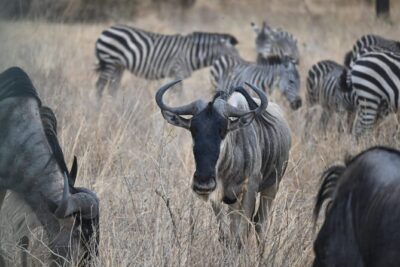
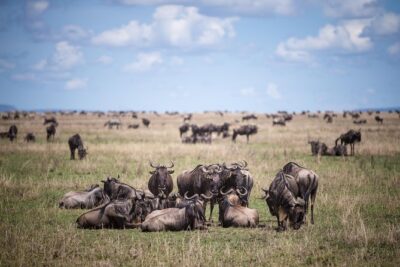
Central Serengeti is known for its broad plains and large populations of grazing animals and predators. The great migration involves about 1.5 million wildebeest, along with other herbivores and the predators that follow them. The precise location changes, so your guide’s ability to read conditions and recent sightings matters greatly.
Camping inside the park also saves you from making an unnecessary evening transfer. It lets you remain near the wildlife areas, though camping means you should be comfortable with simple facilities and an early start.
Day 4: Moving north toward the Mara River
You rise early, eat breakfast, and set out toward northern Serengeti. The aim is to reach the areas where the wildebeest may gather near the Mara River.
The best-known crossing period is generally July through October, with the herds often reaching the Kogatende area from July. But the animals do not follow a fixed timetable. They may cross back and forth, wait near the river, or move away before you arrive.
This is where the four-day Serengeti plan makes sense. You have more than one chance to locate the herds, and you are not forced to treat one riverbank sighting as your only opportunity. Still, I would not book this trip solely for a dramatic crossing. The migration is a natural event, not a scheduled performance.
The drive itself can be long, especially when the vehicle is covering large distances to follow current animal movement. Pack patience, sun protection, water, and a camera with spare power.
Day 5: A second full day to follow the herds
Day 5 remains in Serengeti, with another full game drive aimed at finding the wildebeest and the animals that follow them. The route is adjusted around the current position of the herds.
The best time for the main migration movement is generally June through September. From January through March, the focus shifts to calving, when young wildebeest are born on the southern plains. These seasonal differences matter. If you want river action, July to September is the usual target. If you prefer green scenery and newborn animals, the first months of the year may suit you better.
Predators are part of the larger story. Lions, cheetahs, leopards, hyenas, and other hunters follow the herds or take advantage of the large numbers of young animals. Even if the wildebeest are not close by, a full day in Serengeti can bring other strong sightings.
Day 6: Sunrise, another drive, and the road to Ngorongoro
Day 6 begins around 5:45 am with an early breakfast. You then take a morning game drive until about 11:30 am, giving you a chance to see Serengeti shortly after sunrise.
After a hot lunch at camp, you pack the vehicle and continue with a game drive while traveling toward Ngorongoro. You spend the night at Simba campsite.
This is a demanding day, but the early start is worthwhile. Morning is a useful time for wildlife activity, and the low light can make the plains feel completely different from the bright middle of the day. The later transfer also puts you in position for an early descent into the crater.
Day 7: Big Five country inside Ngorongoro Crater
You start around 5:30 am, eat breakfast, and descend to the crater floor. The drive down is one of the trip’s major scenic moments. Once inside, you spend six to seven hours looking for animals in a relatively compact area.
Ngorongoro is often called the Garden of Eden because of its concentration of wildlife. The itinerary highlights the Big Five, black rhino, many bird species, and flamingos. You eat lunch inside the crater while watching the natural activity around you.
The crater can be an excellent place to look for animals in a shorter period, but it can also feel busy compared with remote parts of Serengeti. Your experience will depend on the day’s conditions, animal movement, and traffic around notable sightings.
After the crater drive, you ascend, collect your luggage from the campsite, and continue to Jambo Lodge for dinner and the night. The day also includes a walking visit in Mto wa Mbu village. You can see banana plantations, learn about local life, and taste local food.
I like this addition because it breaks up the wildlife schedule. You are not only looking through a vehicle window. At the same time, cultural visits are best approached with respect and curiosity. Listen carefully, ask before taking photographs, and remember that the village is a lived-in community, not a stage show.
Day 8: Lake Manyara and the final drive to Arusha
After breakfast, you head to Lake Manyara National Park for a full-day game drive. The park is famous for tree-climbing lions, although any sighting of these cats depends on luck and current animal behavior.
Lake Manyara also attracts flamingos because of algae in the lake. The park includes a hot spring, giving the final wildlife day another point of interest beyond the usual animal checklist.
The schedule includes a visit to a Maasai boma, where you can learn about local culture, traditions, and daily life. As with the Mto wa Mbu visit, this offers useful human context after several days focused on animals and scenery.
Later, you drive back to Arusha for dinner and the night. The trip includes two nights of Arusha accommodation, one before the safari and one after it, plus transfers in both directions between the international airport and Arusha. That makes the tour easier to fit around international flights, but confirm the exact hotel and departure timing before booking.
Camping, meals, and the safari vehicle
The safari uses an extended 4 by 4 vehicle with a pop-up roof. That roof is important. It gives you a clear standing view for photographs and animal watching while keeping you inside the vehicle.
The tour includes a professional English-speaking guide and unlimited drinking water. The meal plan lists breakfast, lunch, and dinner, with eight breakfasts, eight lunches, and nine dinners. Those numbers do not perfectly match the eight-day schedule, so I would ask the operator to clarify which meals are included on arrival and departure days.
Camping is part of the appeal for people who want to stay close to the parks and keep costs down. It is not the right fit if you want a lodge every night or dislike early starts and basic facilities. The supplied information also refers to group camping in one place and a private tour in another. Ask directly whether your booking is private, shared, or private in the vehicle but arranged with shared camping services.
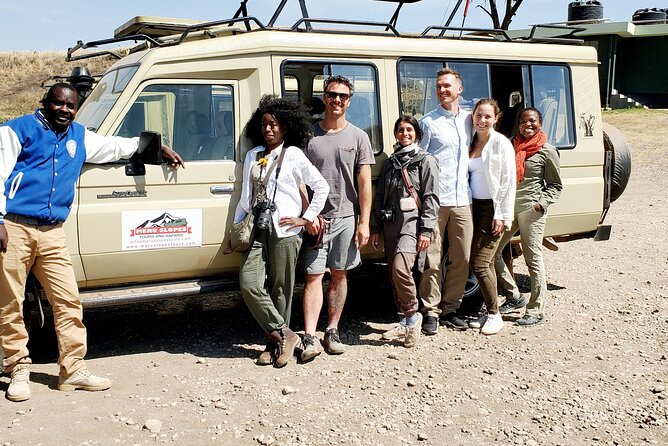
The safari company is Meru Slopes Tours and Safaris. Several named guides receive strong praise in the supplied feedback, including Jacob, Nuru, Samwel, Douglas, Benson, Mohamed, Iddy, and Jerome Hotti. Cooks also receive repeated praise, especially Dula and Eric. Guide quality matters greatly here because a good guide does more than drive. The guide decides how long to wait, which track to follow, and when a distant animal is worth the extra time.
What the price represents
The advertised price is $0 per person, so it cannot be treated as the real cost. It is likely a missing or placeholder figure. Before you plan around this safari, get a written price for your dates and group size.
The included items suggest that the package could offer solid value once a real price is supplied. It covers park fees and taxes, airport transfers, two Arusha hotel nights, a safari vehicle, guide, water, and most meals. Those costs add up quickly in Tanzania, especially with several national parks and four Serengeti days.
Ask for a full cost sheet. Confirm visa costs, tips, drinks beyond water, laundry, telephone use, camping fees, and any extra activities. Tips for the guide and cook are not included, and personal expenses are also separate.
Who should book this safari?
I would recommend this route if you want a broad first look at northern Tanzania and you care more about wildlife variety than luxury. It suits people who can manage long vehicle days, early breakfasts, camping, and a flexible schedule.
It is especially useful for anyone hoping to see the migration but who understands that timing and animal movement cannot be controlled. The four Serengeti days improve your odds, but no responsible operator can promise a Mara River crossing.
I would choose a different plan if you want short drives, high-end lodges, or a relaxed pace. I would also ask for a revised itinerary if your main goal is a particular migration event, since the route should be checked against the herd’s current position.
Cancellation is free up to 24 hours before the start time. A cancellation inside that window is not refunded, and poor weather may lead to a new date or full refund. Most people can participate, but the operator should still hear about any mobility, medical, or dietary needs before departure.
Should you book it?
Yes, if you want a full northern Tanzania circuit with serious Serengeti time, camping, cultural stops, and a strong chance of seeing varied wildlife. I especially like the combination of Arusha’s forest, Tarangire’s elephants, Serengeti’s open plains, Ngorongoro’s concentrated game, and Manyara’s tree-climbing lions.
Book only after confirming the real price and clearing up the private versus group wording, accommodation details, meal count, and migration route for your dates. Once those points are clear, this can be a very good-value safari for an active visitor who wants a lot of Tanzania in eight days.
FAQ
How long is the safari?
The safari lasts approximately eight days.
Where does the safari start?
It starts in Arusha, Tanzania, with pickup from an Arusha hotel around 7:30 am or 8:00 am, depending on the day’s schedule.
Which national parks are included?
The route includes Arusha National Park, Tarangire National Park, Serengeti National Park, Ngorongoro Crater, and Lake Manyara National Park.
Is airport pickup included?
Yes. Transfers in both directions between the international airport and Arusha are included.
Is accommodation in Arusha included?
Yes. The package includes two nights of accommodation in Arusha, one before the safari and one after it.
Is the tour private?
The additional information describes it as a private activity for your group, while the tour description also refers to joining group camping safaris. Confirm this point with the operator before booking.
What is not included?
Tanzania visa costs, personal expenses such as laundry, telephone use, and beverages, plus tips and gratuities for the safari guide and cook, are not included.
Newest safaris around Arusha
- Serengeti & Ngorongoro fly in safari★ 5.0 · 76 reviews
- 7 days great migration safari★ 5.0 · 77 reviews
- 5 days safari, hiking & culture (Serengeti & kilimanjaro)★ 5.0 · 27 reviews
- 6 days Tanzania budget safari★ 5.0 · 65 reviews
- 3 Days Tanzania Budget Group Joining Safari Tour★ 5.0 · 16 reviews
- Amazing 4 Days Tanzania Budget Camping Group Joining Safari★ 5.0 · 15 reviews
- 4 days safari★ 5.0 · 34 reviews
- 2 Day Budget Safari in Tarangire and Ngorongoro From Arusha★ 5.0 · 10 reviews
Arusha Safaris, compared.
Balloon Safari & Bush Breakfast in Serengeti – Miracle Experience
Read our review →
3 Days Serengeti & Ngorongoro Group Camping Safari
Read our review →
7-Day Premium Luxury Tanzania Safari All-Inclusive
Read our review →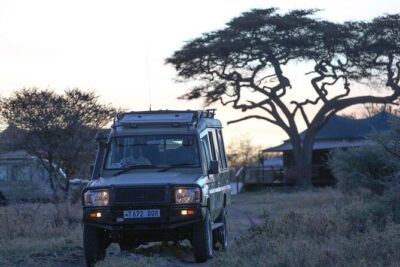
8 Days Great Wildebeest Calving Migration Safari from Arusha
Read our review →
Group Safari 7 Days in Tanzania’s Main Parks
Read our review →Browse the lists this tour appears in