
Review · ARUSHA, TANZANIA
5 Days Tanzania Group Joining Safari, Tarangire/Serengeti/Ngorongoro Crater
Wildlife comes first on this five-day safari. From Arusha, you visit Tarangire National Park, spend two nights around the Serengeti, and finish inside Ngorongoro Crater. I like the excellent park combination and the chance to see elephants, big cats, rhinos, and vast herds without paying lodge-safari prices. I also like that meals, camping, bottled water, snacks, and a 4WD Land Cruiser are included.
The trade-off is time on rough roads and a fairly demanding schedule. This is budget camping, not a polished lodge holiday. You should also confirm the final group arrangement before booking, since the experience is described as a group joining safari but also as a private activity for your own group.
Key points at a glance
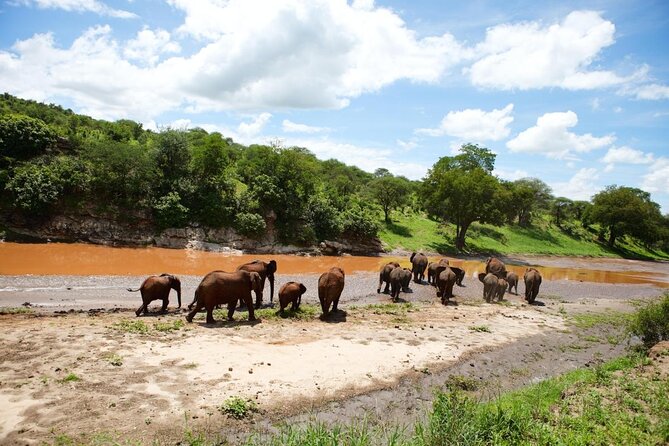
- Tarangire gives you elephants and quieter game viewing: It is especially noted for elephant migration, birds, and a less crowded safari feel.
- Two nights in the Serengeti matter: Day three gives you a full day for game drives instead of rushing through this huge park.
- Ngorongoro Crater is the grand finale: The crater floor offers one of East Africa’s strongest chances to see the Big Five in one compact area.
- The price covers the essentials: At $1,120 per person, transport, a guide, camping accommodation, park activities, meals, snacks, tea, coffee, and water are included.
- Guides can make or break the trip: Specific guides praised in past departures include Mike, Bakari, Ludo, Godfrey, Allen, Nico, and Waldon, though no guide is guaranteed.
- Pack light and pack soft: Duffle bags are required, and the operator specifically says not to bring suitcases.
What $1,120 buys you
At $1,120 per person, this safari is priced for people who want the main Northern Tanzania circuit without lodge rates. You get five days of road transport in a 4WD Land Cruiser, game drives, an English-speaking guide, five breakfasts, five lunches, four dinners, bottled water, snacks, coffee, and tea.
That bundle has real value. Park fees and vehicle costs can make a Northern Tanzania safari expensive before you even add food and accommodation. Here, the major daily costs are built into one price, so you can plan your spending more easily.
The accommodation is camping at Kizumba Campsite, Seronera Campsite, and Simba Campsite. The supplied information calls this budget camping, so you should expect function rather than comfort. You are paying for access to famous parks and time in the vehicle, not a private deck, swimming pool, or long lie-in.
The price does not include international or local flights, visa fees, travel insurance, personal accident insurance, drinks beyond the supplied water, laundry, phone calls, tips, or optional activities. A Maasai cultural village visit is also not included. Keep money aside for those costs.
More National Park Safaris in Arusha
- 3 Day Serengeti National Park & Ngorongoro Crater Camping Safari
★ 5.0 · 142 reviews - 5 day safari Tarangire Serengeti and Ngorongoro crater
★ 5.0 · 83 reviews - 3 Days Small Group Safari to Serengeti NP and Ngorongoro Crater Tour in Tanzania
★ 5.0 · 77 reviews
Day one: Tarangire’s elephants and broad open spaces
Pickup begins in Arusha at 8:30 a.m. The drive to Tarangire is planned as a full day, with game drives and a picnic lunch. This is a sensible first park because Tarangire offers a different feel from the Serengeti. It is particularly known for elephants, birdlife, and a quieter safari atmosphere.
I like that Tarangire is not treated as a quick photo stop. The route allows time inside the park, where you might find large elephant groups and plenty of bird activity. The park is slightly away from the main Northern Tanzania circuit, which helps give it a more relaxed character.
The day lasts about eight hours, and the road portion can be tiring. You then leave the park in the late afternoon and continue to Manyara for dinner and the night at Kizumba Campsite. The schedule mentions Lake Manyara in the general description, but this five-day plan does not provide a dedicated Lake Manyara game drive. You should not book this trip expecting a full visit to Lake Manyara National Park.
Your first night is on a full-board basis. Since this is camping, ask in advance what camping equipment is supplied and what you need to bring. The published details confirm the campsite and meals, but they do not describe tent style, bedding, or bathroom arrangements.
Day two: Leaving Tarangire for the Serengeti
After breakfast, you head toward Serengeti National Park with a picnic lunch. Game viewing takes place along the route, so the day is not simply a transfer from one camp to another.
The Serengeti is the heart of this safari. It is famous for enormous grazing herds, predator sightings, and the Great Migration, which involves roughly two million grazing animals. Conditions and animal movements change by season, so nobody can promise a migration crossing or a particular sighting. The park’s size is part of its appeal, but it also means you may spend long periods driving between areas.
You spend the night at Seronera Campsite, in the central Serengeti area. This is a valuable location because the plan gives you a second day in the park rather than moving on immediately.
The day is listed at about eight hours. Expect dust, bumps, and long periods in the safari vehicle. I would bring a hat, sunglasses, sun protection, a light jacket, and a camera that you can reach without unpacking your whole bag.
Day three: A full Serengeti game-drive day
The third day is the strongest part of the schedule for many people. You stay in the Serengeti for a full day of game drives, returning to camp for a hot lunch and a rest before an afternoon drive.
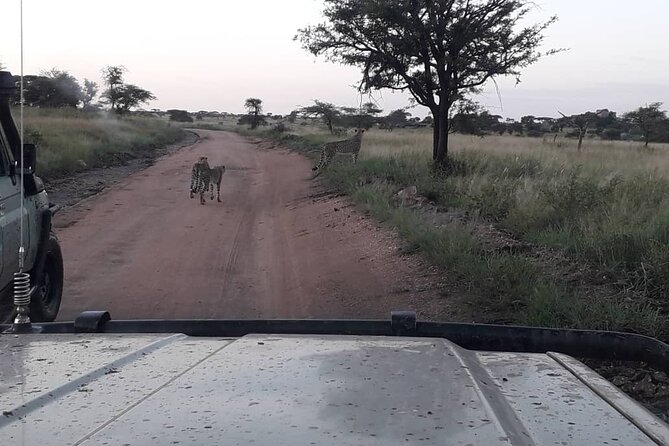
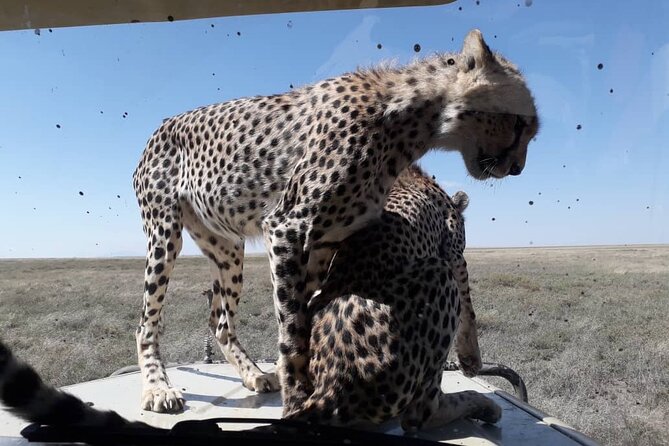
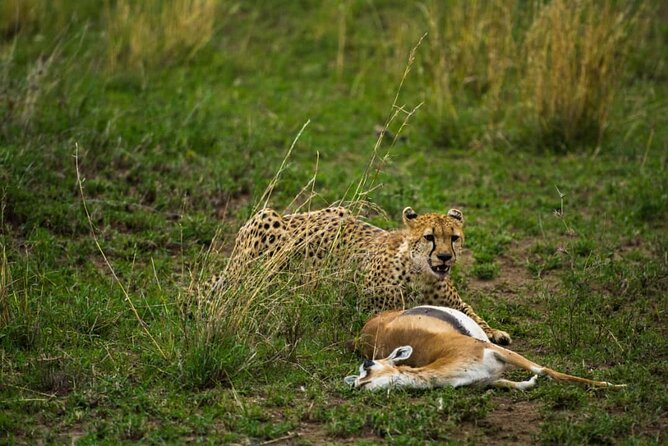
You may also take a picnic lunch and stay out for the entire day. That choice matters. Returning to camp gives you a break from the vehicle, while a full-day drive gives you more time to search for lions, cheetahs, leopards, elephants, zebras, wildebeest, and other animals.
Past guide assignments have included Mike, Nico, Bakari, and others. The strongest praise has focused on patient guides who explain animal behavior, position the vehicle well, and allow time for photography. Mike has been singled out for strong driving and finding good viewing positions, while Bakari has been praised for his calm manner and willingness to take time with guests.
Still, wildlife is never a guaranteed performance. The supplied feedback includes many reports of seeing the Big Five, but your sightings will depend on season, weather, animal movement, and the guide’s decisions. You should enjoy the search itself rather than treat a checklist as a promise.
After the afternoon drive, you return to Seronera Campsite for dinner and another night under the camping plan.
More National Park Safaris in Tanzania
- 5 Day Silver Serengeti & Ngorongoro Crater & Tarangire Safari
★ 5.0 · 46 reviews - 6 days 5 nights safari Ngorongoro, Serengeti and Tarangire National Parks
★ 5.0 · 39 reviews - 4 Days lodge safari Tarangire , Ngorongoro crater & Walking
★ 5.0 · 39 reviews - 3 Days Safari to Serengeti National Park & Ngorongoro Crater in Tanzania
★ 5.0 · 34 reviews
Day four: From the Serengeti to the crater rim
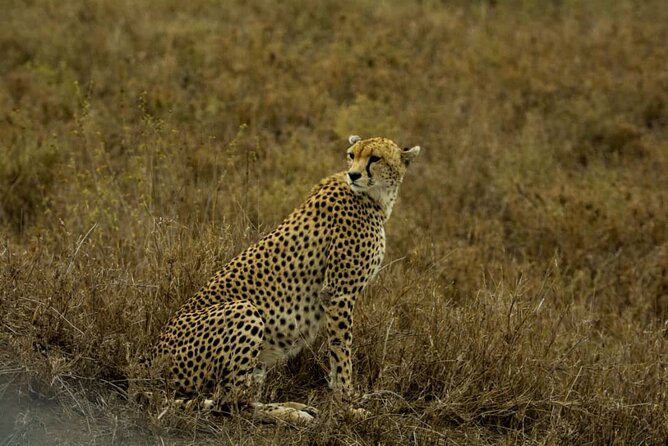
After breakfast, you spend part of the morning on a Serengeti game drive and then travel toward the Ngorongoro Crater rim with a picnic lunch. Dinner and overnight accommodation are at Simba Campsite.
This is another long day, listed at about eight hours. It combines wildlife viewing with a substantial transfer, so you should expect less time watching animals than on the dedicated Serengeti day.
The approach to Ngorongoro brings a sharp change in scenery. The Serengeti feels open and expansive, while the crater is enclosed by steep walls. Simba Campsite puts you near the next morning’s descent, which helps make the final day possible.
The campsite is at the crater rim, but the information provided does not describe temperatures, tent facilities, or exact sleeping arrangements. Bring warm layers. The rim can feel cool, especially compared with the lower, warmer parts of the safari.
Day five: Ngorongoro Crater and the return to Arusha
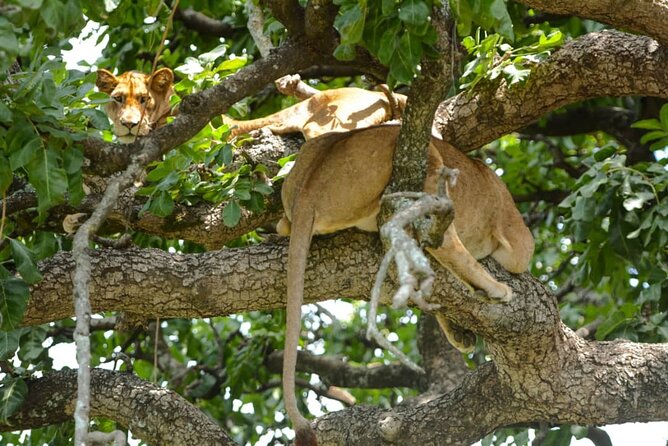
After breakfast, you descend into Ngorongoro Crater for game drives with a picnic lunch. This is the trip’s most concentrated wildlife day.
The crater is a remarkable setting, with a broad floor surrounded by high walls. Because animals live within a relatively compact area, you have a strong chance of seeing several major species during one visit. The plan specifically highlights the Big Five, and past departures have reported lions, elephants, rhinos, leopards, and buffalo, along with giraffes, cheetahs, zebras, wildebeest, warthogs, flamingoes, and many other birds.
A black rhino sighting has been especially memorable for some people. That is never guaranteed, but Ngorongoro is one of the places on this route where you have a realistic chance of looking for one.
The crater can also be busy. Vehicles gather around popular sightings, and the experience may feel less solitary than Tarangire or some parts of the Serengeti. You should also expect rules about driving and behavior inside this protected area. One reported complaint involved loud music being played near the crater. That is poor safari etiquette, and you should feel comfortable asking your guide to keep noise down around animals and other vehicles.
After the game drive, you ascend in the late afternoon and return to Arusha. The experience ends at the original meeting point.
Camps, food, and the practical side of budget camping
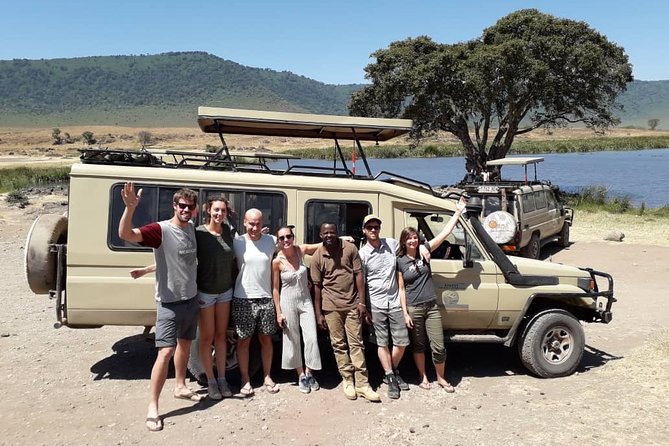
Camping keeps the price manageable, but it requires the right attitude. You will spend several days outdoors, eat on a fixed schedule, and travel in a vehicle for long stretches. If you need private bathrooms, soft beds, or flexible meal times, a lodge-based safari may suit you better.
Food quality can vary by cook and departure. Several past trips praised cooks and meals, including a cook named Erika and another named Yuzzo. One negative account described very basic breakfasts, including toast and jam, and criticized the service. Since the published package includes meals but gives no sample menu, ask what breakfasts, lunches, and dinners normally include before you pay.
Five breakfasts, five lunches, and four dinners are listed. Bottled water, snacks, coffee, and tea are also included. Drinks outside those items are your responsibility.
The operator asks you to bring only a duffle bag, not a suitcase. That is practical for a safari vehicle and campsite storage. Keep your main bag compact, and place your camera, passport, medication, and sun protection in a small day bag that stays within reach.
How the guides shape the experience
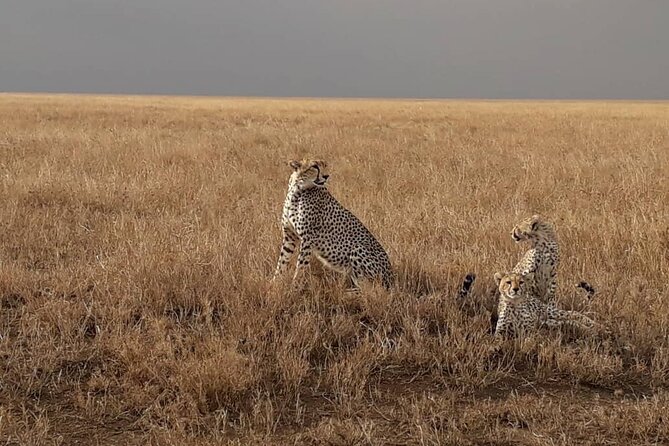
The vehicle and parks matter, but the guide has the biggest effect on your days. A good guide spots distant movement, knows when to wait, explains what you are seeing, and drives with care on rough tracks.
Several guide names appear in the supplied feedback: Mike, Bakari, Ludo, Godfrey, Allen, Nico, Jonas, and Waldon. Mike is frequently associated with strong animal-spotting skills and careful positioning. Bakari is praised for patience and a friendly manner. Ludo is credited with knowing favorite animal areas, while Godfrey is described as enthusiastic and well informed about safari subjects.
These names are useful when you ask about guide requests, but you should not assume one will be assigned to you. The operator may rotate guides and drivers according to availability.
The group setup deserves a clear question before booking. The title describes a group joining safari, yet the additional information says only your group will participate. Ask whether you will share the vehicle with other paying customers, how many seats are used, and whether you will keep the same vehicle throughout. One favorable account specifically valued not having to change vehicles, but that should be confirmed for your departure.
Who should book this safari?
I would choose this trip if you want the classic Northern Tanzania parks at a lower price and you are comfortable with camping, early starts, long drives, and simple meals. It also suits first-time safari visitors who want a strong mix of elephants, predators, open plains, and crater wildlife in five days.
Families and mixed-age groups can enjoy it, but everyone should be prepared for vehicle time. One past group included three generations and had a positive experience, yet the rough-road schedule may still be tiring for young children or anyone who needs frequent rest.
I would not choose it if you want a slow, private, luxury safari or if Lake Manyara is a must-see park. I would also avoid booking without clarification if you are particular about tent facilities, food standards, vehicle capacity, or your guide.
Cancellation is free if you cancel at least 24 hours before the local start time. A valid passport or identification card is required, and you may be asked for a Yellow Fever vaccination certificate when entering Tanzania. Visa rules should be checked before departure.
Is this five-day safari worth booking?
Yes, for the right kind of safari guest. The route gives you Tarangire, two nights in the Serengeti, and Ngorongoro Crater, while the $1,120 price includes the main transport, meals, camping, guide service, and game drives. That is a strong package for a budget safari.
Before paying, confirm the group size, exact camping equipment, guide request options, meal arrangements, and the fact that Lake Manyara is not scheduled for a dedicated park visit. If you accept basic camping and long road days, this safari offers a very efficient way to see Northern Tanzania’s headline wildlife areas.
FAQ
Where does the safari start?
It starts in Arusha, Tanzania, with pickup at 8:30 a.m.
Where does the safari end?
The safari returns to the original meeting point in Arusha at the end of day five.
How long is the safari?
The experience lasts approximately five days.
Which national parks are included?
The planned game-drive destinations are Tarangire National Park, Serengeti National Park, and Ngorongoro Crater.
Is Lake Manyara included?
Lake Manyara is mentioned in the general description and the day-one overnight area, but the schedule does not include a dedicated Lake Manyara game drive.
What type of accommodation is provided?
Accommodation is camping at Kizumba Campsite, Seronera Campsite, and Simba Campsite.
Are meals included?
Yes. The package includes five breakfasts, five lunches, and four dinners, along with snacks, bottled water, coffee, and tea.
Is transportation included?
Yes. Road transportation in a 4WD Land Cruiser safari vehicle is included.
Is a guide included?
Yes. An English-speaking guide is available for the safari.
Can I bring a suitcase?
No. The instructions ask passengers to bring duffle bags rather than suitcases.
Is the Maasai cultural village visit included?
No. A visit to a Maasai cultural village is listed as an extra activity and is not included in the price.
More 5-Day Experiences in Arusha
- 5 Days Group Camping Safari
★ 5.0 · 730 reviews - Tanzania Simba Safari – 5 Days
★ 5.0 · 217 reviews - 5 Days Budget Private Safari, Tanzania
★ 5.0 · 191 reviews - 5-Day Private Northern Tanzania Safari from Arusha
★ 5.0 · 182 reviews
Newest safaris around Arusha
- Serengeti & Ngorongoro fly in safari★ 5.0 · 76 reviews
- 7 days great migration safari★ 5.0 · 77 reviews
- 5 days safari, hiking & culture (Serengeti & kilimanjaro)★ 5.0 · 27 reviews
- 6 days Tanzania budget safari★ 5.0 · 65 reviews
- Amazing 4 Days Tanzania Budget Camping Group Joining Safari★ 5.0 · 15 reviews
- 4 days safari★ 5.0 · 34 reviews
- 3 Days Tanzania Budget Group Joining Safari Tour★ 5.0 · 16 reviews
- 2 Day Budget Safari in Tarangire and Ngorongoro From Arusha★ 5.0 · 10 reviews
National Park Safaris, compared.
Udawalawe National Park | Private Safari Tour
Read our review →
Addo Elephant National Park All Inclusive Full-Day Safari
Read our review →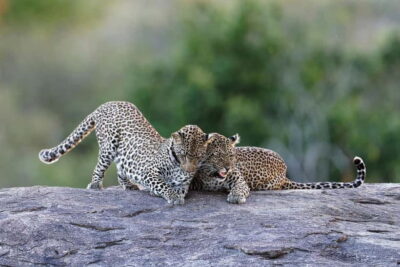
Yala National Park Safari Tours: Morning/Evening/Full Day
Read our review →
Full Day Ultimate Pilanesberg National Park Safari from Johannesburg or Pretoria
Read our review →Browse the lists this tour appears in