
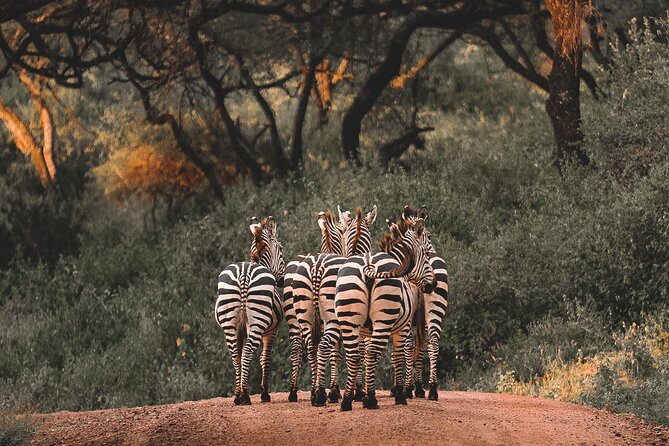
Review · ARUSHA, TANZANIA
5 Day Tanzania Safari
Big wildlife, short schedule, serious safari value. This five-day route links Tarangire, Ngorongoro Crater, and Serengeti National Park, giving you three very different settings and a strong chance to see elephants, lions, buffalo, leopards, and possibly rhinos. I like the private vehicle, experienced English-speaking guide, and practical extras such as bottled drinks, binoculars, Wi-Fi, and park fees.
I also like the balance between price and comfort. At $3,472 per person, you receive four nights in 3- to 4-star accommodation, meals, a new Land Cruiser, medical support, and transport from Arusha. The main drawback is the pace: you spend long hours on rough park roads, and the itinerary gives you only one full day in Ngorongoro before three days centered on the Serengeti.
Five details that shape this safari
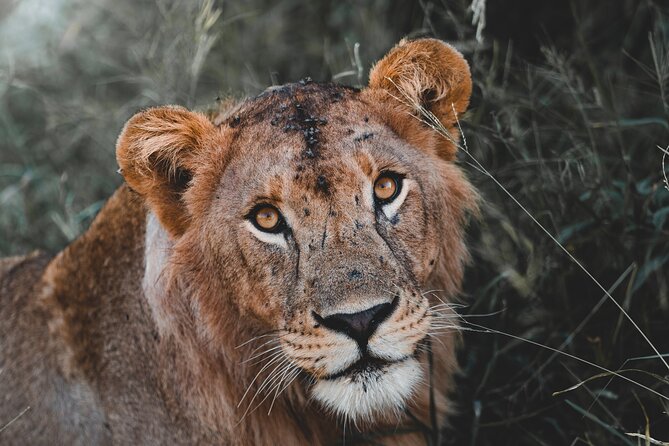
- Three famous parks in five days: Tarangire, Ngorongoro Crater, and Serengeti each offer a different wildlife setting.
- Private touring: Only your group takes part, allowing more flexibility than a standard shared safari.
- A purpose-built Land Cruiser: The vehicle has a pop-up roof, refrigerator, power sockets, and ergonomic seats.
- Strong guide service: Past guests singled out guides such as Stefan, Malik, Hashim, Anold, Aaron, Hussain, Peter, Levinson, and Fidelus for their wildlife skills and calm driving.
- Most major costs are covered: Park and concession fees, lodging, meals, drinks, Wi-Fi, medical supplies, and air ambulance service are included.
- Arusha pickup and drop-off: The standard start time is 7:30 a.m., with alternative return locations available by request.
Why this five-day route works
Northern Tanzania gives you a rare combination of scenery and animal viewing without forcing you to choose between a crater, open grassland, or elephant country. Tarangire feels wooded and intimate, Ngorongoro is compact and packed with wildlife, and the Serengeti opens into an enormous plain where each day can bring a different scene.
The route is also designed around game-drive time rather than long cultural stops. That will suit you if your main goal is wildlife. You are not spending half the trip changing hotels or crossing the country.
The private format matters. Your party rides together, and your guide can spend more time looking for the animals you most want to see. A family with a 12-year-old, for example, can ask for extra time with elephants or lions instead of following a fixed bus schedule.
This is still a busy five days. You should expect early starts, picnic meals, hours in the vehicle, and bumpy roads. Safari is not a passive sightseeing trip. It rewards patience, good binoculars, and a willingness to wait while your guide reads the signs of animal movement.
A few more safaris around Arusha worth a look
- 5 Days Group Camping Safari
★ 5.0 · 730 reviews - Tanzania Simba Safari – 5 Days
★ 5.0 · 217 reviews - 5 Days Budget Private Safari, Tanzania
★ 5.0 · 191 reviews
Day one: Tarangire and its elephant country
Your first day usually begins with pickup in Arusha at about 7:30 a.m. The drive to Tarangire takes you into one of northern Tanzania’s best-known wildlife parks, with the first game drive beginning around 10 a.m.
You have about six hours in the park. That gives you enough time for a useful first look at safari life without trying to cover the entire reserve in a single afternoon.
Tarangire is especially appealing for its elephants and varied scenery. The park feels different from the wide Serengeti plains, with trees, open areas, and routes that bring you close to wildlife. Your guide will work with the conditions of the day, watching for movement and choosing roads where sightings are most promising.
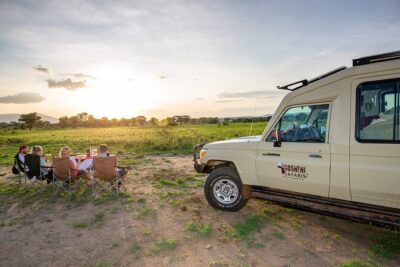
The new Land Cruiser should make this opening day more comfortable than a basic transfer vehicle. Its pop-up roof gives you a better viewing angle and lets you stand for photographs when conditions allow. The refrigerator helps keep water and soft drinks cold, while power sockets are useful for cameras and phones.
You receive bottled water, soft drinks, coffee, and tea during safari. Lunch is included, and the vehicle carries one pair of binoculars for the group. If wildlife viewing matters to you, bring your own binoculars as well. One pair is better than none, but it can be awkward when two people want to watch the same animal.
Tarangire is a good introduction because it offers a satisfying first day without the pressure of finding every major animal at once. You still have four more days, and the route gets more dramatic as it continues.
Day two: the Ngorongoro Crater from rim to lake
Ngorongoro Crater is the most concentrated wildlife setting on this route. The crater formed from a huge ancient volcano, and its enclosed floor supports a remarkable range of animals in a relatively small area.
The descent takes about 30 minutes. The road passes through lush forest, giving you a striking change from Tarangire’s more open setting. As you drop toward the crater floor, the views become part of the experience, not just a backdrop to the wildlife.
Once below the rim, you will spend about six hours on a game drive. The compact area means you can often see several types of animals within a short distance of one another. That makes Ngorongoro a strong place to look for lions, buffalo, elephants, and other large mammals.
A picnic stop near Lake Magadi gives you time to eat and rest. The lake adds another useful wildlife setting, with animals often drawn to water and open ground. Your guide can explain what you are seeing and help you sort out the many species that appear in quick succession.
The advantage here is concentration. You do not need to cover the vast distances of the Serengeti to encounter wildlife. The drawback is that a crater game drive can feel more crowded and structured than a remote plain, especially when several vehicles gather around an important sighting.
You should also remember that the crater is not a zoo. A rhino sighting is possible, but no ethical safari can promise every member of the Big Five. Guides can improve your odds through experience and communication, but animal movement remains unpredictable.
Days three through five: three different looks at the Serengeti
After breakfast on day three, you travel toward central Serengeti, the area known as Seronera. This is where the trip shifts from a compact crater experience to vast open country.
The drive and game viewing together take about seven hours. Around lunchtime, you may stop at the Serengeti Visitor Centre, where you receive a lunchbox and learn about the park’s animal populations and history. Hyraxes can also be seen in this area. These small animals are related to elephants, an odd but memorable fact your guide can help explain.
You also have the option of returning to camp for lunch and a short rest before heading out again in the afternoon. That choice matters. A packed day can produce more sightings, but a brief nap can help you stay alert during the later drive, when the light is often attractive for photographs.
Day four gives you a full day in central Serengeti, again with about seven hours of safari. The value of staying in one region for several days is that you are not constantly checking out, packing, and driving to the next park. You get time to notice how the area changes from morning to afternoon.
The itinerary points you toward kopjes, the rounded volcanic rock formations scattered across the plains. They make memorable photo subjects and provide shade and lookout points for animals. Simba Rock is another planned highlight, connected with the scene in The Lion King where Mufasa presents young Simba.
The film reference is fun, but the real attraction is the setting itself. The Serengeti is not a stage set. It is a working ecosystem where animals hunt, rest, move, and disappear into the grass on their own schedule.
Day five is another seven-hour Serengeti safari before the drive back to Arusha. You will visit new areas and search for species or behavior you missed earlier. That final day is useful because one part of the park cannot show you the whole Serengeti.
The return to Arusha is expected by dinner. Alternative drop-off points may be arranged in advance, which is useful if you are continuing to another hotel or onward travel. Still, confirm the return plan before departure, since the final day involves both game viewing and a long transfer.
Same region, a very different drive:
- Balloon Safari & Bush Breakfast in Serengeti – Miracle Experience
★ 5.0 · 1,646 reviews - 4 Days Group Camping Safari
★ 5.0 · 1,101 reviews - 3 Days Serengeti & Ngorongoro Group Camping Safari
★ 5.0 · 574 reviews - 7-Day Premium Luxury Tanzania Safari All-Inclusive
★ 5.0 · 426 reviews
Big Five chances and the reality of wildlife viewing
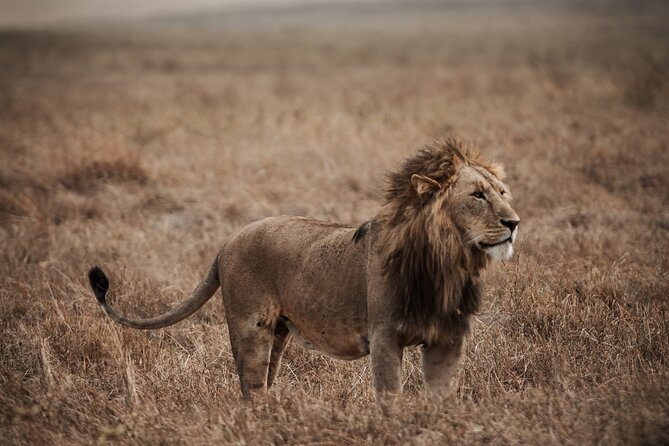
This route is built to improve your odds of seeing the Big Five: elephant, buffalo, leopard, rhino, and lion. Tarangire and the Serengeti are strong settings for elephants and lions, while Ngorongoro can offer excellent chances to see buffalo and other large animals in close proximity.
Leopards and rhinos are never guaranteed. Their behavior and location can change quickly, and the park is too large to search every corner. Your guide’s ability to spot tracks, read animal behavior, and communicate with other drivers can make a real difference.
Several guides connected with this safari have been praised for animal spotting and park knowledge. Names that appear repeatedly include Stefan, Malik, Hashim, Anold, Aaron, Hussain, Peter, Levinson, and Fidelus. One especially useful quality to look for is restraint: a good guide does not push into an animal’s space simply to produce a closer photograph.
You might see lions sleeping one day and hunting the next. Elephants may remain distant, or they may approach the vehicle. That uncertainty is part of the appeal. A safari gives you a series of real encounters, not a checklist with guaranteed times.
Comfort inside the Land Cruiser
Five days in a safari vehicle can test your back and patience, so the vehicle details are important. This tour uses a new 4×4 Land Cruiser with a pop-up roof, ergonomic seats, refrigerator, and power sockets.
The roof is the key feature. It lets you stand for a wider view and take photographs above the window line. The seats and refrigerator matter during long drives, when small comforts become large ones.
Wi-Fi is included, but the signal is available in only 60 to 75 percent of the areas traveled. Treat it as a useful bonus, not a constant connection. You should download maps, booking details, and entertainment before leaving Arusha.
The tour also includes a medical kit and air ambulance service through AMREF Flying Doctors. Those services do not remove the normal risks of remote travel, but they provide meaningful support when you are far from ordinary medical facilities.
Meals include five lunches, four dinners, and four breakfasts. Dietary needs should be provided at booking. The operator can accommodate pescatarian, vegetarian, vegan, halal, gluten-free, lactose-free, and other meal preferences.
The $3,472 price: where the value sits
At $3,472 per person, this is not a cheap weekend outing. It is a major trip cost, but the price includes many items that can otherwise create unpleasant surprises.
You receive pickup and drop-off in Arusha, four nights of 3- to 4-star accommodation, a private safari vehicle, an English-speaking guide, park entry and concession fees, meals, drinks, Wi-Fi, binoculars, and medical support. The national park fees alone are an important part of the total cost of a Northern Tanzania safari.
I see the strongest value in the private setup and the three-park route. You are not paying only for transport and a room. You are paying for access to a professional driver-guide, a properly equipped vehicle, and five days in protected areas that would be difficult to arrange independently.
The price will feel less attractive if you want luxury lodges, a slow pace, or several rest days. The itinerary is aimed at people who want a strong wildlife route within five days, not those seeking a leisurely resort holiday.
Tips for the safari guide are not included. Plan for that separately, and ask the operator for current guidance before you leave.
Who should book this safari
This trip suits first-time safari visitors who want the classic Northern Tanzania parks without designing a route from scratch. It also works well for couples, families, and small private groups that value having their own vehicle.
Families should note that the itinerary can be tiring for younger children, even though most people can participate. A 12-year-old who enjoys animals and long drives may find it thrilling, while a child who needs frequent activity changes may struggle with seven-hour game-drive days.
The route is also a good fit if you want a serious chance at the Big Five but do not have time for a longer trip. Three Serengeti days give you more than a quick overnight visit, while Tarangire and Ngorongoro add variety.
It may not suit you if you dislike rough roads, early starts, packed lunches, or uncertain animal sightings. There is no promise of a specific animal, and the weather can affect the schedule.
The cancellation terms are fairly clear. Cancel at least six full days before the start for a full refund. Cancel two to six full days before departure for a 50 percent refund, while cancellations less than two full days before the start are nonrefundable. Poor weather may lead to a different date or a full refund.
Should you book it?
I would book this safari if you want maximum wildlife variety in five full days and prefer a private vehicle with most major expenses already handled. The route is well chosen, the equipment is practical, and the guide can shape each game drive around your interests.
Before paying, confirm the exact lodge names, room arrangements, pickup location, and expected driving times. If you can accept long days and safari’s lack of guarantees, this is a strong Northern Tanzania introduction. If you want a slower trip with more time at each lodge, add a rest day or choose a longer custom itinerary.
FAQ
Where does the safari start and finish?
The safari starts with pickup in Arusha, usually at 7:30 a.m. It ends with drop-off in Arusha after the final Serengeti day. Alternative drop-off points may be possible by request.
Which national parks are included?
The route includes Tarangire National Park, Ngorongoro Crater, and Serengeti National Park.
Is this a private tour?
Yes. Only your group participates in the activity.
Is a safari guide included?
Yes. A certified, experienced English-speaking safari guide is included.
What type of vehicle is used?
The safari uses a new Land Cruiser 4×4 with a pop-up roof, ergonomic seats, a refrigerator, and power sockets.
Are meals included?
Yes. The package includes five lunches, four dinners, and four breakfasts.
Are park fees included?
Yes. National park entry fees and concession fees for the full tour are included.
Can dietary requirements be accommodated?
Yes. You should provide your allergies or dietary requirements when booking. Options include pescatarian, vegetarian, vegan, halal, gluten-free, lactose-free, and other meal preferences.
Is Wi-Fi available during the safari?
Free Wi-Fi is included, but the signal is available in only about 60 to 75 percent of the areas traveled.
Newest safaris around Arusha
- Serengeti & Ngorongoro fly in safari★ 5.0 · 76 reviews
- 7 days great migration safari★ 5.0 · 77 reviews
- 5 days safari, hiking & culture (Serengeti & kilimanjaro)★ 5.0 · 27 reviews
- 6 days Tanzania budget safari★ 5.0 · 65 reviews
- 3 Days Tanzania Budget Group Joining Safari Tour★ 5.0 · 16 reviews
- Amazing 4 Days Tanzania Budget Camping Group Joining Safari★ 5.0 · 15 reviews
- 4 days safari★ 5.0 · 34 reviews
- 2 Day Budget Safari in Tarangire and Ngorongoro From Arusha★ 5.0 · 10 reviews
5-Day Experiences, compared.
5 Day Garden Route and Addo Safari – Best of South Africa Small Group Tour
Read our review →
5-Day Private Northern Tanzania Safari from Arusha
Read our review →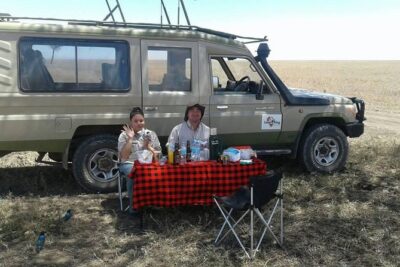
5 Days Best of Tanzania Luxury Safari Northern Circuit
Read our review →
5-Day private Camping Safari Tour in Tanzania
Read our review →Browse the lists this tour appears in