
Review · ARUSHA, TANZANIA
6 Days Serengeti Safari(hiking waterfalls &coffee tour)
Africa delivers the big scenes here. This six-day trip combines two days around the Serengeti with Tarangire, Ngorongoro Crater, Lake Manyara, Materuni Waterfalls, and a Chagga coffee experience. I like the strong mix of wildlife and local culture, and I like that the safari uses a custom jeep with a pop-up roof, a guide-driver, and a cook. The main caution is the pace: long road days, camping, and an itinerary that covers a great deal of northern Tanzania in a short time.
I also like the small-group format, which is advertised for up to six clients in the main description, though the additional information gives a maximum of seven people. That is worth confirming before you pay. At $1,250 per person, the package offers a lot for the money, but this is an active camping safari, not a soft bed and private lodge holiday.
Key points to know before booking
- Two Serengeti days: You get an afternoon arrival and a full morning game drive, rather than racing through the park in a single day.
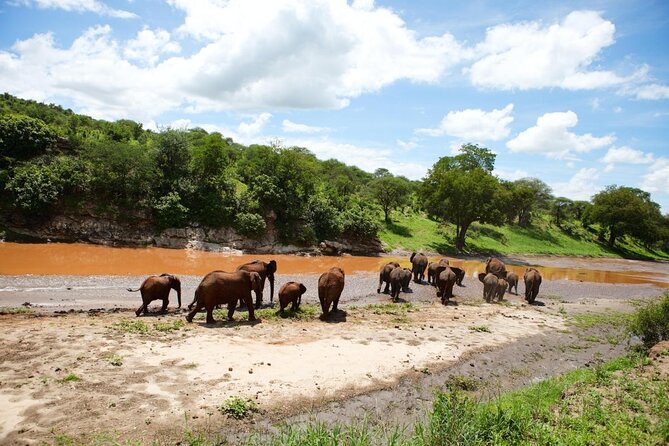
- Big wildlife variety: Tarangire is especially good for elephants, while Ngorongoro makes animal spotting easier from its crater floor.
- Camping with a cook: Tents, sleeping bags, mattresses, and meals are included, giving you a more practical safari setup.
- A cultural final day: Materuni adds a village walk, an 80-meter waterfall, Chagga culture, and coffee preparation.
- Guide quality matters: Drivers such as David, Godfrey, Simon, Lewis, Calvin, and Malisa have been praised for animal spotting, patience, and safe driving.
- A packed schedule: Most safari days include about six hours of driving and game viewing, so you should be ready for early starts and dusty roads.
What the $1,250 price really covers
The price is attractive for a six-day northern Tanzania program. You receive the safari jeep, park fees, camping equipment, meals during the safari, and the services of a guide-driver and cook. That removes several large expenses that can quickly add up on a self-arranged trip.
The camping equipment includes a tent, sleeping bag, and sleeping mattress. Meals are also part of the package, with breakfast, lunch, and dinner listed for the relevant safari days. Bottled water was also provided on some trips, though you should confirm whether that is included for your departure.
The value comes from the range of parks. Tarangire, Serengeti, Ngorongoro, and Lake Manyara each offer a different setting and animal experience. You are not paying for one park repeated several times.
The trade-off is comfort. This is a group safari with long drives, shared arrangements, and campsites rather than a lodge-based route. A few past customers found the food very good, while one described it as simply good rather than outstanding. That is a fair expectation: the cook can prepare satisfying meals in camp, but this is not a restaurant tour.
The schedule also has a small inconsistency. The main description says a maximum of six clients, while the additional information says seven. The tour is also described as a five-day group safari with a sixth day added for Materuni. Ask the operator to confirm the exact group size, sleeping arrangements, and what happens on the final evening.
More Walking and Trekking in Arusha:
- 5 days safari, hiking & culture (Serengeti & kilimanjaro)
★ 5.0 · 27 reviews - Rainforest Hike and Waterfall Safari
★ 5.0 · 567 reviews - Howth Safari Hiking Tour
★ 5.0 · 279 reviews
Day 1: Tarangire and its elephant herds
Your safari begins with a morning drive to Tarangire National Park, about 2,600 square kilometers of savannah, seasonal wetlands, and giant baobab trees. The park is roughly the size of Luxembourg, but the real measure of Tarangire is its wildlife.
I would pay close attention to elephants here. Herds can reach around 300 animals, and Tarangire is known as one of East Africa’s better places to see them at fairly close range. You may also see giraffes, buffaloes, hartebeest, eland, fringe-eared oryx, gerenuk, and a large selection of birds.
The gerenuk is a special possibility. Its unusually long neck allows it to feed while standing upright, giving it an almost comic appearance. The baobabs add another memorable feature, especially when elephants pass beneath them.
After the game drive, you spend the night at a Tarangire campsite. This first day is listed at about six hours, though the actual length can change with road conditions and wildlife stops. Lunch and dinner are included.
Day 2: Crossing Ngorongoro to the Serengeti
After breakfast, the road continues from the Mto wa Mbu area toward the Serengeti. The drive takes about six hours including stops, and it passes through the Ngorongoro Conservation Area.
A short stop at the Ngorongoro gate and viewpoint gives you a first look at the crater. This is not the full crater visit yet, but the view helps explain why Ngorongoro is one of the signature sights in northern Tanzania.
You may also choose to visit a Maasai village. The visit lasts about 20 to 45 minutes and is optional, with the cost not included. It offers an introduction to Maasai customs and village life, but you should decide in advance if this type of cultural stop fits your interests and budget.
The road then continues to the Serengeti. Arrival timing can vary, so the first game viewing may be limited by the length of the drive. That is one reason two Serengeti days are useful. You have more than a quick pass through the park and a better chance to see the area at different times of day.
Days 2 and 3: Two chances to find wildlife in the Serengeti
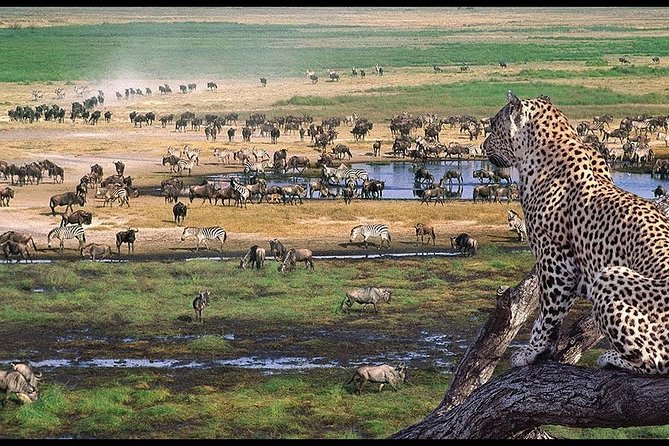
The Serengeti is the center of this trip. It is famous for more than one million wildebeest and roughly 250,000 zebras associated with the annual migration, but the park is rewarding even when the herds are elsewhere.
Your second Serengeti day begins with an early breakfast and an early game drive around Seronera. Morning is a smart time to be out. Animals are often easier to look for before the strongest heat of the day, and the open plains provide broad views.
The schedule calls for game viewing until afternoon, then lunch and packing at camp. You continue with a game drive as you leave the Serengeti toward Simba Campsite near the Ngorongoro rim, a drive of about two hours. Even the campsite can produce sightings, so do not assume the wildlife stops at the park gate.
This part of the trip depends heavily on your guide. David was praised for animal knowledge and finding a wide range of wildlife, while Godfrey was praised for knowing where to go and making a strong effort to locate the Big Five. Simon, Calvin, Lewis, Malisa, Hachiem, and other guides also received positive comments for safety, patience, and good communication.
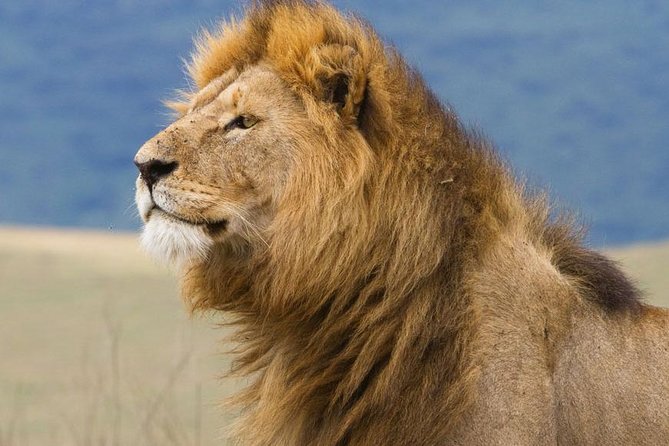
You should keep expectations sensible. Seeing lions, elephants, buffalo, leopards, and rhinos on one trip is possible, but no guide can guarantee the Big Five. Cheetahs, in particular, may not appear even when you see many other animals.
A few more safaris around Arusha worth a look
- Materuni Waterfalls & Coffee making Cultural Tour | BURIGI CHATO SAFARIS LTD
★ 5.0 · 15 reviews - Marangu waterfall & Coffee making Cultural Tour | BURIGI CHATO SAFARIS CO LTD
★ 5.0 · 12 reviews - Cappadocia Off-Road Jeep Safari Experience with Free Coffee
★ 4.9 · 19 reviews
Day 4: The Ngorongoro Crater from the crater floor
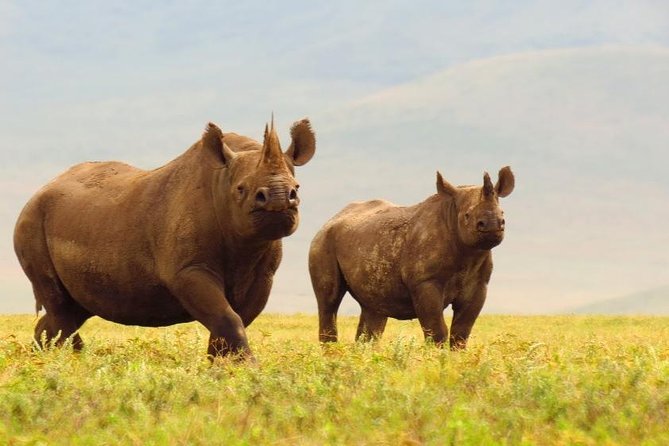
The Ngorongoro day begins early, with a planned descent around 6:15 a.m. That early start is worth accepting. You reach the crater floor when the light is softer and have more time to search for wildlife before the day becomes hot.
Ngorongoro is a collapsed volcanic caldera, and its enclosed shape makes animal spotting feel more concentrated than in the open Serengeti. You may find buffaloes, wildebeest, zebras, lions, and other species across the grasslands. The black rhino is the prize here, but it is also among the hardest animals to spot.
After lunch, the game drive continues before you climb back toward the crater rim. You then pack up and continue toward Fig Lodge and Campsite near Lake Manyara National Park.
This is a full day with an early start, several hours of wildlife viewing, and another transfer. The crater is one of the trip’s strongest highlights, but you should not expect a slow, private experience. Vehicles gather around notable sightings, and the day follows park rules and road conditions.
Day 5: Lake Manyara’s birds, hippos, and tree-climbing lions
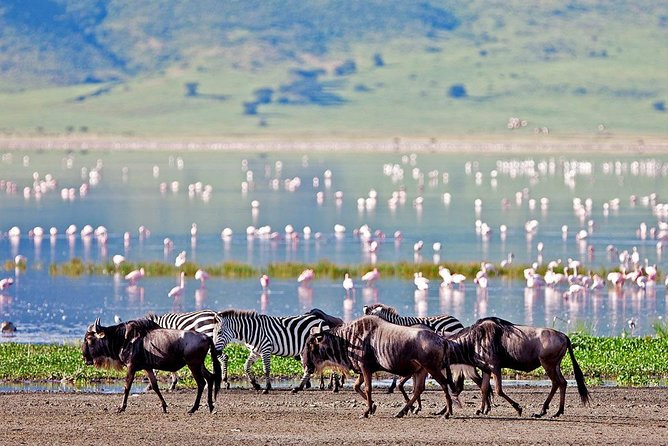
Lake Manyara brings a different mood. The park is known for birds, flamingoes, monkeys, buffaloes, wildebeest, warthogs, vultures, and eagles. You also visit a hippo pool for a closer look at these powerful animals and stop at a hot spring during the game drive.
Tree-climbing lions are part of Manyara’s reputation, though they are rarely seen. Treat them as a lucky bonus, not the main reason to book the park. Flamingoes can also vary with conditions, so the birdlife is the more dependable feature.
After breakfast, you spend the day in the park and have lunch included. The package does not list dinner for this day, so confirm the evening meal and your exact overnight plan when booking.
This park works well near the end of a safari because it adds variety without requiring another long journey into the Serengeti. Still, after several early mornings, you may feel ready for a quieter final day.
Day 6: Materuni Waterfalls and Chagga coffee culture
The final day changes the subject from wild animals to village life. Materuni is a Chagga village about 15 kilometers from Moshi and the last village before Kilimanjaro National Park.
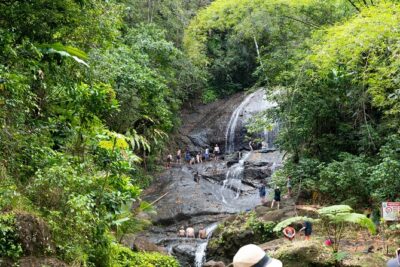
A guide takes you on a walk of about 40 minutes to Materuni Waterfalls. The route includes local plants, village life, and Chagga culture. The waterfall drops more than 80 meters, and you can enjoy a refreshing swim.
You might also see the summit of Kilimanjaro if the weather is clear. The mountain view is never guaranteed, but the walk and waterfall provide a worthwhile finish even when clouds cover the peak.
The coffee portion is especially useful because it connects the scenery to daily life. You get to see how coffee is prepared in the local setting rather than simply drinking a cup at a hotel. This half-day or four-hour outing suits active visitors who want a cultural experience after several days in a vehicle.
Bring practical walking clothes and footwear that can handle a wet path. The tour description calls for a morning pickup, but the general meeting information lists a 12:00 a.m. start time. That looks inconsistent, so confirm the pickup hour directly.
Camping, vehicles, and the human side of the trip
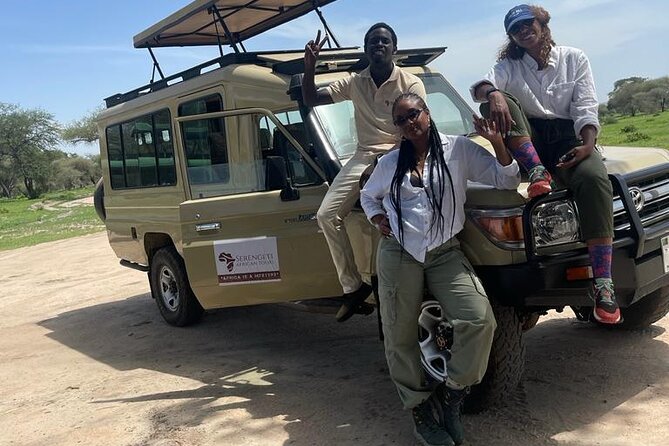
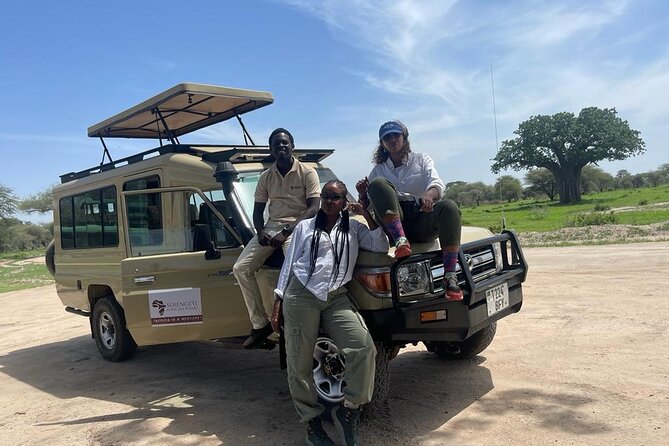
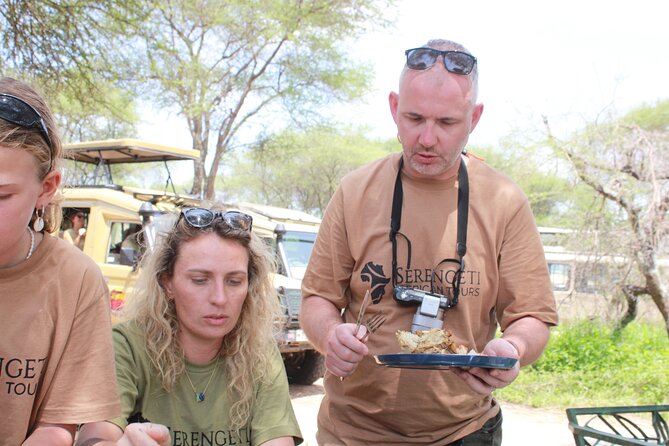
The safari uses a custom jeep with a pop-up roof. That roof gives you a better view during game drives and lets you watch animals from a standing position without leaving the vehicle. The vehicle is also your main base for long stretches, so group size matters.
The operator pairs a guide-driver with a chef. That arrangement is useful because the guide can focus on driving and wildlife while the cook handles meals and camp food. Matthew, also called Chief Matthew in one account, was praised for preparing good meals, while other cooks received similar positive comments.
There was one report of vehicle trouble that was eventually sorted out. That does not mean you should expect a breakdown, but it is a sensible reminder to ask about vehicle maintenance and what support is available if a problem occurs.
The trip is a good fit for solo visitors because group departures can make it easier to meet other people. One solo customer described feeling safe from airport pickup onward with guide Calvin. At the same time, a group safari means you share the vehicle and daily timetable. If you need complete privacy, confirm that you are not being combined with another booking.
Who should book this safari?
I would recommend it to you if you want a broad introduction to northern Tanzania and care more about wildlife access than polished accommodation. It suits active people who can handle early mornings, six-hour road days, tent camping, and a changing schedule.
It also suits a first safari. Tarangire gives you elephants, Serengeti gives you open plains and migration country, Ngorongoro gives you concentrated wildlife viewing, and Lake Manyara adds birds and hippo viewing. Materuni then gives you a human and cultural counterpoint.
I would think twice if you dislike camping, long drives, shared vehicles, or uncertain wildlife sightings. The itinerary covers a lot of ground, and the final waterfall walk adds physical activity after five demanding safari days.
Free cancellation is available if you cancel at least 24 hours before the local start time. Inside that window, the payment is not refunded. Visas, flights, and tips are not included.
Is this six-day Tanzania safari worth booking?
For $1,250, this is a strong-value route if you want four northern parks, camping equipment, meals, park fees, a safari vehicle, and a Materuni day in one package. The two days linked to the Serengeti are a real advantage, and Ngorongoro and Tarangire give the program two especially strong wildlife chapters.
I would book it after confirming three things: the exact group size, the final-day meal and pickup details, and the accommodation plan for each night. If those answers suit you, this trip offers a practical way to see Tanzania’s headline parks without paying lodge prices.
FAQ
How long is the experience?
The experience lasts approximately six days. The first five days focus on the northern safari circuit, and the sixth day covers Materuni Waterfalls and the coffee experience.
What parks are included?
The route includes Tarangire National Park, Serengeti National Park, the Ngorongoro Conservation Area and Crater, and Lake Manyara National Park.
Is the Maasai village visit included?
No. The Maasai village visit is optional, lasts about 20 to 45 minutes, and is not included in the tour price.
What camping equipment is provided?
The package includes a tent, sleeping bag, and sleeping mattress.
Are meals included?
Meals are included during the safari. The package lists six lunches, five breakfasts, and four dinners, so confirm the exact meal plan for your departure, especially on the final safari evening.
What is not included in the price?
Visas, flights, and tips are not included. The optional Maasai village visit is also not included.
More 6-Day Experiences in Arusha
- 6 Days Private Budget Safari
★ 5.0 · 163 reviews - 6 Days Tanzania Budget Camping Safari
★ 5.0 · 145 reviews - 6 days Tanzania budget safari
★ 5.0 · 65 reviews - 6 Day Tanzania Wildlife Mid range Safari
★ 5.0 · 54 reviews
Newest safaris around Arusha
- Serengeti & Ngorongoro fly in safari★ 5.0 · 76 reviews
- 7 days great migration safari★ 5.0 · 77 reviews
- 5 days safari, hiking & culture (Serengeti & kilimanjaro)★ 5.0 · 27 reviews
- 6 days Tanzania budget safari★ 5.0 · 65 reviews
- 3 Days Tanzania Budget Group Joining Safari Tour★ 5.0 · 16 reviews
- Amazing 4 Days Tanzania Budget Camping Group Joining Safari★ 5.0 · 15 reviews
- 4 days safari★ 5.0 · 34 reviews
- Best 5 Days Tanzania Private Luxury Safari with luxury Lodges★ 5.0 · 12 reviews
Hiking & Trekking, compared.
3 Days gorilla trekking Safari tour in Uganda
Read our review →
8-Day Murchison Falls, Chimp and Epic Gorilla Trekking Safari
Read our review →
Browse the lists this tour appears in