
Review · ARUSHA, TANZANIA
8 Days Great Wildebeest Calving Migration Safari from Arusha
Calving season changes everything. This 8-day Tanzania safari links Tarangire, Lake Manyara, Ndutu, the Serengeti, and Ngorongoro Crater during the December to April migration period. I like the smart route, which moves from elephant country to the southern Serengeti, and I like that lodging, meals, park fees, transport, and guiding are bundled together. The main caution is the pace: you cover a lot of ground in seven nights.
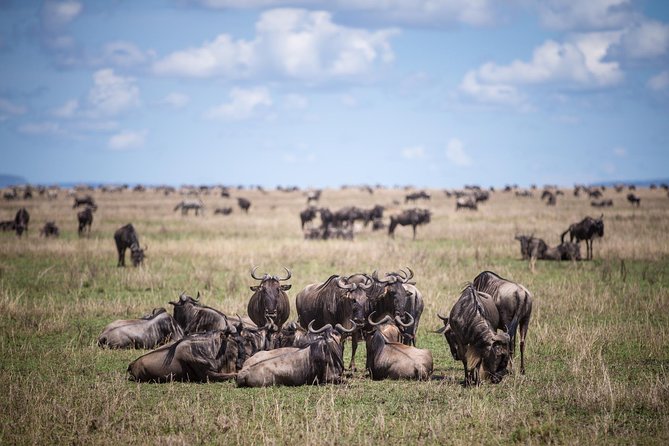
The strongest part is the timing. In the Ndutu area, usually around February for roughly three weeks, huge wildebeest herds gather to give birth. That brings young animals, zebra, and plenty of predator activity. The possible drawback is that wildlife sightings can never be promised, and long drives between parks are part of the bargain.
Key points to know before booking
- Calving season in Ndutu: The southern Serengeti is the main focus from December to April, with the peak calving period generally around February.
- Five major wildlife areas: The route includes Tarangire, Lake Manyara, Ndutu, central Serengeti, and Ngorongoro Crater.
- Private vehicle with a small group: The maximum group size is seven, giving you more room and a better chance to discuss stops with your driver-guide.
- Accommodation is included: You stay in a hotel, luxury tented camps, and lodges, with meals listed from breakfast through dinner on most safari days.
- Strong guide reputation: Guides named in positive feedback include William, Albert, Emanuel, George Mathias, Calvin Kileo, Ombeni, Michael Sangiwa, Rahim, Innocent Mafuru, and Bariki.
- Good value for an all-in safari: At $2,999.62 per person, the price covers major costs, though alcoholic drinks are extra.
Why calving season is worth the trip
The Great Wildebeest Migration is not one single event. The herds move through the Serengeti ecosystem in search of fresh grazing, and the southern plains become especially important during the calving months.
Ndutu sits within the Ngorongoro Conservation Area but forms part of the wider southern Serengeti ecosystem. That makes it a useful base for seeing the migration without treating the Serengeti as one huge, generic park. Here, short grass plains, swamps, woodland, and soda lakes create different settings for wildlife.
The calving spectacle is powerful because it brings both life and danger. Thousands of young wildebeest may be born during a short period, while lions, hyenas, cheetahs, and other predators take advantage of the concentration of prey. You might see a birth, a chase, or simply large herds spread across the plains. Nature does not follow a timetable, so patience matters.
The tour description identifies December to April as the calving-season window, with the main calving period around February and lasting about three weeks. If calving is your main reason for booking, ask for the exact departure date before paying. A trip in December or April can still offer excellent wildlife viewing, but it may not match the busiest birth period.
A few more safaris around Arusha worth a look
- Balloon Safari & Bush Breakfast in Serengeti – Miracle Experience
★ 5.0 · 1,646 reviews - 4 Days Group Camping Safari
★ 5.0 · 1,101 reviews - 5 Days Group Camping Safari
★ 5.0 · 730 reviews
Day 1: A soft landing in Arusha
The journey begins with pickup from Kilimanjaro Airport and transfer to Mount Meru Hotel in Arusha. The listed meeting time is 8:30 a.m. in Arusha, so you should confirm how that start time applies to your arrival flight.
This first night is useful rather than flashy. Arusha is the practical gateway to northern Tanzania, and a hotel night gives you a place to rest before several full days on rough park roads. It also means the safari starts with prearranged transport instead of the usual airport bargaining and hurried hotel search.
Airport pickup and drop-off are included. That is a real help if this is your first visit to Tanzania, especially when you are arriving with luggage and adjusting to a new time zone.
Day 2: Elephants and baobabs in Tarangire
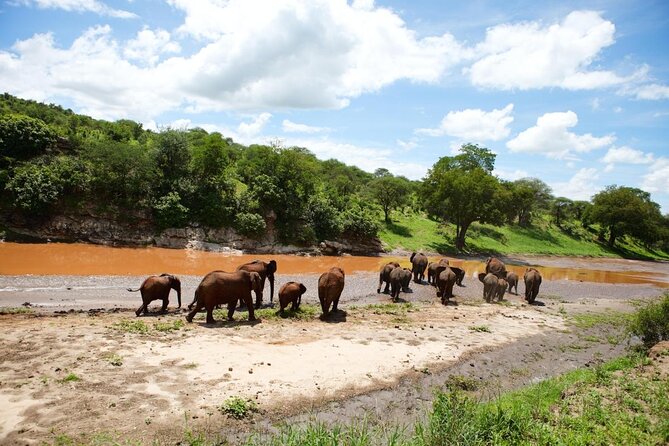
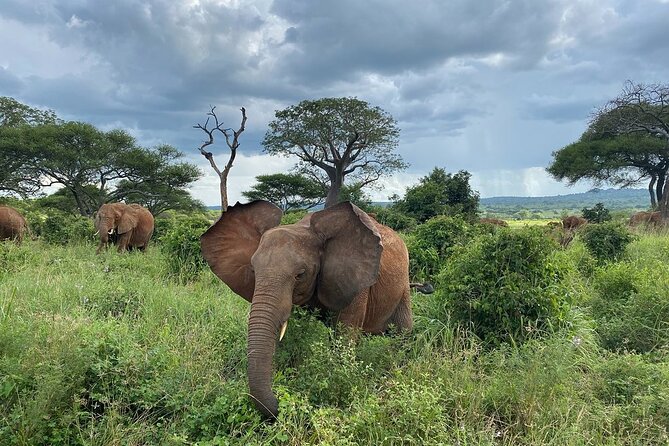
Tarangire National Park is one of the most distinctive stops on the route. Its great attraction is the Tarangire River, described as flowing all year, which helps draw wildlife even when other water sources are less reliable.
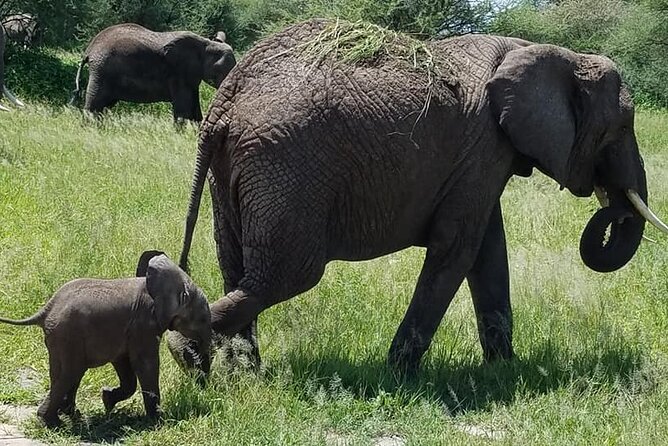
The park is especially known for large elephant herds, baobab trees, and the possibility of seeing tree-climbing lions. The baobabs give the area a strong sense of place. They are not just background scenery, but some of the park’s defining natural features.
This is a good opening game drive because it offers variety without asking you to reach the far southern Serengeti on the first day. You can expect a full day with lunch included and an overnight stay at a luxury tented camp.
The phrase luxury tented camp can cover different setups, so I would ask the operator for the exact camp name and facilities before departure. The itinerary confirms the style of accommodation, but not the specific property.
Day 3: Lake Manyara’s compact wildlife circuit
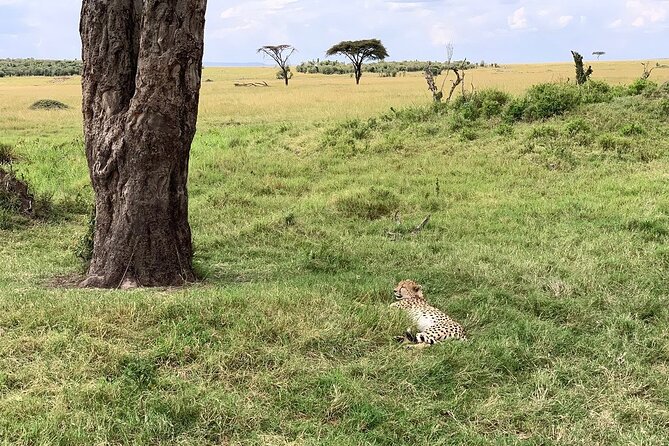
Lake Manyara National Park is a smaller and more concentrated wildlife area than the Serengeti. Its compact game-viewing circuit gives you a change of pace after Tarangire.
The park is known for its scenic lake and ecological variety. The itinerary also points to its reputation as one of Tanzania’s most diverse reserves. That diversity matters because you are not simply repeating the same open-plains experience each day.
The short drive circuit can be an advantage. You may spend less time crossing huge distances and more time moving through different habitats. The tradeoff is that a compact park cannot offer the same scale as the Serengeti.
You stay at a luxury lodge and receive breakfast, lunch, and dinner. As with the tented camps, the exact lodge is not specified, so ask about its location and room setup if accommodation quality is a major part of your decision.
Same region, a very different drive:
- 3 Days Serengeti & Ngorongoro Group Camping Safari
★ 5.0 · 574 reviews - 7-Day Premium Luxury Tanzania Safari All-Inclusive
★ 5.0 · 426 reviews - 3-Day Classic Serengeti Safari
★ 5.0 · 263 reviews - Group Safari 7 Days in Tanzania’s Main Parks
★ 5.0 · 240 reviews
Days 4 and 5: The Ndutu calving grounds
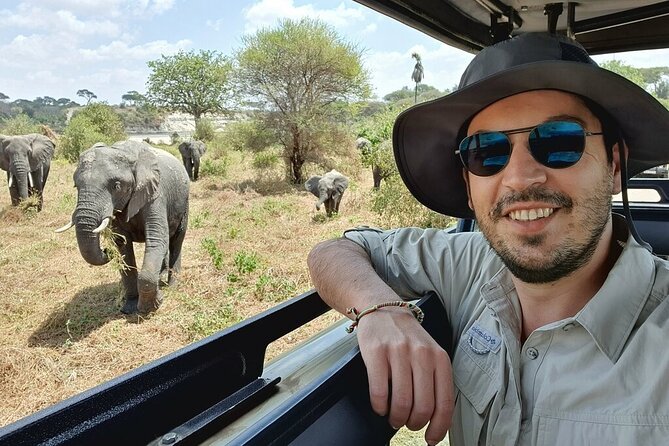
Day 4 takes you toward the Ndutu area in the southern Serengeti ecosystem. The route places you within the Ngorongoro Conservation Area, an important detail because the broader ecosystem crosses administrative boundaries.
Lake Ndutu is an alkaline lake, like many Rift Valley lakes, but the water is still consumed by local wildlife. Around it, you may find a mix of open plains, wet areas, woodland, and other habitats that attract different species.
Day 5 is the key migration day. You spend a full day on game drives around Ndutu, looking for wildebeest and zebra. If your date lines up with the main February calving period, this is likely to be the emotional center of the safari.
The word likely matters. No operator can guarantee a particular sighting, and animal movements depend on rain, grazing, and local conditions. Still, the route gives you a sound chance to be in the right part of the ecosystem at the right time.
You spend the night in a luxury tented camp. Staying close to the wildlife area is valuable because you avoid treating Ndutu as a quick roadside stop. The tradeoff is that remote safari accommodation can feel simpler than a city hotel, even when it is described as luxurious.
Days 5 and 6: Following the herds into central Serengeti
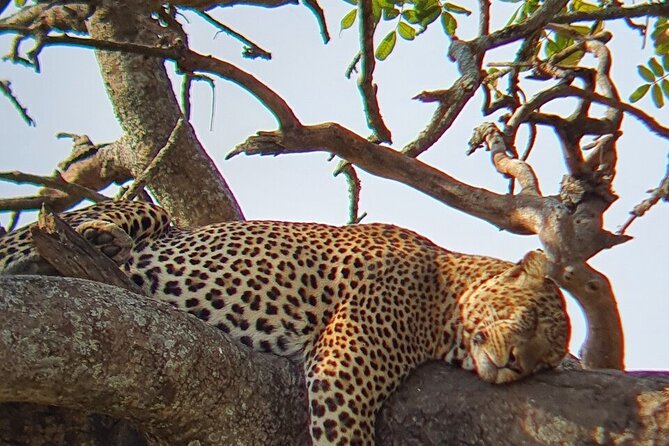
After the Ndutu game drive, the route continues toward central Serengeti. The change is important. You are no longer focusing only on calving grounds, but following the wider migration trails through one of Africa’s best-known wildlife areas.
Day 6 provides a full day of game drives in central Serengeti. Your driver-guide is expected to explain the migration and help interpret what you see. A good guide does more than find animals. The better ones explain behavior, plant life, local culture, and why wildlife gathers in a particular area.
That guide quality is one of the strongest reasons to consider this safari. William has been praised for identifying wildlife, plants, and Maasai culture, including spotting rare animals such as black rhino. Albert and Emanuel are noted for care, professionalism, and positive energy. George Mathias is praised for his driving, patience, and determination to find animals.
Other highly praised guides include Calvin Kileo, Ombeni, Michael Sangiwa, Rahim, Innocent Mafuru, and Bariki. These names are useful to know, but you should not assume you will be assigned a particular guide. Ask who will lead your departure and whether your group will have one driver-guide throughout.
Central Serengeti can produce some of the safari’s best general wildlife viewing, but it is also where you may notice the scale of the park. Long transfers and slow travel are normal. A safari vehicle is comfortable compared with an ordinary car, yet several hours on uneven roads can still be tiring.
Day 7: A crater filled with wildlife
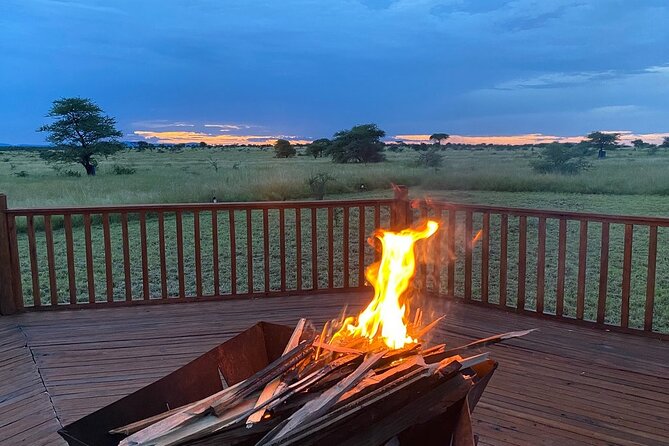
The Ngorongoro Crater brings a different kind of safari setting. You descend about 600 meters into the crater for game viewing, moving from broad migration plains to a contained natural basin.
The crater is valuable because several habitats sit close together. The itinerary promises a range of wildlife, including the chance to see major African species. It does not guarantee a complete Big Five sighting, but several people praised their guides for helping them see lion, leopard, rhinoceros, elephant, and buffalo during their safaris.
A crater visit is not just another game drive. The descent and enclosed setting make it feel distinct from Tarangire and Serengeti. You should also expect the possibility of a busier viewing environment than in more remote areas, though the supplied information does not give a vehicle count or a specific crowd forecast.
The night is at a luxury lodge. Breakfast, lunch, and dinner are included, making this one of the easier days logistically. You do not need to arrange separate meals or park entry payments.
Day 8: Mto wa Mbu and the trip home
The final day moves to Mto wa Mbu for a morning cultural tour and walking safari. This gives the itinerary a welcome human and local dimension after several days centered on wildlife.
You also have a local lunch while taking in the surrounding views. The available information does not specify which community activities or walking route are included, so ask what the cultural visit involves if this part is especially important to you.
In the afternoon, the group returns to Arusha or the airport for a flight home. Because return timing can depend on road conditions and the length of the morning activity, you should confirm the airport drop-off plan before booking a same-day flight at a tight time.
What the $2,999.62 price really covers
The price is $2,999.62 per person. For an eight-day northern Tanzania safari, the important point is not simply the headline number. You are paying for seven nights, private-vehicle transport, a driver-guide, park entrance fees, meals listed in the schedule, bottled water, airport transfers, and accommodation.
That bundled structure makes budgeting easier. You do not need to add separate park fees each morning, and you are not arranging transport between five major wildlife areas on your own.
The value depends partly on how much you use the included service. If you want a carefully planned first safari, the price has appeal. You receive a route that would be difficult to arrange independently, along with a small maximum group size of seven.
Alcoholic drinks are not included and can be purchased separately. The exact tented camps, lodges, vehicle equipment, and guide assignment are not specified, so I would request those details before treating the word luxury as a firm standard.
The vehicle, group size, and daily rhythm
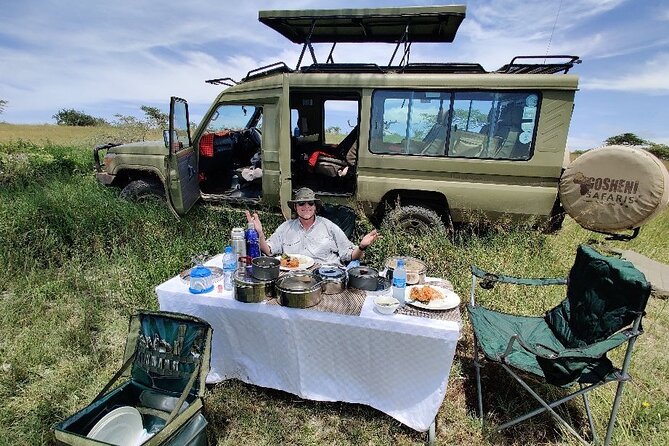
Transport is by private vehicle, with a driver-guide and bottled water included. Positive feedback gives special attention to vehicle comfort, driving skill, and the ability to handle difficult roads. That matters in Tanzania, where the quality of the drive affects both comfort and wildlife viewing.
A maximum of seven people is a practical size. You have a better chance of seeing through the vehicle’s open roof area, and it is easier to agree on stops than in a large coach. Still, you should confirm whether the vehicle is private to your booking party or shared with other people up to the stated limit.
The schedule includes full days of game drives, early starts, road transfers, and several nights in remote camps. A moderate fitness level is requested. You should be comfortable with sitting for long periods, getting in and out of a safari vehicle, and spending time on uneven roads.
Families can use the trip, but children must be accompanied by an adult. One positive account describes a family with two infant grandchildren whose guides were considerate and attentive. That is encouraging, though you should still ask about child seating, sleeping arrangements, and the length of driving days before booking for very young children.
What the guide quality can add
Wildlife is the headline, but the driver-guide often shapes the whole experience. A sharp guide can spot an animal before you do, position the vehicle carefully, and explain what you are seeing without turning the day into a lecture.
The strongest praise for this operation centers on guide skill, kindness, and patience. William is credited with a sharp eye and broad knowledge of wildlife, plants, and Maasai culture. Albert is praised for finding animals before they were visible through binoculars. Ombeni is remembered for animal spotting, difficult-road driving, humor, and even singing with the group.
Michael Sangiwa is especially praised for patience with children. Calvin Kileo is described as calm, helpful, and attentive. These details suggest that the company’s best asset may be its field staff rather than any single lodge.
You can improve your odds of a good match by sharing your priorities at booking. Tell the company if you care most about predators, birds, photography, botany, culture, or family-friendly pacing.
Who should book this safari
I would recommend this trip to someone who wants the migration as the main event but also wants a broad introduction to northern Tanzania. You see several parks instead of spending all eight days in one area.
It is a good fit for first-time safari visitors who value a prearranged route and included meals. It also suits families and small groups who want a driver-guide rather than a self-drive trip.
I would hesitate if you dislike long road transfers, prefer a slow stay in one place, or want a fixed guarantee of seeing newborn wildebeest and predators. The route is ambitious, and the most dramatic calving action depends on the date and natural conditions.
The free cancellation policy allows a full refund when you cancel at least 24 hours before the start time. Changes made inside that window are not accepted, and bad weather or an insufficient minimum group can lead to a new date or full refund.
Should you book it?
Book this safari if you want a well-rounded Tanzania route with a strong chance of seeing the migration during its calving season. The combination of Ndutu, central Serengeti, Ngorongoro Crater, Tarangire, and Lake Manyara gives you both scale and variety.
Before paying, confirm three things: your exact departure date, the names of the camps and lodges, and who will guide your vehicle. If those details suit you, the included costs and small group limit make $2,999.62 a reasonable package price for an eight-day safari.
FAQ
How long is the safari?
The experience lasts approximately eight days and includes seven nights of accommodation.
Where does the safari start?
The listed starting point is Arusha in the Arusha Region, with an 8:30 a.m. start time. Airport pickup from Kilimanjaro Airport is included for the arrival day.
Which parks and areas are included?
The route includes Tarangire National Park, Lake Manyara National Park, the Ndutu area, central Serengeti National Park, the Ngorongoro Conservation Area, Ngorongoro Crater, and Mto wa Mbu.
When does the calving season take place?
The safari is scheduled during the December to April calving season. The main wildebeest calving period is described as occurring around February and lasting about three weeks.
What accommodation is included?
Accommodation includes Mount Meru Hotel on the first night, luxury tented camps, and luxury lodges during the safari.
Are meals included?
Yes. Breakfast, lunch, and dinner are included on the days marked B, L, and D in the schedule. The final day includes breakfast and lunch.
Is transport included?
Yes. Airport pickup and drop-off, transport by private vehicle, and a driver-guide are included.
How many people can join the tour?
The activity has a maximum of seven travelers.
Are alcoholic drinks included?
No. Alcoholic drinks are not included, but they are available to purchase.
Can children join the safari?
Yes, but children must be accompanied by an adult. The tour also recommends a moderate level of physical fitness.
What happens if I need to cancel?
You can receive a full refund if you cancel at least 24 hours before the experience start time. Cancellations or changes made less than 24 hours before the start time are not refunded or accepted.
Newest safaris around Arusha
- Serengeti & Ngorongoro fly in safari★ 5.0 · 76 reviews
- 7 days great migration safari★ 5.0 · 77 reviews
- 5 days safari, hiking & culture (Serengeti & kilimanjaro)★ 5.0 · 27 reviews
- 6 days Tanzania budget safari★ 5.0 · 65 reviews
- 3 Days Tanzania Budget Group Joining Safari Tour★ 5.0 · 16 reviews
- Amazing 4 Days Tanzania Budget Camping Group Joining Safari★ 5.0 · 15 reviews
- 4 days safari★ 5.0 · 34 reviews
- 2 Day Budget Safari in Tarangire and Ngorongoro From Arusha★ 5.0 · 10 reviews
Arusha Safaris, compared.
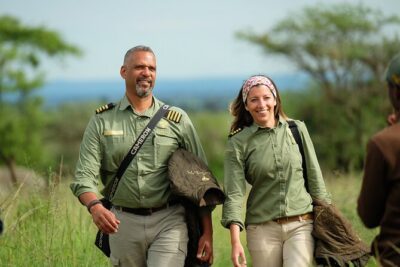
Balloon Safari & Bush Breakfast in Serengeti – Miracle Experience
Read our review →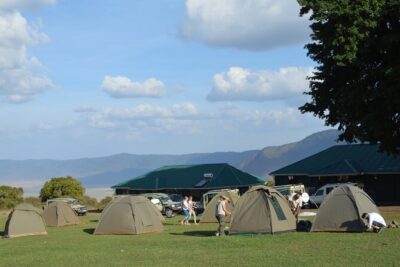
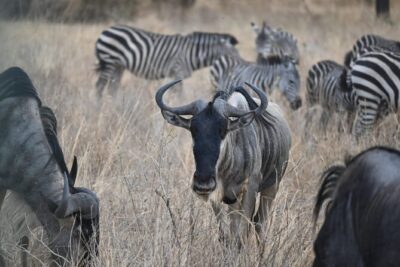
3 Days Serengeti & Ngorongoro Group Camping Safari
Read our review →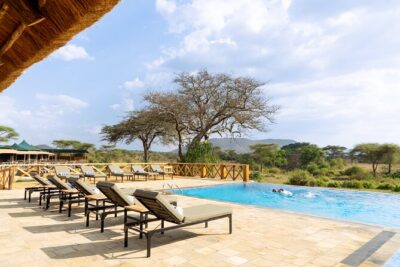
7-Day Premium Luxury Tanzania Safari All-Inclusive
Read our review →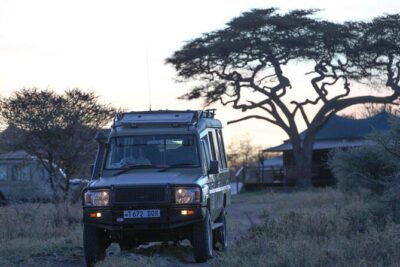
Group Safari 7 Days in Tanzania’s Main Parks
Read our review →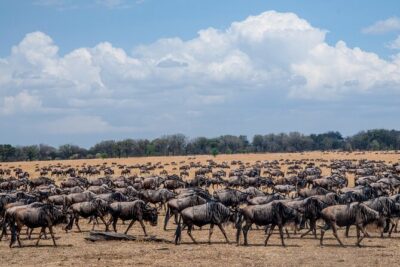
10-Day Serengeti Wildebeest Migration Safari from Arusha
Read our review →Browse the lists this tour appears in