
Review · ARUSHA, TANZANIA
Private 6-Day Great Migration Ndutu Serengeti Safari Tour
Watch the herds move with the seasons. This six-day private safari follows wildebeest and zebra into the Ndutu region, where December through April brings short grass, newborn calves, and hungry predators close by. I like the smart mix of Tarangire’s elephants and Ngorongoro’s crater wildlife, and I like having a private vehicle and guide rather than sharing the schedule with strangers. The main consideration is timing: the calving spectacle depends on seasonal movement, so nature, not the itinerary, sets the exact show.
I also like the range of scenery, from Maasai country outside Arusha to soda lakes, woodland, open plains, and the steep walls of Ngorongoro Crater. Guides such as Shafino, Gilbert, Ozzie, Evans, Meck, and Goodluck have earned especially warm praise for spotting animals, driving carefully, and tailoring the day to each group. Still, this is a busy six days with long drives, rough park tracks, early starts, and a non-refundable booking.
Key things to know before booking
- Ndutu is the main event: The best chance of seeing the calving season comes from January into early February, within the broader December to April migration period.
- Five major wildlife areas fit into six days: You visit Tarangire, Ndutu, the Serengeti, Ngorongoro Crater, and Lake Manyara.
- Your group stays private: Only your own party takes part, with pickup offered and group discounts available.
- The wildlife can be dramatic: You may see wildebeest calves, zebra, elephants, lions, buffalo, giraffe, monkeys, flamingos, and possibly the Big Five.
- The price reflects a full safari program: At $2,827 per person, the cost should be judged against the private setup, guide, park access, transport, lodging, and six-day route.
- The route is full but not leisurely: Several days include about eight hours of driving and game viewing, so comfort with long road days matters.
Why Ndutu makes this safari different
Many northern Tanzania safaris focus on the famous central Serengeti. This one aims farther south, toward Lake Ndutu in the Ngorongoro Conservation Area, during the part of the year when the migration usually gathers on the short-grass plains.
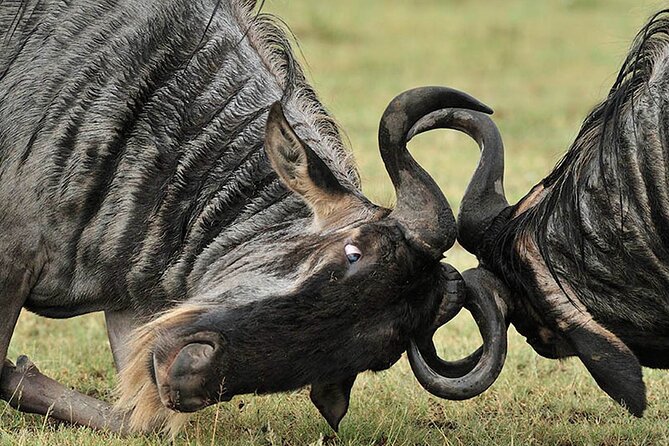
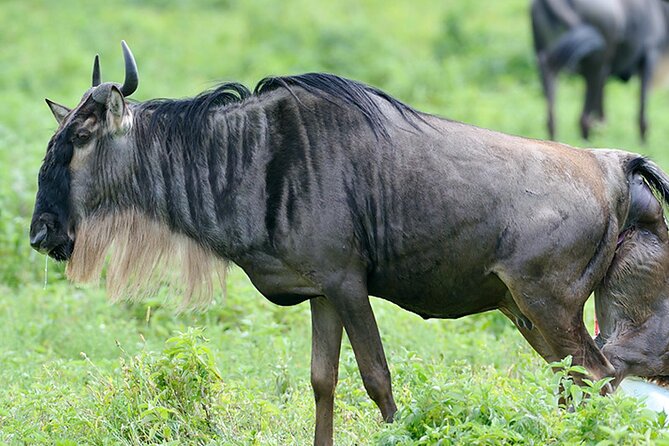
The timing is the heart of the experience. From December through April, wildebeest and zebra generally move through the Ndutu area. January is especially important because the calving season often peaks for roughly three weeks. Around half a million young wildebeest may be born during this synchronized period, giving you a chance to see very young calves trying to stand and run almost immediately.
That abundance also brings danger. The open grass offers little cover, and predators wait nearby. You might see lions, cheetahs, or other hunters using the confusion of the herds to their advantage. Nothing is guaranteed, but the setting creates more tension than a simple animal-spotting drive.
Lake Ndutu itself is an alkaline Rift Valley lake surrounded by a mix of habitats. You may pass swamps, woodland, soda lake margins, and open grassland in one day. That variety matters because different animals favor different ground. It also keeps the scenery changing when the roads get repetitive.
A few more safaris around Arusha worth a look
- 6 Days Private Budget Safari
★ 5.0 · 163 reviews - 6 Days Tanzania Budget Camping Safari
★ 5.0 · 145 reviews - 6 days Tanzania budget safari
★ 5.0 · 65 reviews
Day one in Arusha: a practical start
The safari begins with pickup in Arusha. A Lion King representative collects you from the airport and takes you to your accommodation, with Arusha Planet Lodge listed for the overnight stay.
This first day is intentionally light. You can relax, recover from your flight, and prepare for the road ahead. That is useful because the following days are active and often long. You are not spending a precious wildlife day on airport transfers or paperwork.
The stated meeting point is Mount Meru Hotel on Arusha-Taveta Road in the Sekei area of Arusha. Pickup is offered, but confirm the exact pickup arrangement before arrival, especially if you are coming directly from the airport rather than from the listed meeting point.
The first night also gives you a chance to raise practical questions about the route, weather, luggage, and the next morning’s departure. Communication before the trip received strong praise, and several people specifically valued quick replies from the office team. That kind of support matters when flights change or luggage arrives late.
Day two: elephants and open country in Tarangire
Your safari vehicle leaves Arusha in the morning for Tarangire National Park. The route crosses Maasai plains with acacia trees, colorful clothing, bicycles, cattle, and donkey carts along the roadside. The drive is part of the introduction to northern Tanzania, not just a transfer between parks.
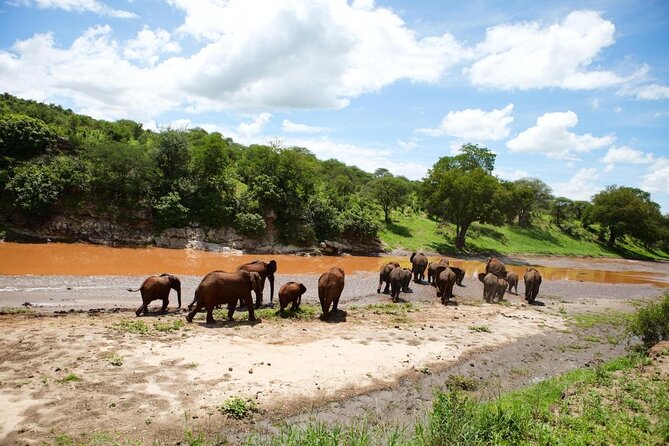
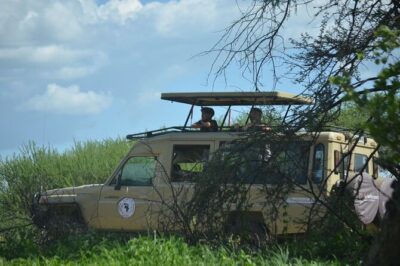
Tarangire is best known here for its large elephant herds. Its seasonal swamps and the Tarangire River draw animals when water is scarce elsewhere. From the open roof of the safari vehicle, you may see zebra and other plains animals among the grass and trees.
This is a useful opening park because it gives you a different wildlife setting before the migration focus begins. Tarangire is more wooded and river-based than the open Ndutu plains, so the contrast is easy to notice. You might find elephants close to the vehicle, while birds and smaller animals reward slower looking.
The day is listed at about eight hours. That includes the drive and game viewing, so expect a full day rather than a gentle introduction. The open-roof vehicle helps with views and photography, but dusty tracks and changing weather are part of the deal.
Day three: reaching Lake Ndutu and the southern Serengeti
After breakfast, you drive about three hours toward Lake Ndutu. The route crosses the Rift Valley and leads into the southern Serengeti ecosystem within the Ngorongoro Conservation Area.
The first sight of Ndutu is less about one landmark than about the way the ground opens up. Alkaline water, short grass, swamps, and scattered woodland create a large feeding area for the moving herds. In the migration season, the animals may be spread across a wide area, so your guide’s ability to read tracks and animal movement becomes important.
You have a game drive after reaching the region, followed by a late afternoon drive before dinner and the overnight stay. That afternoon timing can be productive because animals may become more active as the heat eases, though the exact sightings depend on conditions.
This is where the private format earns its keep. Your group can discuss how long to stay at a sighting and what animals matter most to you. Several guides, including Shafino Dominick, Gilbert, Ozzie, and Meck, received praise for finding specific animals such as leopards, rhinos, adult male lions, and cheetahs. Their work is not magic, but strong local field skills can make a real difference on a broad plain.
Same region, a very different drive:
- Balloon Safari & Bush Breakfast in Serengeti – Miracle Experience
★ 5.0 · 1,646 reviews - 4 Days Group Camping Safari
★ 5.0 · 1,101 reviews - 5 Days Group Camping Safari
★ 5.0 · 730 reviews - 3 Days Serengeti & Ngorongoro Group Camping Safari
★ 5.0 · 574 reviews
Day four: the calving grounds at their busiest
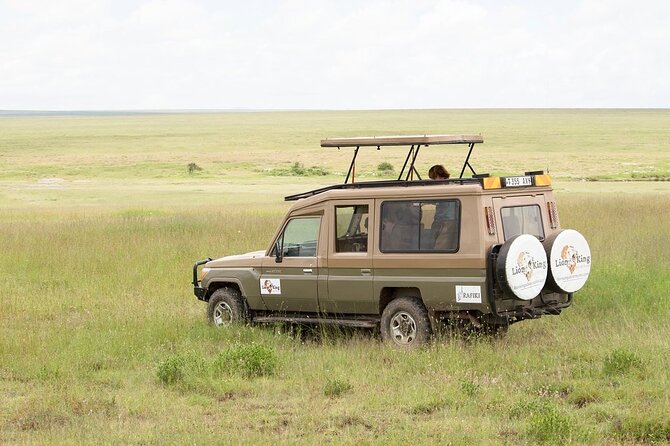
Day four is the dedicated Ndutu day, with a full game drive after breakfast. That gives you the best chance to spend real time in the area rather than treating it as a quick stop between parks.
The route may pass through woodland, swamps, soda lakes, and the short-grass plains. The open ground makes the herds easy to see at a distance, but it also exposes newborn calves. During the main calving period, you may watch adults gather, calves wobble to their feet, and predators patrol the edges.
The numbers are enormous, yet the experience is often about small details. Look for a calf staying close to its mother, zebra standing among wildebeest, or a lion lying low in the grass. Your guide can help turn a distant shape into a meaningful sighting.
A full day in Ndutu can also test your patience. You may spend time driving between animal concentrations, waiting for a predator to appear, or watching a herd move slowly across the plain. That is normal safari rhythm. If you want a fast list of animals, this may feel slow. If you enjoy watching behavior unfold, it is the day to savor.
One particularly striking possibility is a river crossing. A crossing is never promised, but one group on a February safari saw wildebeest cross a river in Ndutu. That kind of event is rare, unpredictable, and exactly why spending a full day in the area has value.
Day five: from the Serengeti to Ngorongoro Crater
After breakfast, you travel through the Serengeti on an en-route game drive toward Ngorongoro Crater. The route combines wildlife viewing with a transfer, so you may spot animals while moving toward the next overnight area.
The crater formed after a huge volcanic explosion millions of years ago. Its walls rise around a floor about 610 meters below the rim, covering roughly 304 square kilometers. The enclosed setting supports a dense population of animals, estimated at about 25,000 ungulates.
You reach the crater rim before lunch for the broad view into the bowl below. It is one of the strongest scenic moments of the trip, but this day is not only about a viewpoint. The crater offers a strong chance for game viewing because animals are concentrated within a contained area.
The itinerary suggests the possibility of seeing all of the Big Five, meaning lion, leopard, elephant, buffalo, and rhino. That is a possibility, not a promise. Guides such as Evans, Meck, and Shafino have been praised for careful spotting and for making an effort to find particular animals, but wildlife remains wild and sightings vary.
The eight-hour day can feel demanding after Ndutu. You are covering ground, watching for animals, and taking in a major geological feature all at once. Still, the combination makes this a strong bridge between the migration plains and the final park.
Day six: birds, primates, and varied scenery at Lake Manyara
The final destination is Lake Manyara National Park, about 120 kilometers west of Arusha. The shallow salt lake covers roughly 70 percent of the park in some seasons, then floods and dries as conditions change.
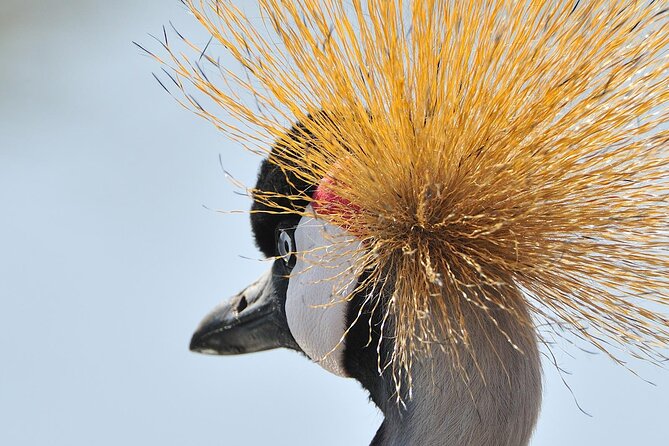
Manyara gives you a different kind of safari. Instead of mostly open grassland, you may pass through grassy plains, woodland, and baobab-dotted cliffs. The park is known for birdlife, with thousands of flamingos and around 500 bird species recorded in the description of the experience.
You may also see monkeys, giraffe, zebra, wildebeest, buffalo, and elephants. With luck, you might find lions resting in trees, one of the park’s best-known possibilities. The mix of birds, primates, and larger mammals means you do not need a single dramatic sighting for the park to feel worthwhile.
The day is listed at about eight hours, including the drive and exploration. After lunch, the safari heads back toward the end point. Because this is the final day, it can feel more like a last wildlife outing than a quiet trip home. Plan your expectations accordingly.
The private vehicle and guide make the biggest difference
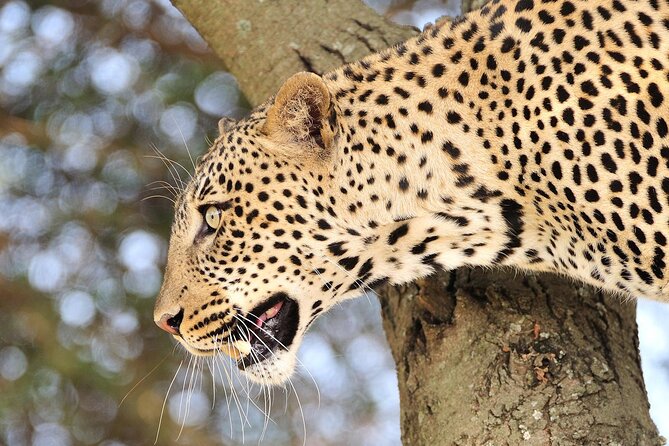
This is a private activity, so only your group participates. That gives you more control than a shared safari. You can talk with your guide about your priorities, spend longer at an animal sighting, and avoid negotiating every stop with strangers.
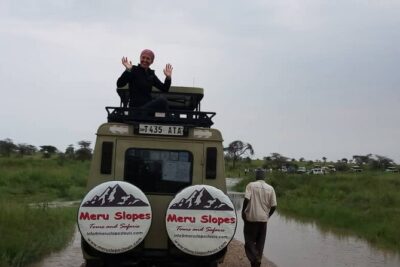
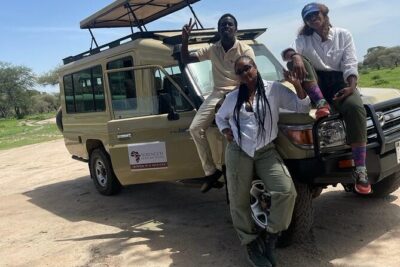
The guide is the key part of the experience. The strongest praise has gone to individuals rather than to a generic service. Shafino Dominick was singled out for animal spotting and tireless effort. Gilbert received praise for finding the Big Five and even a river crossing. Ozzie, Evans, Meck, Goodluck, Gama, Luther, David, Sahele, and others were also credited with careful driving, animal knowledge, meal coordination, and personal attention.
That range of names suggests an important practical point: ask who your guide will be when possible, but understand that assignments may change. What you should expect is an English-speaking safari professional selected by the company, not a guaranteed particular person unless confirmed in writing.
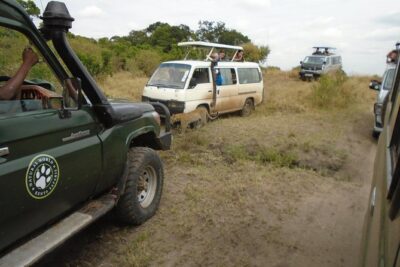
Driving skill matters here. Park roads can be rocky, muddy, and rough. One guide, David, was especially praised for handling difficult tracks smoothly. A capable driver does more than protect your comfort. It helps you reach wildlife areas safely and positions the vehicle well for viewing.
Is $2,827 per person fair value?
The listed price is $2,827 per person. That is a serious amount, but six days of private guiding across several major parks is also a substantial program.
The value comes from the combination of a private safari vehicle, a dedicated guide, airport or local pickup, multiple conservation areas, accommodation, meals, park travel, and the chance to visit Ndutu during migration season. The route covers five major wildlife areas instead of concentrating on one park.
The price is easier to justify if Ndutu calving is your main goal and you value personal service. It is less compelling if you want a slow schedule with long stays in one camp, since this itinerary covers a lot of ground.
Accommodation received strong praise, with several people describing it as first class and specifically liking the Nyota Luxury Camp. The supplied details do not provide a complete lodging list, so ask for the exact properties, room type, meal plan, and any supplement before paying.
Group discounts may be available, which can improve the per-person value for families or friends. Since the booking is non-refundable and cannot be changed for any reason, confirm your dates, flight plans, and preferred migration period before committing.
Who should book this safari?
I would recommend it to someone who wants a private northern Tanzania safari with migration timing at the center. It suits couples, families, and small groups who want one guide and the freedom to shape daily viewing.
It also works well for a first safari because the route offers variety: elephants in Tarangire, calving herds in Ndutu, open Serengeti country, crater wildlife, and birds and monkeys at Manyara.
I would hesitate if you dislike long drives, rough tracks, early starts, or a tightly packed route. I would also avoid booking solely on the promise of a Big Five sighting or a dramatic birth scene. The odds may be good in the right season, but no guide can order nature to perform.
My booking verdict
This is a strong choice if you can travel between December and April, with January offering the best chance of seeing the calving period. The combination of a private vehicle, experienced guides, and five very different wildlife areas gives the price real substance.
Book it if you want the Ndutu migration experience and accept that the days will be long. Before you pay, confirm the exact dates, accommodations, pickup plan, guide arrangement, and what is included in the $2,827 price. If those details fit your plans, this safari offers a serious chance to see Tanzania at its most dramatic, from a newborn calf on open grass to elephants beside the Tarangire River.
FAQ
Where does this safari begin?
The safari begins in Arusha, Tanzania. Pickup is offered, and the stated meeting point is Mount Meru Hotel on Arusha-Taveta Road in the Sekei area of Arusha.
Where does the safari end?
The activity ends back at the meeting point.
How long is the safari?
The experience lasts six days, approximately.
Is this a private tour?
Yes. Only your own group participates in the activity.
When is the best time to see the migration at Ndutu?
The migration is generally found around Ndutu from December through April. January is described as the best period for witnessing calving, which usually lasts about three weeks.
Which parks and areas are included?
The route includes Tarangire National Park, Lake Ndutu, the Serengeti, Ngorongoro Conservation Area and Crater, and Lake Manyara National Park.
Can I see the Big Five?
You may see lion, leopard, elephant, buffalo, and rhino. The itinerary describes this as a possibility, not a guarantee.
How much does the safari cost?
The listed price is $2,827 per person. Group discounts are available.
Can I cancel or change the booking?
No. The experience is non-refundable and cannot be changed for any reason.
Newest safaris around Arusha
- Serengeti & Ngorongoro fly in safari★ 5.0 · 76 reviews
- 7 days great migration safari★ 5.0 · 77 reviews
- 5 days safari, hiking & culture (Serengeti & kilimanjaro)★ 5.0 · 27 reviews
- 6 days Tanzania budget safari★ 5.0 · 65 reviews
- 4 days safari★ 5.0 · 34 reviews
- 3 Days Tanzania Budget Group Joining Safari Tour★ 5.0 · 16 reviews
- Amazing 4 Days Tanzania Budget Camping Group Joining Safari★ 5.0 · 15 reviews
- 2 Day Budget Safari in Tarangire and Ngorongoro From Arusha★ 5.0 · 10 reviews
6-Day Experiences, compared.
Garden Route and Addo Elephant Park 6-Day Safari
Read our review →
6 Days Serengeti Safari(hiking waterfalls &coffee tour)
Read our review →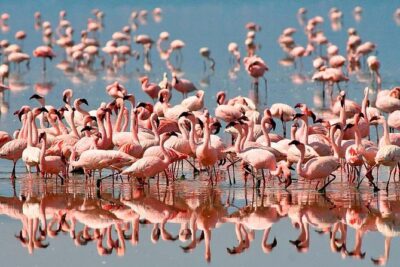
6 days 5 nights safari Ngorongoro, Serengeti and Tarangire National Parks
Read our review →Browse the lists this tour appears in